
About This Book
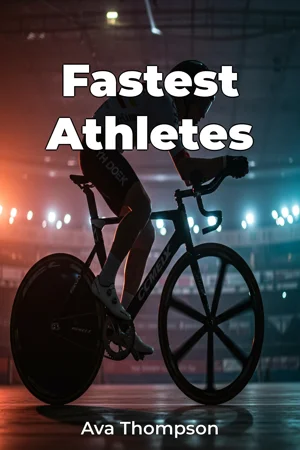
What separates a good athlete from a record-breaking one? "Fastest Athletes" delves into the lives and accomplishments of individuals who have not only pushed the boundaries of human speed but have also redefined our understanding of athletic potential across running, cycling, and swimming. This book explores the confluence of physical prowess, technological innovation, and psychological fortitude that drives athletes to achieve speeds once thought impossible. The book is structured around three core themes: the evolution of training methodologies, the impact of technological advancements on performance, and the psychological factors that contribute to athletic success. Understanding the progression of training techniques is crucial. From early, rudimentary approaches to today's data-driven, personalized programs, this evolution reveals how athletes have learned to maximize their bodies' capabilities. Examining technological advancements—from aerodynamic equipment in cycling to hydrodynamic swimsuits—is equally pertinent. These innovations have demonstrably lowered times and forced constant re-evaluation of what constitutes peak performance. Finally, the psychological aspect, encompassing mental resilience, focus, and the ability to perform under immense pressure, completes the trifecta of elements dissected throughout the book. To provide context, "Fastest Athletes" incorporates a historical overview of each sport, tracing the development of speed records from the late 19th century to the present day. It analyzes the scientific principles underpinning athletic performance, drawing upon biomechanics, exercise physiology, and sports psychology to explain the mechanisms by which athletes achieve their speeds. Each chapter builds upon these foundational elements, presenting case studies of specific athletes who exemplify the themes. The central argument of "Fastest Athletes" is that record-breaking speed is not solely a product of innate talent but rather a carefully cultivated combination of optimized training, technological assistance, and mental discipline. This argument is crucial because it shifts the focus from the romantic notion of natural ability to a more pragmatic understanding of athletic achievement, highlighting the potential for improvement through dedicated effort and scientifically informed strategies. The book begins by introducing the fundamental concepts of speed, power, and efficiency in each sport. The following sections are dedicated to the detailed analysis of training methodologies, technological advancements, and psychological strategies, with each section featuring detailed examples. Sprinters like Usain Bolt, cyclists such as Chris Froome, and swimmers like Michael Phelps are examined through objective analysis. The book builds to a conclusion that synthesizes these findings, offering insights into the future of speed in sports and the potential for further records to be broken. The evidence presented in "Fastest Athletes" is drawn from a variety of sources, including scientific studies published in peer-reviewed journals, performance data from international sporting events, and interviews with athletes, coaches, and sports scientists. The book also incorporates data visualization techniques to illustrate trends in speed records and the impact of various interventions. The content is designed to appeal to a broad audience: sports enthusiasts, athletes, coaches, and anyone interested in the science of human performance will find this book valuable. Its accessible writing style and real-world examples make complex scientific concepts easy to grasp. While it maintains scientific rigor, the book avoids overly technical jargon, ensuring readability for non-experts. "Fastest Athletes" contributes to ongoing discussions about the ethics of technology in sports and the limits of human potential. While the book celebrates the achievements of record-breaking athletes, it also acknowledges the controversies surrounding performance-enhancing drugs and the pressure to constantly push the boundaries of what is possible. The book's scope is intentionally limited to running, cycling, and swimming, allowing for an in-depth analysis of these sports. It does not attempt to provide a comprehensive overview of all sports. The book offers practical advice on how to improve athletic performance, based on the principles and examples discussed. Readers in sports science, kinesiology, or exercise physiology will find considerable value in the interdisciplinary approach. It connects biomechanics, sports psychology, and the social history of sports.
What separates a good athlete from a record-breaking one? "Fastest Athletes" delves into the lives and accomplishments of individuals who have not only pushed the boundaries of human speed but have also redefined our understanding of athletic potential across running, cycling, and swimming. This book explores the confluence of physical prowess, technological innovation, and psychological fortitude that drives athletes to achieve speeds once thought impossible. The book is structured around three core themes: the evolution of training methodologies, the impact of technological advancements on performance, and the psychological factors that contribute to athletic success. Understanding the progression of training techniques is crucial. From early, rudimentary approaches to today's data-driven, personalized programs, this evolution reveals how athletes have learned to maximize their bodies' capabilities. Examining technological advancements—from aerodynamic equipment in cycling to hydrodynamic swimsuits—is equally pertinent. These innovations have demonstrably lowered times and forced constant re-evaluation of what constitutes peak performance. Finally, the psychological aspect, encompassing mental resilience, focus, and the ability to perform under immense pressure, completes the trifecta of elements dissected throughout the book. To provide context, "Fastest Athletes" incorporates a historical overview of each sport, tracing the development of speed records from the late 19th century to the present day. It analyzes the scientific principles underpinning athletic performance, drawing upon biomechanics, exercise physiology, and sports psychology to explain the mechanisms by which athletes achieve their speeds. Each chapter builds upon these foundational elements, presenting case studies of specific athletes who exemplify the themes. The central argument of "Fastest Athletes" is that record-breaking speed is not solely a product of innate talent but rather a carefully cultivated combination of optimized training, technological assistance, and mental discipline. This argument is crucial because it shifts the focus from the romantic notion of natural ability to a more pragmatic understanding of athletic achievement, highlighting the potential for improvement through dedicated effort and scientifically informed strategies. The book begins by introducing the fundamental concepts of speed, power, and efficiency in each sport. The following sections are dedicated to the detailed analysis of training methodologies, technological advancements, and psychological strategies, with each section featuring detailed examples. Sprinters like Usain Bolt, cyclists such as Chris Froome, and swimmers like Michael Phelps are examined through objective analysis. The book builds to a conclusion that synthesizes these findings, offering insights into the future of speed in sports and the potential for further records to be broken. The evidence presented in "Fastest Athletes" is drawn from a variety of sources, including scientific studies published in peer-reviewed journals, performance data from international sporting events, and interviews with athletes, coaches, and sports scientists. The book also incorporates data visualization techniques to illustrate trends in speed records and the impact of various interventions. The content is designed to appeal to a broad audience: sports enthusiasts, athletes, coaches, and anyone interested in the science of human performance will find this book valuable. Its accessible writing style and real-world examples make complex scientific concepts easy to grasp. While it maintains scientific rigor, the book avoids overly technical jargon, ensuring readability for non-experts. "Fastest Athletes" contributes to ongoing discussions about the ethics of technology in sports and the limits of human potential. While the book celebrates the achievements of record-breaking athletes, it also acknowledges the controversies surrounding performance-enhancing drugs and the pressure to constantly push the boundaries of what is possible. The book's scope is intentionally limited to running, cycling, and swimming, allowing for an in-depth analysis of these sports. It does not attempt to provide a comprehensive overview of all sports. The book offers practical advice on how to improve athletic performance, based on the principles and examples discussed. Readers in sports science, kinesiology, or exercise physiology will find considerable value in the interdisciplinary approach. It connects biomechanics, sports psychology, and the social history of sports.
"Fastest Athletes" explores the extraordinary achievements of record-breaking athletes in running, cycling, and swimming, revealing the secrets behind their unparalleled speed. It examines how advancements in training methodologies, like data-driven personalized programs, coupled with technological innovations, such as aerodynamic equipment, have redefined the limits of human potential. The book also emphasizes the critical role of sports psychology, highlighting how mental resilience and focus are just as vital as physical prowess. The approach is historical, tracing the evolution of sports, analyzing the scientific principles, and presenting case studies of athletes who exemplify each theme. Did you know that innovations have demonstrably lowered times and forced constant re-evaluation of what constitutes peak performance? Or that early training methodologies were rudimentary compared to today's programs? Each chapter builds upon foundational elements such as biomechanics, exercise physiology, and sports psychology, offering a comprehensive view. Beginning with the fundamentals of speed and power, the book progresses to detailed analyses of training, technology, and psychological strategies, featuring examples from athletes like Usain Bolt and Michael Phelps. Ultimately, "Fastest Athletes" argues that record-breaking speed is a result of optimized training, technological assistance, and mental discipline, offering insights into the future of sports performance.
Book Details
ISBN
9788233990008
Publisher
Publifye AS
Your Licenses
You don't own any licenses for this book
Purchase a license below to unlock this book and download the EPUB.
Purchase License
Select a tier to unlock this book
Need bulk licensing?
Contact us for enterprise agreements.