
About This Book
Did you know that for millennia, cultures across the globe have turned to the earth itself for healing, utilizing the potent properties of clay for detoxification, skincare, and internal balance? This book, "Sacred Clay Healing," explores the rich history and emerging science behind this ancient practice, revealing how clay can be a powerful tool for modern health and wellness. This book delves into three core areas. First, it examines the historical use of clay in diverse cultures, from ancient Egypt to indigenous communities in the Americas, showcasing its role in traditional medicine and spiritual practices. Second, it analyzes the scientific basis for clay's therapeutic effects, focusing on its mineral composition, adsorption capabilities, and antimicrobial properties. Finally, it bridges the gap between tradition and science, providing practical guidance on how to safely and effectively incorporate clay into your daily routine for detoxification, skincare, and overall well-being. Understanding the composition of different clays and their unique properties is crucial. The book offers a comprehensive overview of clay mineralogy, explaining how factors like particle size, surface area, and cation exchange capacity contribute to a clay's therapeutic potential. It also acknowledges the environmental context, discussing responsible sourcing and the importance of choosing clays free from contaminants. The central argument is that clay is not merely a folk remedy but a scientifically valid therapeutic agent with a long history of successful application. By combining historical evidence with modern research, the book aims to demonstrate clay's potential as a natural and accessible tool for promoting health and vitality. The book begins by introducing the concept of geophagy (the practice of eating earth) and its prevalence throughout history. It then dedicates chapters to examining specific types of clays, such as bentonite, kaolin, and illite, detailing their unique properties and therapeutic applications. Further sections explore the use of clay in detoxification protocols, skincare treatments, and internal remedies for digestive issues and mineral deficiencies. The book culminates in a practical guide to using clay safely and effectively, including recipes for masks, poultices, and internal preparations. The arguments presented are supported by a thorough review of scientific literature, including studies on clay mineralogy, toxicology, and clinical trials evaluating the efficacy of clay-based therapies. The book also draws on ethnobotanical research and historical accounts to provide a comprehensive understanding of clay's traditional uses. This book connects to several disciplines, including geology, mineralogy, anthropology, and integrative medicine. By integrating knowledge from these fields, the book offers a holistic perspective on the therapeutic potential of clay. It also provides a unique perspective by combining scientific rigor with respect for traditional knowledge. The information is presented in a clear and accessible style, making it suitable for both healthcare professionals and individuals interested in natural health and wellness. It is written as a narrative non-fiction piece, blending scientific explanation with compelling historical anecdotes and practical advice. The target audience includes individuals seeking natural and holistic approaches to health, skincare, and detoxification, as well as healthcare practitioners interested in integrating clay therapy into their practices. This book provides a valuable resource for anyone looking to understand the science and history behind this ancient healing modality. As a health and fitness book, "Sacred Clay Healing" addresses the genre's expectations by linking historical practices and scientific research to actionable advice for readers seeking to improve their well-being. The scope of the book is limited to the therapeutic applications of natural clays. It does not cover the industrial uses of clay or delve into the complex geological processes involved in clay formation. While the book provides a broad overview of different types of clays, it does not offer an exhaustive analysis of every available clay variety. Readers can apply the information in this book to create personalized clay-based therapies for skincare, detoxification, and digestive health. The book provides detailed instructions and recipes for making masks, poultices, and internal preparations. While clay therapy is generally considered safe, there are some potential controversies and debates surrounding its use, particularly regarding the presence of heavy metals and the potential for interactions with medications. The book addresses these concerns by providing guidance on choosing high-quality clays and consulting with a healthcare professional before starting any new clay-based therapy.
Did you know that for millennia, cultures across the globe have turned to the earth itself for healing, utilizing the potent properties of clay for detoxification, skincare, and internal balance? This book, "Sacred Clay Healing," explores the rich history and emerging science behind this ancient practice, revealing how clay can be a powerful tool for modern health and wellness. This book delves into three core areas. First, it examines the historical use of clay in diverse cultures, from ancient Egypt to indigenous communities in the Americas, showcasing its role in traditional medicine and spiritual practices. Second, it analyzes the scientific basis for clay's therapeutic effects, focusing on its mineral composition, adsorption capabilities, and antimicrobial properties. Finally, it bridges the gap between tradition and science, providing practical guidance on how to safely and effectively incorporate clay into your daily routine for detoxification, skincare, and overall well-being. Understanding the composition of different clays and their unique properties is crucial. The book offers a comprehensive overview of clay mineralogy, explaining how factors like particle size, surface area, and cation exchange capacity contribute to a clay's therapeutic potential. It also acknowledges the environmental context, discussing responsible sourcing and the importance of choosing clays free from contaminants. The central argument is that clay is not merely a folk remedy but a scientifically valid therapeutic agent with a long history of successful application. By combining historical evidence with modern research, the book aims to demonstrate clay's potential as a natural and accessible tool for promoting health and vitality. The book begins by introducing the concept of geophagy (the practice of eating earth) and its prevalence throughout history. It then dedicates chapters to examining specific types of clays, such as bentonite, kaolin, and illite, detailing their unique properties and therapeutic applications. Further sections explore the use of clay in detoxification protocols, skincare treatments, and internal remedies for digestive issues and mineral deficiencies. The book culminates in a practical guide to using clay safely and effectively, including recipes for masks, poultices, and internal preparations. The arguments presented are supported by a thorough review of scientific literature, including studies on clay mineralogy, toxicology, and clinical trials evaluating the efficacy of clay-based therapies. The book also draws on ethnobotanical research and historical accounts to provide a comprehensive understanding of clay's traditional uses. This book connects to several disciplines, including geology, mineralogy, anthropology, and integrative medicine. By integrating knowledge from these fields, the book offers a holistic perspective on the therapeutic potential of clay. It also provides a unique perspective by combining scientific rigor with respect for traditional knowledge. The information is presented in a clear and accessible style, making it suitable for both healthcare professionals and individuals interested in natural health and wellness. It is written as a narrative non-fiction piece, blending scientific explanation with compelling historical anecdotes and practical advice. The target audience includes individuals seeking natural and holistic approaches to health, skincare, and detoxification, as well as healthcare practitioners interested in integrating clay therapy into their practices. This book provides a valuable resource for anyone looking to understand the science and history behind this ancient healing modality. As a health and fitness book, "Sacred Clay Healing" addresses the genre's expectations by linking historical practices and scientific research to actionable advice for readers seeking to improve their well-being. The scope of the book is limited to the therapeutic applications of natural clays. It does not cover the industrial uses of clay or delve into the complex geological processes involved in clay formation. While the book provides a broad overview of different types of clays, it does not offer an exhaustive analysis of every available clay variety. Readers can apply the information in this book to create personalized clay-based therapies for skincare, detoxification, and digestive health. The book provides detailed instructions and recipes for making masks, poultices, and internal preparations. While clay therapy is generally considered safe, there are some potential controversies and debates surrounding its use, particularly regarding the presence of heavy metals and the potential for interactions with medications. The book addresses these concerns by providing guidance on choosing high-quality clays and consulting with a healthcare professional before starting any new clay-based therapy.
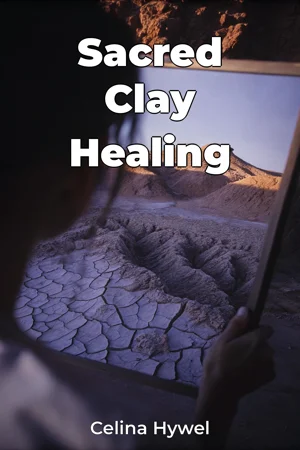
"Sacred Clay Healing" explores the age-old practice of using clay for health, fitness, and wellness. For centuries, various cultures have harnessed the power of clay for detoxification, skincare, and promoting internal balance. This book presents a unique blend of historical insights and scientific research, revealing how different types of clay, such as bentonite and kaolin, possess distinct mineral compositions that contribute to their therapeutic effects. Geophagy, the practice of eating earth, has roots in ancient traditions, and the book delves into its prevalence and purpose across different societies while emphasizing responsible sourcing. The book examines the historical use of clay in traditional medicine, linking it to modern scientific understanding. It highlights clay's adsorption capabilities and antimicrobial properties, which make it a valuable resource for health and fitness. Chapters progress from introducing the concept of geophagy to examining specific clays and their applications in detoxification, skincare, and internal remedies. It bridges the gap between ancient practices and modern applications, offering practical guidance on incorporating clay into daily routines for improved well-being.
Book Details
ISBN
9788233989965
Publisher
Publifye AS
Your Licenses
You don't own any licenses for this book
Purchase a license below to unlock this book and download the EPUB.
Purchase License
Select a tier to unlock this book
Need bulk licensing?
Contact us for enterprise agreements.