
About This Book
Could the secrets to optimal nutrition and sustainable living be hidden in the culinary practices of our ancestors? "Ancient Cooking Techniques" explores the methods employed by past civilizations to prepare food, focusing on earthen ovens, slow fermentation, and wood-fired techniques, revealing how these approaches enhanced nutritional value and cultural significance. This book tackles the often-overlooked connection between historical food preparation methods and their impact on human health and societal development. Understanding these techniques is crucial in an era grappling with processed foods and a growing interest in sustainable and nutritious diets. We delve into the how and why of ancient cooking, illuminating enduring practices that hold relevance for modern kitchens. We begin by establishing the historical and social contexts in which these cooking methods emerged. We will explore how factors such as climate, available resources, and cultural beliefs shaped culinary traditions across diverse ancient societies, from the Mediterranean to Mesoamerica. No prior knowledge of culinary history is required; we present the information in an accessible and engaging manner suitable to a broad audience. The central argument is that ancient cooking techniques, particularly earthen ovens, slow fermentation, and wood-fired methods, served not merely as means of preparing food but as integral processes that enhanced its nutritional profile, digestibility, and preservation qualities. The book demonstrates how these techniques, often born out of necessity, inadvertently created healthier and more sustainable food systems. The book is structured into three main sections. First, we introduce the core techniques: the construction and utilization of earthen ovens across different cultures, the science and art of slow fermentation, and the principles behind wood-fired cooking. Second, we delve into the nutritional benefits and cultural significance of each method. For earthen ovens, we explore how they preserved moisture and nutrients. With slow fermentation, we discuss the creation of probiotics and the breakdown of complex carbohydrates into easily digestible elements. For wood-fired techniques, we examine the unique flavor compounds produced and the retention of essential minerals. Third, we discuss the applicability of these ancient practices in a contemporary context, providing practical guidance for readers interested in incorporating these techniques into their own cooking. The book draws upon archaeological evidence, historical texts, and scientific research to support its claims. We examine archaeological findings of ancient ovens and fermentation vessels; scrutinize historical recipes and culinary writings; and reference modern nutritional science to validate the health benefits of these techniques. Our methodology involves a synthesis of historical analysis and scientific validation, providing a robust and interdisciplinary approach. "Ancient Cooking Techniques" bridges culinary history with nutritional science, anthropology, and environmental studies. The nutritional science aspect helps quantify the health benefits. The anthropological perspective enables us to understand the cultural significance. The environmental studies angle examines sustainability. These connections enrich our understanding of the past and inform present-day approaches to food. This book offers a fresh perspective by demonstrating the overlooked wisdom embedded in ancient culinary practices, offering a practical and historically informed approach to enhancing nutritional value and promoting sustainability in modern diets. Written in a clear and engaging style, "Ancient Cooking Techniques" is designed for a broad audience, including food enthusiasts, history buffs, nutritionists, and anyone interested in sustainable living. The book's value lies in its ability to connect ancient wisdom with contemporary needs, providing both historical insight and practical guidance. This book adheres to the conventions of historical non-fiction, presenting factual information supported by evidence and analysis while also incorporating elements of culinary writing to engage the senses and make the subject matter accessible. The scope includes a global perspective, examining ancient cooking methods across different civilizations, but focuses primarily on societies with well-documented culinary practices and archaeological records. One limitation is the availability of detailed nutritional data from ancient sources, which requires us to rely on modern scientific analysis to extrapolate the nutritional benefits. Readers can directly apply the knowledge gained from this book by experimenting with earthen oven cooking, fermentation, and wood-fired techniques in their own kitchens. The book provides practical tips, recipes, and resources for those seeking to rediscover these ancient culinary traditions. While the health benefits of these cooking methods are increasingly recognized, some debate continues regarding the precise impact of fermentation on gut health and sustainability. "Ancient Cooking Techniques" addresses these debates by presenting a balanced view of the available evidence and acknowledging areas where further research is needed.
Could the secrets to optimal nutrition and sustainable living be hidden in the culinary practices of our ancestors? "Ancient Cooking Techniques" explores the methods employed by past civilizations to prepare food, focusing on earthen ovens, slow fermentation, and wood-fired techniques, revealing how these approaches enhanced nutritional value and cultural significance. This book tackles the often-overlooked connection between historical food preparation methods and their impact on human health and societal development. Understanding these techniques is crucial in an era grappling with processed foods and a growing interest in sustainable and nutritious diets. We delve into the how and why of ancient cooking, illuminating enduring practices that hold relevance for modern kitchens. We begin by establishing the historical and social contexts in which these cooking methods emerged. We will explore how factors such as climate, available resources, and cultural beliefs shaped culinary traditions across diverse ancient societies, from the Mediterranean to Mesoamerica. No prior knowledge of culinary history is required; we present the information in an accessible and engaging manner suitable to a broad audience. The central argument is that ancient cooking techniques, particularly earthen ovens, slow fermentation, and wood-fired methods, served not merely as means of preparing food but as integral processes that enhanced its nutritional profile, digestibility, and preservation qualities. The book demonstrates how these techniques, often born out of necessity, inadvertently created healthier and more sustainable food systems. The book is structured into three main sections. First, we introduce the core techniques: the construction and utilization of earthen ovens across different cultures, the science and art of slow fermentation, and the principles behind wood-fired cooking. Second, we delve into the nutritional benefits and cultural significance of each method. For earthen ovens, we explore how they preserved moisture and nutrients. With slow fermentation, we discuss the creation of probiotics and the breakdown of complex carbohydrates into easily digestible elements. For wood-fired techniques, we examine the unique flavor compounds produced and the retention of essential minerals. Third, we discuss the applicability of these ancient practices in a contemporary context, providing practical guidance for readers interested in incorporating these techniques into their own cooking. The book draws upon archaeological evidence, historical texts, and scientific research to support its claims. We examine archaeological findings of ancient ovens and fermentation vessels; scrutinize historical recipes and culinary writings; and reference modern nutritional science to validate the health benefits of these techniques. Our methodology involves a synthesis of historical analysis and scientific validation, providing a robust and interdisciplinary approach. "Ancient Cooking Techniques" bridges culinary history with nutritional science, anthropology, and environmental studies. The nutritional science aspect helps quantify the health benefits. The anthropological perspective enables us to understand the cultural significance. The environmental studies angle examines sustainability. These connections enrich our understanding of the past and inform present-day approaches to food. This book offers a fresh perspective by demonstrating the overlooked wisdom embedded in ancient culinary practices, offering a practical and historically informed approach to enhancing nutritional value and promoting sustainability in modern diets. Written in a clear and engaging style, "Ancient Cooking Techniques" is designed for a broad audience, including food enthusiasts, history buffs, nutritionists, and anyone interested in sustainable living. The book's value lies in its ability to connect ancient wisdom with contemporary needs, providing both historical insight and practical guidance. This book adheres to the conventions of historical non-fiction, presenting factual information supported by evidence and analysis while also incorporating elements of culinary writing to engage the senses and make the subject matter accessible. The scope includes a global perspective, examining ancient cooking methods across different civilizations, but focuses primarily on societies with well-documented culinary practices and archaeological records. One limitation is the availability of detailed nutritional data from ancient sources, which requires us to rely on modern scientific analysis to extrapolate the nutritional benefits. Readers can directly apply the knowledge gained from this book by experimenting with earthen oven cooking, fermentation, and wood-fired techniques in their own kitchens. The book provides practical tips, recipes, and resources for those seeking to rediscover these ancient culinary traditions. While the health benefits of these cooking methods are increasingly recognized, some debate continues regarding the precise impact of fermentation on gut health and sustainability. "Ancient Cooking Techniques" addresses these debates by presenting a balanced view of the available evidence and acknowledging areas where further research is needed.
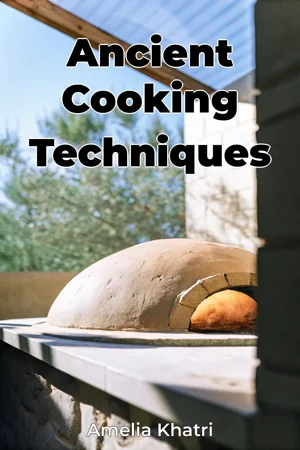
"Ancient Cooking Techniques" explores the forgotten culinary wisdom of ancient civilizations, revealing how practices like wood-fired cooking and slow fermentation enhanced food's nutritional value and cultural significance. Discover how earthen ovens, crucial in many ancient societies, preserved moisture and nutrients in ways modern cooking often overlooks. This book examines archaeological findings and historical texts to demonstrate the sustainable and health-conscious nature of these methods. The book progresses by first introducing core techniques such as the construction of earthen ovens and the art of slow fermentation. It then delves into the nutritional benefits, explaining how fermentation creates probiotics and wood-fired cooking retains essential minerals. Finally, it considers the applicability of these ancient practices in today's kitchens, providing practical guidance for readers who want to incorporate these techniques into their cooking, promoting more sustainable and nutritious diets.
Book Details
ISBN
9788233989958
Publisher
Publifye AS
Your Licenses
You don't own any licenses for this book
Purchase a license below to unlock this book and download the EPUB.
Purchase License
Select a tier to unlock this book
Need bulk licensing?
Contact us for enterprise agreements.