
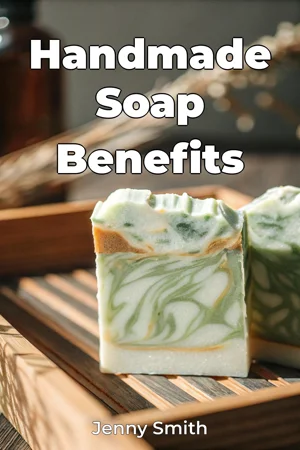
About This Book
Have you ever considered the intricate chemistry behind a simple bar of soap and how it interacts with your skin's delicate ecosystem? This book, "Handmade Soap Benefits," delves into the science and art of crafting soap using natural fats, lye, and essential oils, revealing the profound benefits these traditional methods offer for skin health. We will explore how understanding the saponification process, the selection of natural ingredients, and their impact on the skin microbiome can revolutionize your approach to personal care. The book addresses three key areas: the chemistry of soap making, the dermatological benefits of natural ingredients, and the environmental impact of choosing handmade soap. These topics are crucial because they bridge the gap between traditional practices and modern scientific understanding, empowering readers to make informed choices about their skincare routines. We begin with a historical overview of soap making, tracing its origins from ancient civilizations to the modern era. This context helps us understand how soap evolved from a utilitarian cleanser to a complex product influenced by industrial processes. We explore the basic chemistry required to understand saponification; no prior in-depth knowledge is needed. Our central argument is that handmade soap, crafted with natural ingredients and a deep understanding of the saponification process, offers superior benefits for skin health and environmental sustainability compared to commercially produced alternatives. This argument is vital because it challenges the prevailing reliance on synthetic ingredients and mass-produced products, advocating for a return to simpler, more wholesome skincare practices. The book's structure is designed to progressively build upon these concepts. First, we introduce the fundamental principles of soap chemistry, explaining the reactions between fats and lye that create soap molecules. Second, we dedicate chapters to exploring how different natural oils, butters, and additives, such as essential oils and botanicals, impact skin health, delving into their moisturizing, anti-inflammatory, and antimicrobial properties. Third, we investigate the environmental footprint of soap production, comparing the sustainable practices of handmade soap makers to the large-scale manufacturing processes of commercial brands. This comparison includes an analysis of waste reduction, biodegradable packaging, and responsible sourcing of ingredients. Finally, we provide practical guidance on selecting, storing, and using handmade soap to maximize its benefits. We support our arguments with a combination of scientific research, ingredient studies, and comparative analyses. We also incorporate insights from dermatologists and experienced soap makers. We draw upon studies published in peer-reviewed journals, data from environmental impact assessments, and anecdotal evidence from individuals who have experienced positive results using handmade soap. The book interweaves chemistry, biology, and environmental science. The chemical reactions of saponification are explained in detail, connecting to biological functions related to skin health and how the environmental costs of different production methods are compared. This interdisciplinary approach offers a holistic understanding of the topic. A unique aspect of this book is its emphasis on the skin microbiome and how handmade soap, without harsh chemicals, can help maintain a healthy balance of bacteria on the skin. We provide insights into how specific ingredients can nourish beneficial bacteria and support the skin's natural defense mechanisms. The tone is informative and accessible, aiming to educate readers without overwhelming them with technical jargon. The writing style is clear, concise, and engaging, designed to appeal to a broad audience. The target audience includes those seeking natural skincare solutions, individuals with sensitive skin or skin conditions, environmental enthusiasts, and anyone interested in learning the art and science of traditional soap making. This book is valuable because it provides evidence-based information to empower readers to make informed decisions about their personal care choices. As a work of non-fiction, this book is intended to provide factual information, supported by research and evidence, rather than offering personal opinions or unsubstantiated claims. We acknowledge the limitations of our scope, focusing primarily on the chemistry, benefits, and environmental impact of cold-process soap making using natural ingredients. We do not cover other cleaning products. The information in this book can be applied practically by readers to make informed decisions about purchasing or creating their own handmade soap. We give the knowledge to understand ingredient lists, evaluate product claims, and select soaps that are best suited for individual skin types and preferences. While the benefits of handmade soap are widely recognized, some debates exist regarding the use of lye and the potential for allergic reactions to certain ingredients. We address these controversies by providing detailed explanations about the safety of properly made soap and offering guidance on identifying and avoiding potential allergens.
Have you ever considered the intricate chemistry behind a simple bar of soap and how it interacts with your skin's delicate ecosystem? This book, "Handmade Soap Benefits," delves into the science and art of crafting soap using natural fats, lye, and essential oils, revealing the profound benefits these traditional methods offer for skin health. We will explore how understanding the saponification process, the selection of natural ingredients, and their impact on the skin microbiome can revolutionize your approach to personal care. The book addresses three key areas: the chemistry of soap making, the dermatological benefits of natural ingredients, and the environmental impact of choosing handmade soap. These topics are crucial because they bridge the gap between traditional practices and modern scientific understanding, empowering readers to make informed choices about their skincare routines. We begin with a historical overview of soap making, tracing its origins from ancient civilizations to the modern era. This context helps us understand how soap evolved from a utilitarian cleanser to a complex product influenced by industrial processes. We explore the basic chemistry required to understand saponification; no prior in-depth knowledge is needed. Our central argument is that handmade soap, crafted with natural ingredients and a deep understanding of the saponification process, offers superior benefits for skin health and environmental sustainability compared to commercially produced alternatives. This argument is vital because it challenges the prevailing reliance on synthetic ingredients and mass-produced products, advocating for a return to simpler, more wholesome skincare practices. The book's structure is designed to progressively build upon these concepts. First, we introduce the fundamental principles of soap chemistry, explaining the reactions between fats and lye that create soap molecules. Second, we dedicate chapters to exploring how different natural oils, butters, and additives, such as essential oils and botanicals, impact skin health, delving into their moisturizing, anti-inflammatory, and antimicrobial properties. Third, we investigate the environmental footprint of soap production, comparing the sustainable practices of handmade soap makers to the large-scale manufacturing processes of commercial brands. This comparison includes an analysis of waste reduction, biodegradable packaging, and responsible sourcing of ingredients. Finally, we provide practical guidance on selecting, storing, and using handmade soap to maximize its benefits. We support our arguments with a combination of scientific research, ingredient studies, and comparative analyses. We also incorporate insights from dermatologists and experienced soap makers. We draw upon studies published in peer-reviewed journals, data from environmental impact assessments, and anecdotal evidence from individuals who have experienced positive results using handmade soap. The book interweaves chemistry, biology, and environmental science. The chemical reactions of saponification are explained in detail, connecting to biological functions related to skin health and how the environmental costs of different production methods are compared. This interdisciplinary approach offers a holistic understanding of the topic. A unique aspect of this book is its emphasis on the skin microbiome and how handmade soap, without harsh chemicals, can help maintain a healthy balance of bacteria on the skin. We provide insights into how specific ingredients can nourish beneficial bacteria and support the skin's natural defense mechanisms. The tone is informative and accessible, aiming to educate readers without overwhelming them with technical jargon. The writing style is clear, concise, and engaging, designed to appeal to a broad audience. The target audience includes those seeking natural skincare solutions, individuals with sensitive skin or skin conditions, environmental enthusiasts, and anyone interested in learning the art and science of traditional soap making. This book is valuable because it provides evidence-based information to empower readers to make informed decisions about their personal care choices. As a work of non-fiction, this book is intended to provide factual information, supported by research and evidence, rather than offering personal opinions or unsubstantiated claims. We acknowledge the limitations of our scope, focusing primarily on the chemistry, benefits, and environmental impact of cold-process soap making using natural ingredients. We do not cover other cleaning products. The information in this book can be applied practically by readers to make informed decisions about purchasing or creating their own handmade soap. We give the knowledge to understand ingredient lists, evaluate product claims, and select soaps that are best suited for individual skin types and preferences. While the benefits of handmade soap are widely recognized, some debates exist regarding the use of lye and the potential for allergic reactions to certain ingredients. We address these controversies by providing detailed explanations about the safety of properly made soap and offering guidance on identifying and avoiding potential allergens.
"Handmade Soap Benefits" explores the science and art behind traditional soap making, emphasizing the advantages of natural ingredients for skin health and environmental sustainability. The book details how understanding the saponification process, the chemical reaction between fats and lye, leads to superior soap quality compared to commercial alternatives. Intriguingly, handmade soaps, crafted with essential oils and natural fats, can positively influence the skin microbiome, fostering a healthier balance of bacteria. The book progresses from a historical overview of soap making to an in-depth analysis of soap chemistry and the dermatological benefits of natural ingredients. It highlights how sustainable skincare practices, like using biodegradable packaging and responsible sourcing, reduce the environmental impact. By comparing these practices to large-scale manufacturing, the book emphasizes the value of handmade soap in promoting both personal well-being and environmental responsibility. This book uniquely bridges traditional soap-making methods with modern scientific understanding, providing readers with practical guidance on selecting, storing, and using handmade soap to maximize its benefits. It supports its arguments with scientific research, ingredient studies, and insights from dermatologists, empowering readers to make informed decisions about their skincare routines and appreciate the benefits of natural soap.
Book Details
ISBN
9788233989941
Publisher
Publifye AS
Your Licenses
You don't own any licenses for this book
Purchase a license below to unlock this book and download the EPUB.
Purchase License
Select a tier to unlock this book
Need bulk licensing?
Contact us for enterprise agreements.