
About This Book
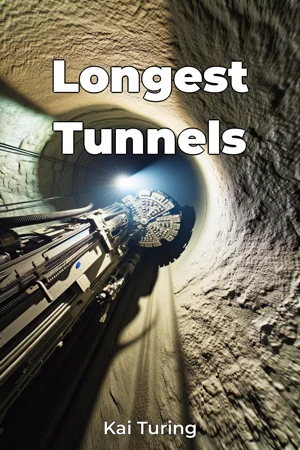
Have you ever considered the sheer ingenuity required to carve a path through mountains, under seas, or beneath bustling cities? "Longest Tunnels" delves into the world's most impressive tunnels, exploring the engineering marvels that make them possible and the crucial role they play in connecting communities and driving global commerce. This book covers the technology, the planning and the execution of the world's longest tunnels. This book examines three core themes: the evolution of tunnel engineering, the economic and societal impact of these infrastructure projects, and the geological and environmental considerations imperative to successful tunnel construction. These themes are significant because tunnels are not just conduits for transportation; they represent humanity's ability to overcome geographical barriers, facilitate trade, and reshape landscapes. Understanding the complexities of tunnel construction provides insights into broader challenges of infrastructure development and sustainable engineering. The construction of tunnels has a rich history, dating back to ancient civilizations that carved rudimentary passages for mining and water conveyance. The advent of modern technology, including tunnel boring machines (TBMs) and advanced surveying techniques, has revolutionized the field, enabling the creation of longer and more complex tunnels than ever before. As populations grow and urbanization increases, the need for efficient transportation and infrastructure solutions becomes paramount. "Longest Tunnels" posits that the development of long tunnels is a critical component of modern global infrastructure, reflecting both technological advancements and the increasing demand for efficient transportation networks. This argument is vital because it highlights the strategic importance of these projects in facilitating economic growth, connecting disparate regions, and enhancing societal well-being. This book begins by introducing the fundamental principles of tunnel engineering, including geological surveying, structural design, and risk management. It then develops this initial discussion across chapters, presenting case studies of the world's longest tunnels, such as the Gotthard Base Tunnel, the Seikan Tunnel, and the Channel Tunnel. Each case study explores the unique challenges faced during construction, the innovative solutions employed, and the long-term impact of the tunnel on the surrounding region. The book culminates with an analysis of future trends in tunnel construction. It looks at new materials, techniques, and the potential for even more ambitious projects, as well as the environmental considerations necessary for responsible development. It then discusses practical applications and implications of tunnel technology for urban planning, disaster resilience, and resource management. The evidence presented throughout "Longest Tunnels" is drawn from a variety of sources, including engineering reports, geological surveys, historical archives, and interviews with engineers and project managers involved in the construction of these tunnels. Unique data sources, such as real-time monitoring data from tunnel boring machines and satellite imagery used for geological analysis, provide insights into the complexities of tunnel construction. This book connects to several other fields, including geology, economics, and environmental science. Geology is critical to understanding the subsurface conditions. Economics informs the cost-benefit analysis of tunnel projects. Environmental science helps assess the ecological impact of tunnel construction. These interdisciplinary connections enrich the book's argument. "Longest Tunnels" offers a comprehensive and up-to-date perspective on the design, construction, and impact of long tunnels, combining technical expertise with accessible language to engage a broad audience. The writing style is professional yet accessible, designed to convey complex information in a clear and engaging manner. The target audience includes engineers, urban planners, policymakers, students, and anyone with an interest in infrastructure, technology, and the built environment. As a work of non-fiction, "Longest Tunnels" adheres to the standards of accuracy, objectivity, and thorough research. The scope of this book is limited to the longest tunnels currently in operation or under construction worldwide, with a focus on tunnels used for transportation and infrastructure purposes. It does not cover every tunnel ever built. The information in this book can be applied to real-world scenarios, such as urban planning, infrastructure development, disaster preparedness, and resource management. For example, the principles of tunnel engineering can be used to design underground transportation systems in densely populated cities, while the lessons learned from past tunnel projects can inform future infrastructure investments. "Longest Tunnels" also addresses some of the ongoing debates and controversies in the field, such as the environmental impact of tunnel construction, the cost-effectiveness of tunnel projects compared to other infrastructure solutions, and the ethical considerations involved in large-scale engineering projects.
Have you ever considered the sheer ingenuity required to carve a path through mountains, under seas, or beneath bustling cities? "Longest Tunnels" delves into the world's most impressive tunnels, exploring the engineering marvels that make them possible and the crucial role they play in connecting communities and driving global commerce. This book covers the technology, the planning and the execution of the world's longest tunnels. This book examines three core themes: the evolution of tunnel engineering, the economic and societal impact of these infrastructure projects, and the geological and environmental considerations imperative to successful tunnel construction. These themes are significant because tunnels are not just conduits for transportation; they represent humanity's ability to overcome geographical barriers, facilitate trade, and reshape landscapes. Understanding the complexities of tunnel construction provides insights into broader challenges of infrastructure development and sustainable engineering. The construction of tunnels has a rich history, dating back to ancient civilizations that carved rudimentary passages for mining and water conveyance. The advent of modern technology, including tunnel boring machines (TBMs) and advanced surveying techniques, has revolutionized the field, enabling the creation of longer and more complex tunnels than ever before. As populations grow and urbanization increases, the need for efficient transportation and infrastructure solutions becomes paramount. "Longest Tunnels" posits that the development of long tunnels is a critical component of modern global infrastructure, reflecting both technological advancements and the increasing demand for efficient transportation networks. This argument is vital because it highlights the strategic importance of these projects in facilitating economic growth, connecting disparate regions, and enhancing societal well-being. This book begins by introducing the fundamental principles of tunnel engineering, including geological surveying, structural design, and risk management. It then develops this initial discussion across chapters, presenting case studies of the world's longest tunnels, such as the Gotthard Base Tunnel, the Seikan Tunnel, and the Channel Tunnel. Each case study explores the unique challenges faced during construction, the innovative solutions employed, and the long-term impact of the tunnel on the surrounding region. The book culminates with an analysis of future trends in tunnel construction. It looks at new materials, techniques, and the potential for even more ambitious projects, as well as the environmental considerations necessary for responsible development. It then discusses practical applications and implications of tunnel technology for urban planning, disaster resilience, and resource management. The evidence presented throughout "Longest Tunnels" is drawn from a variety of sources, including engineering reports, geological surveys, historical archives, and interviews with engineers and project managers involved in the construction of these tunnels. Unique data sources, such as real-time monitoring data from tunnel boring machines and satellite imagery used for geological analysis, provide insights into the complexities of tunnel construction. This book connects to several other fields, including geology, economics, and environmental science. Geology is critical to understanding the subsurface conditions. Economics informs the cost-benefit analysis of tunnel projects. Environmental science helps assess the ecological impact of tunnel construction. These interdisciplinary connections enrich the book's argument. "Longest Tunnels" offers a comprehensive and up-to-date perspective on the design, construction, and impact of long tunnels, combining technical expertise with accessible language to engage a broad audience. The writing style is professional yet accessible, designed to convey complex information in a clear and engaging manner. The target audience includes engineers, urban planners, policymakers, students, and anyone with an interest in infrastructure, technology, and the built environment. As a work of non-fiction, "Longest Tunnels" adheres to the standards of accuracy, objectivity, and thorough research. The scope of this book is limited to the longest tunnels currently in operation or under construction worldwide, with a focus on tunnels used for transportation and infrastructure purposes. It does not cover every tunnel ever built. The information in this book can be applied to real-world scenarios, such as urban planning, infrastructure development, disaster preparedness, and resource management. For example, the principles of tunnel engineering can be used to design underground transportation systems in densely populated cities, while the lessons learned from past tunnel projects can inform future infrastructure investments. "Longest Tunnels" also addresses some of the ongoing debates and controversies in the field, such as the environmental impact of tunnel construction, the cost-effectiveness of tunnel projects compared to other infrastructure solutions, and the ethical considerations involved in large-scale engineering projects.
"Longest Tunnels" explores the fascinating world of underground infrastructure, examining the engineering marvels that enable us to traverse mountains and seas. It delves into the technology, planning, and execution behind the world's most impressive tunnels, highlighting their vital role in connecting communities and driving global commerce. Did you know that modern tunnel boring machines (TBMs) have revolutionized tunnel construction, allowing for longer and more complex projects than ever before? The book emphasizes how these tunnels represent humanity's ability to overcome geographical barriers, facilitate trade, and reshape landscapes. The book progresses by first introducing the principles of tunnel engineering, including geological surveying and risk management. It then moves through case studies of iconic tunnels like the Gotthard Base Tunnel, the Seikan Tunnel, and the Channel Tunnel, examining the unique challenges, innovative solutions, and lasting impact of each. The study of tunnels connects to several fields, including geology, economics, and environmental science, providing insights into broader challenges of infrastructure development and sustainable engineering. The book concludes with an analysis of future trends, new materials, and environmental considerations necessary for responsible development.
Book Details
ISBN
9788233989514
Publisher
Publifye AS
Your Licenses
You don't own any licenses for this book
Purchase a license below to unlock this book and download the EPUB.
Purchase License
Select a tier to unlock this book
Need bulk licensing?
Contact us for enterprise agreements.