
About This Book
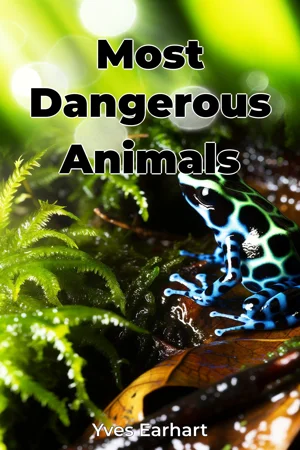
Have you ever wondered what truly makes an animal "dangerous"? This book, "Most Dangerous Animals," delves into the complex interplay of biology, adaptation, and environment that defines lethality in the animal kingdom. We move beyond simple fear-mongering to examine the scientific realities of animal-inflicted harm. This book explores three significant areas: the diverse range of deadly animals across the globe, the specialized adaptations that make them dangerous, and the crucial role of extreme environments in shaping their survival strategies and inherent risks. Understanding these subjects is vital, as it sheds light on evolutionary processes, ecological balance, and the often-tenuous relationship between humans and wildlife. Misconceptions about dangerous animals often lead to unwarranted fear and destructive behaviors; accurate knowledge fosters respect and informed conservation efforts. The information presented is grounded in current scientific research and ecological understanding. We analyze case studies from diverse habitats, including venomous snakes in arid deserts, apex predators in dense jungles, and microscopic pathogens thriving in aquatic ecosystems. Crucially, the book differentiates between perceived danger, often fueled by media sensationalism, and genuine ecological threat, defined by measurable impact on human populations and ecosystems. The central argument of "Most Dangerous Animals" is that an animal's "dangerousness" is not an intrinsic quality but rather a product of specific biological traits interacting with environmental pressures and human behaviors. The book challenges the notion of inherent evil in nature, arguing that understanding the evolutionary and ecological contexts of animal behavior is essential for mitigating risks and promoting coexistence. The book unfolds in three distinct parts. First, we introduce core concepts of animal biology, including evolutionary adaptation, predator-prey dynamics, and the role of venom, toxins, and physical weaponry. Second, we present detailed profiles of specific animals, grouped by habitat and mode of inflicting harm: constriction, predation, venom, parasitism, and disease transmission. Each profile includes information on the animal's natural history, hunting or defense strategies, the specific mechanisms of harm, and its global distribution. Third, the text examines the influence of extreme environments on animal evolution, focusing on how resource scarcity, intense competition, and unpredictable climate have driven the development of specialized survival adaptations, some of which pose significant risks to humans. We conclude by discussing practical applications of this knowledge in conservation, public health, and risk management, including strategies for preventing human-animal conflict and mitigating the spread of infectious diseases. The book draws upon a wide range of scientific literature, including peer-reviewed research articles, field studies, and expert consultations with biologists, zoologists, and medical professionals. We also utilize publicly available databases on animal bites, stings, and disease outbreaks to provide a data-driven assessment of the risks posed by different species. "Most Dangerous Animals" connects to various fields such as ecology, medicine, public health, and conservation biology. By exploring the evolutionary origins of animal behavior, the book provides insights into the complex web of life and the challenges of maintaining biodiversity in a rapidly changing world. Its connection to medicine and public health emphasizes the importance of understanding animal-borne diseases and developing effective prevention and treatment strategies. This book offers a balanced portrayal of risk, moving away from sensationalism and focusing on facts. The writing style is accessible to a broad audience with an interest in nature and science, while maintaining scientific rigor and accuracy. The target audience includes students, educators, nature enthusiasts, and anyone curious about the natural world. The book is valuable to those seeking a deeper understanding of biology, ecology, and the complex relationships between humans and animals. As a work of non-fiction science, "Most Dangerous Animals" strives for accuracy, objectivity, and clarity. The book is designed to inform, educate, and inspire readers to appreciate the wonders and complexities of the natural world while acknowledging its potential perils. The scope of the book is global, encompassing a wide range of animal species from various ecosystems. However, it does not delve into the specific details of forensic pathology or advanced medical treatments for animal-inflicted injuries. The knowledge gained from this book can be applied to various real-world situations, such as promoting responsible wildlife tourism, developing effective strategies for preventing human-animal conflict, and supporting conservation efforts aimed at protecting endangered species and their habitats. While the topic of "dangerous animals" is often fraught with controversy and ethical considerations, this book seeks to provide a balanced and nuanced perspective, acknowledging the inherent value of all species and the importance of promoting peaceful coexistence.
Have you ever wondered what truly makes an animal "dangerous"? This book, "Most Dangerous Animals," delves into the complex interplay of biology, adaptation, and environment that defines lethality in the animal kingdom. We move beyond simple fear-mongering to examine the scientific realities of animal-inflicted harm. This book explores three significant areas: the diverse range of deadly animals across the globe, the specialized adaptations that make them dangerous, and the crucial role of extreme environments in shaping their survival strategies and inherent risks. Understanding these subjects is vital, as it sheds light on evolutionary processes, ecological balance, and the often-tenuous relationship between humans and wildlife. Misconceptions about dangerous animals often lead to unwarranted fear and destructive behaviors; accurate knowledge fosters respect and informed conservation efforts. The information presented is grounded in current scientific research and ecological understanding. We analyze case studies from diverse habitats, including venomous snakes in arid deserts, apex predators in dense jungles, and microscopic pathogens thriving in aquatic ecosystems. Crucially, the book differentiates between perceived danger, often fueled by media sensationalism, and genuine ecological threat, defined by measurable impact on human populations and ecosystems. The central argument of "Most Dangerous Animals" is that an animal's "dangerousness" is not an intrinsic quality but rather a product of specific biological traits interacting with environmental pressures and human behaviors. The book challenges the notion of inherent evil in nature, arguing that understanding the evolutionary and ecological contexts of animal behavior is essential for mitigating risks and promoting coexistence. The book unfolds in three distinct parts. First, we introduce core concepts of animal biology, including evolutionary adaptation, predator-prey dynamics, and the role of venom, toxins, and physical weaponry. Second, we present detailed profiles of specific animals, grouped by habitat and mode of inflicting harm: constriction, predation, venom, parasitism, and disease transmission. Each profile includes information on the animal's natural history, hunting or defense strategies, the specific mechanisms of harm, and its global distribution. Third, the text examines the influence of extreme environments on animal evolution, focusing on how resource scarcity, intense competition, and unpredictable climate have driven the development of specialized survival adaptations, some of which pose significant risks to humans. We conclude by discussing practical applications of this knowledge in conservation, public health, and risk management, including strategies for preventing human-animal conflict and mitigating the spread of infectious diseases. The book draws upon a wide range of scientific literature, including peer-reviewed research articles, field studies, and expert consultations with biologists, zoologists, and medical professionals. We also utilize publicly available databases on animal bites, stings, and disease outbreaks to provide a data-driven assessment of the risks posed by different species. "Most Dangerous Animals" connects to various fields such as ecology, medicine, public health, and conservation biology. By exploring the evolutionary origins of animal behavior, the book provides insights into the complex web of life and the challenges of maintaining biodiversity in a rapidly changing world. Its connection to medicine and public health emphasizes the importance of understanding animal-borne diseases and developing effective prevention and treatment strategies. This book offers a balanced portrayal of risk, moving away from sensationalism and focusing on facts. The writing style is accessible to a broad audience with an interest in nature and science, while maintaining scientific rigor and accuracy. The target audience includes students, educators, nature enthusiasts, and anyone curious about the natural world. The book is valuable to those seeking a deeper understanding of biology, ecology, and the complex relationships between humans and animals. As a work of non-fiction science, "Most Dangerous Animals" strives for accuracy, objectivity, and clarity. The book is designed to inform, educate, and inspire readers to appreciate the wonders and complexities of the natural world while acknowledging its potential perils. The scope of the book is global, encompassing a wide range of animal species from various ecosystems. However, it does not delve into the specific details of forensic pathology or advanced medical treatments for animal-inflicted injuries. The knowledge gained from this book can be applied to various real-world situations, such as promoting responsible wildlife tourism, developing effective strategies for preventing human-animal conflict, and supporting conservation efforts aimed at protecting endangered species and their habitats. While the topic of "dangerous animals" is often fraught with controversy and ethical considerations, this book seeks to provide a balanced and nuanced perspective, acknowledging the inherent value of all species and the importance of promoting peaceful coexistence.
"Most Dangerous Animals" explores the science behind what makes certain members of wildlife dangerous, moving beyond sensationalism to examine animal behavior, evolutionary adaptation, and their roles in diverse ecosystems. The book reveals how an animal's perceived "dangerousness" is not an intrinsic trait but a product of its biology, environment, and interactions with humans. It highlights intriguing facts, such as the sophisticated venom delivery systems of some snakes and the complex predator-prey dynamics in extreme environments. This book uniquely blends zoology, ecology, and conservation, offering a balanced portrayal of risk grounded in scientific research. It emphasizes the importance of understanding animal-borne diseases and promoting coexistence. Beginning with core concepts of animal biology, the book progresses to detailed profiles of specific animals grouped by habitat and mode of harm. Finally, it investigates the influence of extreme environments and concludes with practical applications in conservation, public health, and risk management.
Book Details
ISBN
9788233989491
Publisher
Publifye AS
Your Licenses
You don't own any licenses for this book
Purchase a license below to unlock this book and download the EPUB.
Purchase License
Select a tier to unlock this book
Need bulk licensing?
Contact us for enterprise agreements.