
About This Book
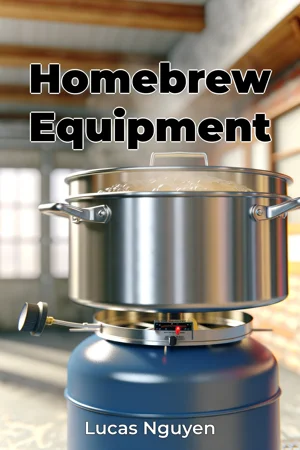
Ready to transform your kitchen into a craft brewery? "Homebrew Equipment" is your comprehensive guide to selecting, using, and maintaining the essential tools required to create quality beer in the comfort of your own home. This book dives deep into the heart of homebrewing, focusing not just on the "what" but also the "why" behind each piece of equipment. We begin by exploring the core components of any home brewery: the fermenter, the kettle, and the bottling or kegging system. Understanding the nuances of each—from the material composition of a fermenter (glass, plastic, or stainless steel) to the optimal size of your brew kettle—is critical to consistent and successful brewing. Each chapter outlines the advantages and disadvantages of different options, empowering you to make informed decisions based on your budget, space, and brewing style. The book argues that the key to great homebrew lies not just in following a recipe, but in mastering the fundamentals of temperature control and sanitation. Temperature control is paramount throughout the fermentation process, influencing everything from flavor profile to alcohol content. We delve into various methods, from simple ice baths to sophisticated digital control systems, and explain how to match the right technology to your specific brewing needs. Similarly, stringent sanitation practices are non-negotiable, and a detailed understanding of the proper cleaning and sanitizing agents, along with their application, is thoroughly explored. Following the initial overview, "Homebrew Equipment" is structured in three major parts. The first part covers the 'Wet Side,' focusing on the equipment involved in the boil and wort production (kettles, mash tuns, immersion chillers). The second part delves into fermentation vessels (carboys, buckets, conical fermenters) and the critical aspects of temperature regulation and monitoring. The final section addresses packaging, comparing bottling and kegging systems, and providing practical guidance on carbonation techniques and equipment maintenance. We also cover specific equipment needs for different brewing styles from ales to lagers. The information presented is grounded in brewing science, with references to established brewing texts and industry best practices. Data from comparative equipment reviews, user surveys, and experimental brewing logs are used to support claims and provide real-world examples. We draw connections to chemistry (understanding the reactions during fermentation), engineering (fluid dynamics in brewing systems), and even microbiology (the role of yeast and potential contaminants). "Homebrew Equipment" distinguishes itself through its practical focus and accessible tone. While providing necessary technical details, the book avoids overwhelming jargon and employs clear, concise language suitable for both beginners and experienced brewers looking to upgrade their equipment. Step-by-step instructions, detailed illustrations, and troubleshooting tips are included throughout. This book is specifically targeted at homebrewers of all skill levels, from those just starting out to seasoned veterans looking to refine their processes or upgrade their equipment. It caters to individuals who value quality and consistency in their beer and are willing to invest in the right tools to achieve their brewing goals. The scope of the book is intentionally limited to equipment-related aspects of homebrewing. While recipes and brewing techniques are mentioned, the primary focus remains on the selection, operation, and maintenance of brewing equipment. This targeted approach allows for a deep dive into the subject matter, providing a level of detail not found in more general homebrewing guides. This is also an exploration of ways to creatively use or modify existing equipment to get the most for your money. The information provided can be directly applied by readers to improve their brewing practices, troubleshoot equipment issues, and make informed purchasing decisions. By understanding the impact of different equipment choices on the final product, homebrewers can fine-tune their setups to create the beers they envision. "Homebrew Equipment" serves as an important step in taking the leap into the brewing world!
Ready to transform your kitchen into a craft brewery? "Homebrew Equipment" is your comprehensive guide to selecting, using, and maintaining the essential tools required to create quality beer in the comfort of your own home. This book dives deep into the heart of homebrewing, focusing not just on the "what" but also the "why" behind each piece of equipment. We begin by exploring the core components of any home brewery: the fermenter, the kettle, and the bottling or kegging system. Understanding the nuances of each—from the material composition of a fermenter (glass, plastic, or stainless steel) to the optimal size of your brew kettle—is critical to consistent and successful brewing. Each chapter outlines the advantages and disadvantages of different options, empowering you to make informed decisions based on your budget, space, and brewing style. The book argues that the key to great homebrew lies not just in following a recipe, but in mastering the fundamentals of temperature control and sanitation. Temperature control is paramount throughout the fermentation process, influencing everything from flavor profile to alcohol content. We delve into various methods, from simple ice baths to sophisticated digital control systems, and explain how to match the right technology to your specific brewing needs. Similarly, stringent sanitation practices are non-negotiable, and a detailed understanding of the proper cleaning and sanitizing agents, along with their application, is thoroughly explored. Following the initial overview, "Homebrew Equipment" is structured in three major parts. The first part covers the 'Wet Side,' focusing on the equipment involved in the boil and wort production (kettles, mash tuns, immersion chillers). The second part delves into fermentation vessels (carboys, buckets, conical fermenters) and the critical aspects of temperature regulation and monitoring. The final section addresses packaging, comparing bottling and kegging systems, and providing practical guidance on carbonation techniques and equipment maintenance. We also cover specific equipment needs for different brewing styles from ales to lagers. The information presented is grounded in brewing science, with references to established brewing texts and industry best practices. Data from comparative equipment reviews, user surveys, and experimental brewing logs are used to support claims and provide real-world examples. We draw connections to chemistry (understanding the reactions during fermentation), engineering (fluid dynamics in brewing systems), and even microbiology (the role of yeast and potential contaminants). "Homebrew Equipment" distinguishes itself through its practical focus and accessible tone. While providing necessary technical details, the book avoids overwhelming jargon and employs clear, concise language suitable for both beginners and experienced brewers looking to upgrade their equipment. Step-by-step instructions, detailed illustrations, and troubleshooting tips are included throughout. This book is specifically targeted at homebrewers of all skill levels, from those just starting out to seasoned veterans looking to refine their processes or upgrade their equipment. It caters to individuals who value quality and consistency in their beer and are willing to invest in the right tools to achieve their brewing goals. The scope of the book is intentionally limited to equipment-related aspects of homebrewing. While recipes and brewing techniques are mentioned, the primary focus remains on the selection, operation, and maintenance of brewing equipment. This targeted approach allows for a deep dive into the subject matter, providing a level of detail not found in more general homebrewing guides. This is also an exploration of ways to creatively use or modify existing equipment to get the most for your money. The information provided can be directly applied by readers to improve their brewing practices, troubleshoot equipment issues, and make informed purchasing decisions. By understanding the impact of different equipment choices on the final product, homebrewers can fine-tune their setups to create the beers they envision. "Homebrew Equipment" serves as an important step in taking the leap into the brewing world!
"Homebrew Equipment" is a comprehensive guide designed to help both beginner and experienced brewers select, use, and maintain the essential tools for crafting quality beer at home. It emphasizes the importance of understanding *why* certain equipment is used, not just *what* to use. The book highlights the core components, such as fermenters, kettles, and bottling/kegging systems, and emphasizes the critical role of temperature control and sanitation in achieving consistent, high-quality results. Did you know that temperature control influences not only the flavor but also the alcohol content of your brew? The book also stresses that stringent sanitation practices are non-negotiable for successful brewing. The book is structured into three parts: the 'Wet Side' focusing on wort production, the fermentation process including temperature regulation, and finally, packaging with bottling and kegging. It provides practical advice grounded in brewing science, referencing industry best practices, comparative equipment reviews, and experimental brewing logs. Readers will find step-by-step instructions, detailed illustrations, and troubleshooting tips, making it an invaluable resource for anyone looking to improve their home brewery setup and master the fundamentals of homebrewing.
Book Details
ISBN
9788233989286
Publisher
Publifye AS
Your Licenses
You don't own any licenses for this book
Purchase a license below to unlock this book and download the EPUB.
Purchase License
Select a tier to unlock this book
Need bulk licensing?
Contact us for enterprise agreements.