
About This Book
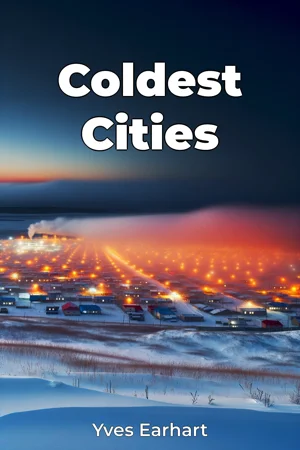
Ever wondered how life persists in places where temperatures plummet far below freezing for months on end? This book, "Coldest Cities," delves into the remarkable resilience of communities inhabiting the planet's most frigid urban environments, exploring not just the challenges they face, but also the innovative strategies they've developed to thrive. We will investigate the complex interplay of geography, climate science, and human adaptation in shaping life in these extreme locales, examining why these cities exist and how their residents cope with conditions that would be considered unlivable elsewhere. The book's central argument posits that survival in these environments is not merely a matter of enduring hardship, but a testament to human ingenuity and the power of community. It illustrates how cultural practices, architectural innovations, and economic structures work together to transform forbidding landscapes into habitable homes. This argument is crucial because it challenges prevailing notions of human comfort and adaptability, offering valuable insights into how societies can respond to environmental challenges in an era of global climate change. "Coldest Cities" is structured to provide a comprehensive understanding of these unique urban centers. Initially, we will introduce the concept of extreme cold and its physiological effects on the human body, setting a scientific baseline for understanding the challenges residents face daily. Subsequent sections will explore specific cities, such as Yakutsk and Norilsk in Russia, and Yellowknife in Canada, each representing a distinct case study in adaptation. We will analyze their geographical context, focusing on factors like permafrost, latitude, and access to resources. These case studies will delve into the historical development of these settlements, examining how resource extraction, strategic geopolitical considerations, or unique cultural factors contributed to their establishment and growth. Then, we will explore how residents combat the cold through specialized clothing, heating systems, and urban planning strategies designed to minimize exposure to the elements and maximize energy efficiency. Finally, the book will examine the broader implications of these adaptations, exploring how lessons learned from these cities can inform strategies for sustainable living in other challenging environments, including those affected by climate change. The research presented will draw upon a combination of climatological data, historical records, sociological studies, and first-hand accounts from residents of these cities. We will analyze temperature trends, energy consumption patterns, and public health statistics to quantify the impact of cold on various aspects of life. The book also incorporates insights from fields such as architecture, urban planning, and engineering, examining how these disciplines have contributed to creating habitable environments in extreme conditions. "Coldest Cities" also builds connections to broader areas of study. It resonates with discussions within environmental science, particularly regarding climate adaptation and sustainability. It also connects to urban planning by examining how communities adapt infrastructure to withstand the impact of prolonged exposure to extreme temperatures. Moreover, the book touches upon anthropology and sociology by investigating how cold shapes community dynamics, cultural practices, and the overall human experience. The tone of "Coldest Cities" is factual and informative, presented in a manner that is accessible to a broad audience. The writing style balances scientific accuracy with engaging storytelling, bringing the experiences of residents to life and making complex concepts understandable. The intended audience is anyone interested in geography, climate science, human resilience, or travel to unusual destinations. The book would be valuable to students, researchers, policymakers, and general readers seeking a deeper understanding of how humans adapt to and thrive in the planet’s most challenging environments. It fills a gap in the literature by focusing specifically on urban centers in extremely cold regions. Given its focus, this book observes the conventions of fact-based non-fiction, offering verifiable data, credible sources, and logical arguments to support its conclusions. The scope of the book is limited to a selected number of cities across the globe that experience extreme, prolonged cold. It does not delve into every cold region worldwide, focusing instead on providing in-depth case studies that illustrate key themes and adaptation strategies. The information presented is designed to have real-world applications, informing strategies for sustainable living. The book also provides examples of how cold-climate technologies and urban planning strategies might be applied in other contexts impacted by climate change. By exploring the lived realities of those in the world's coldest cities, this book offers not only geographic and scientific insight, but also a testament to the remarkable human capacity for adaptation and innovation.
Ever wondered how life persists in places where temperatures plummet far below freezing for months on end? This book, "Coldest Cities," delves into the remarkable resilience of communities inhabiting the planet's most frigid urban environments, exploring not just the challenges they face, but also the innovative strategies they've developed to thrive. We will investigate the complex interplay of geography, climate science, and human adaptation in shaping life in these extreme locales, examining why these cities exist and how their residents cope with conditions that would be considered unlivable elsewhere. The book's central argument posits that survival in these environments is not merely a matter of enduring hardship, but a testament to human ingenuity and the power of community. It illustrates how cultural practices, architectural innovations, and economic structures work together to transform forbidding landscapes into habitable homes. This argument is crucial because it challenges prevailing notions of human comfort and adaptability, offering valuable insights into how societies can respond to environmental challenges in an era of global climate change. "Coldest Cities" is structured to provide a comprehensive understanding of these unique urban centers. Initially, we will introduce the concept of extreme cold and its physiological effects on the human body, setting a scientific baseline for understanding the challenges residents face daily. Subsequent sections will explore specific cities, such as Yakutsk and Norilsk in Russia, and Yellowknife in Canada, each representing a distinct case study in adaptation. We will analyze their geographical context, focusing on factors like permafrost, latitude, and access to resources. These case studies will delve into the historical development of these settlements, examining how resource extraction, strategic geopolitical considerations, or unique cultural factors contributed to their establishment and growth. Then, we will explore how residents combat the cold through specialized clothing, heating systems, and urban planning strategies designed to minimize exposure to the elements and maximize energy efficiency. Finally, the book will examine the broader implications of these adaptations, exploring how lessons learned from these cities can inform strategies for sustainable living in other challenging environments, including those affected by climate change. The research presented will draw upon a combination of climatological data, historical records, sociological studies, and first-hand accounts from residents of these cities. We will analyze temperature trends, energy consumption patterns, and public health statistics to quantify the impact of cold on various aspects of life. The book also incorporates insights from fields such as architecture, urban planning, and engineering, examining how these disciplines have contributed to creating habitable environments in extreme conditions. "Coldest Cities" also builds connections to broader areas of study. It resonates with discussions within environmental science, particularly regarding climate adaptation and sustainability. It also connects to urban planning by examining how communities adapt infrastructure to withstand the impact of prolonged exposure to extreme temperatures. Moreover, the book touches upon anthropology and sociology by investigating how cold shapes community dynamics, cultural practices, and the overall human experience. The tone of "Coldest Cities" is factual and informative, presented in a manner that is accessible to a broad audience. The writing style balances scientific accuracy with engaging storytelling, bringing the experiences of residents to life and making complex concepts understandable. The intended audience is anyone interested in geography, climate science, human resilience, or travel to unusual destinations. The book would be valuable to students, researchers, policymakers, and general readers seeking a deeper understanding of how humans adapt to and thrive in the planet’s most challenging environments. It fills a gap in the literature by focusing specifically on urban centers in extremely cold regions. Given its focus, this book observes the conventions of fact-based non-fiction, offering verifiable data, credible sources, and logical arguments to support its conclusions. The scope of the book is limited to a selected number of cities across the globe that experience extreme, prolonged cold. It does not delve into every cold region worldwide, focusing instead on providing in-depth case studies that illustrate key themes and adaptation strategies. The information presented is designed to have real-world applications, informing strategies for sustainable living. The book also provides examples of how cold-climate technologies and urban planning strategies might be applied in other contexts impacted by climate change. By exploring the lived realities of those in the world's coldest cities, this book offers not only geographic and scientific insight, but also a testament to the remarkable human capacity for adaptation and innovation.
"Coldest Cities" explores how people thrive in the world's most frigid urban environments. It delves into the geography of extreme cold, highlighting the remarkable human resilience found in places like Yakutsk and Norilsk, where temperatures plummet far below freezing for extended periods. The book examines the innovative strategies these communities have developed, from unique architectural designs to cultural practices, that enable survival and a surprising quality of life despite the harsh climate. The book argues that living in extreme cold is a testament to human ingenuity. For instance, some cities have developed heating systems that utilize geothermal energy. The study begins by establishing a scientific baseline, discussing the physiological impacts of extreme cold on the human body. It then progresses through case studies of specific cities, analyzing their geographical context, historical development, and the unique adaptations of their residents. "Coldest Cities" connects these localized experiences to broader themes, such as climate change and sustainable living, illustrating how lessons from these extreme environments can inform adaptation strategies worldwide. By using a combination of climatological data, historical records, and first-hand accounts, the book offers a comprehensive and accessible understanding of life in the planet's most challenging urban settings.
Book Details
ISBN
9788233989101
Publisher
Publifye AS
Your Licenses
You don't own any licenses for this book
Purchase a license below to unlock this book and download the EPUB.
Purchase License
Select a tier to unlock this book
Need bulk licensing?
Contact us for enterprise agreements.