
About This Book
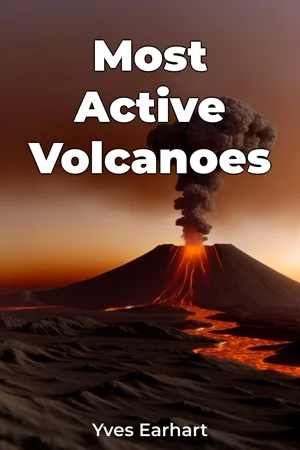
What forces of nature are powerful enough to reshape continents and influence climate on a global scale? The answer lies within the Earth itself, specifically in its most active volcanoes. This book, *Most Active Volcanoes*, delves into the dynamic world of these geological phenomena, examining their frequent eruptions and significant impact on local communities and the broader planetary system. This exploration focuses on three key topics: the geological processes that drive volcanic activity, the diverse range of eruption styles and their associated hazards, and the complex interplay between volcanoes and the environment, including their role in shaping landscapes and influencing atmospheric conditions. Understanding these topics is crucial because volcanoes are not merely destructive forces; they are also integral to the Earth's cycles, contributing to the formation of new land, the release of essential gases, and the regulation of global temperatures over geological timescales. Throughout history, volcanic eruptions have profoundly shaped human civilization, influencing settlement patterns, agricultural practices, and even cultural beliefs. The book will provide historical context on significant eruptions, highlighting the evolving scientific understanding of volcanic phenomena from ancient observations to modern monitoring techniques. No specialized knowledge is required to understand the book, as each concept is carefully illustrated and explained. The central argument of *Most Active Volcanoes* is that a comprehensive understanding of volcanic processes is essential for mitigating risks, developing effective disaster preparedness strategies, and appreciating the Earth's dynamic nature. This understanding is particularly relevant in an era of increasing urbanization near volcanic regions and growing awareness of the interconnectedness between geological events and global climate. The book is structured to provide a clear and progressive understanding of volcanoes. First, the book introduces the internal structure of the Earth. Then, it explains the plate tectonic theory and how it relates to volcanism at plate boundaries, hotspots, and other volcanic settings. The book covers the different types of volcanoes, such as stratovolcanoes, shield volcanoes, and cinder cones, detailing their formation processes and characteristic eruption styles. This includes chapters on eruption forecasting and risk assessment, focusing on how scientists monitor volcanic activity and develop models to predict future eruptions and mitigate their impact. The book culminates in a discussion of the long-term environmental and societal implications of volcanic activity, exploring topics such as volcanic contributions to soil fertility, geothermal energy production, and the potential for volcanic eruptions to trigger climate change. The evidence presented in this book is drawn from a variety of sources, including geological surveys, remote sensing data, geochemical analyses of volcanic rocks and gases, and case studies of specific eruptions around the world. It incorporates data from volcano observatories worldwide, as well as insights from recent research published in peer-reviewed scientific journals. *Most Active Volcanoes* also connects to several other fields of study, including climatology by exploring the impact of volcanic aerosols on global temperatures; environmental science through the analysis of volcanic gas emissions and their effects on air quality; and sociology by examining the impact of volcanic disasters on communities and their responses to these events. This book stands out due to its interdisciplinary approach and its emphasis on the practical applications of volcanic research. It presents complex geological concepts in an accessible manner, making it suitable for a broad audience. The tone is informative and factual, aiming to educate readers about the science behind volcanoes and their significance in the Earth system. The target audience includes students of earth science, geography, and environmental science, as well as general readers interested in learning more about natural disasters and the Earth's geological processes. The book will appeal to those seeking a comprehensive overview of volcanoes and their impact on the world. As a work of non-fiction, the book adheres to the conventions of accuracy, objectivity, and evidence-based reporting. The scope of *Most Active Volcanoes* is global, covering a range of volcanic regions around the world. While the book aims to provide a comprehensive overview of the topic, it does not delve into highly specialized areas of volcanology, such as advanced mathematical modeling of magma flow. The information in this book can be applied to everyday life by increasing awareness of volcanic hazards, informing decisions about land use planning in volcanic regions, and promoting responsible environmental stewardship. It also provides a basis for evaluating the ongoing debates surrounding eruption forecasting and the effectiveness of different mitigation strategies.
What forces of nature are powerful enough to reshape continents and influence climate on a global scale? The answer lies within the Earth itself, specifically in its most active volcanoes. This book, *Most Active Volcanoes*, delves into the dynamic world of these geological phenomena, examining their frequent eruptions and significant impact on local communities and the broader planetary system. This exploration focuses on three key topics: the geological processes that drive volcanic activity, the diverse range of eruption styles and their associated hazards, and the complex interplay between volcanoes and the environment, including their role in shaping landscapes and influencing atmospheric conditions. Understanding these topics is crucial because volcanoes are not merely destructive forces; they are also integral to the Earth's cycles, contributing to the formation of new land, the release of essential gases, and the regulation of global temperatures over geological timescales. Throughout history, volcanic eruptions have profoundly shaped human civilization, influencing settlement patterns, agricultural practices, and even cultural beliefs. The book will provide historical context on significant eruptions, highlighting the evolving scientific understanding of volcanic phenomena from ancient observations to modern monitoring techniques. No specialized knowledge is required to understand the book, as each concept is carefully illustrated and explained. The central argument of *Most Active Volcanoes* is that a comprehensive understanding of volcanic processes is essential for mitigating risks, developing effective disaster preparedness strategies, and appreciating the Earth's dynamic nature. This understanding is particularly relevant in an era of increasing urbanization near volcanic regions and growing awareness of the interconnectedness between geological events and global climate. The book is structured to provide a clear and progressive understanding of volcanoes. First, the book introduces the internal structure of the Earth. Then, it explains the plate tectonic theory and how it relates to volcanism at plate boundaries, hotspots, and other volcanic settings. The book covers the different types of volcanoes, such as stratovolcanoes, shield volcanoes, and cinder cones, detailing their formation processes and characteristic eruption styles. This includes chapters on eruption forecasting and risk assessment, focusing on how scientists monitor volcanic activity and develop models to predict future eruptions and mitigate their impact. The book culminates in a discussion of the long-term environmental and societal implications of volcanic activity, exploring topics such as volcanic contributions to soil fertility, geothermal energy production, and the potential for volcanic eruptions to trigger climate change. The evidence presented in this book is drawn from a variety of sources, including geological surveys, remote sensing data, geochemical analyses of volcanic rocks and gases, and case studies of specific eruptions around the world. It incorporates data from volcano observatories worldwide, as well as insights from recent research published in peer-reviewed scientific journals. *Most Active Volcanoes* also connects to several other fields of study, including climatology by exploring the impact of volcanic aerosols on global temperatures; environmental science through the analysis of volcanic gas emissions and their effects on air quality; and sociology by examining the impact of volcanic disasters on communities and their responses to these events. This book stands out due to its interdisciplinary approach and its emphasis on the practical applications of volcanic research. It presents complex geological concepts in an accessible manner, making it suitable for a broad audience. The tone is informative and factual, aiming to educate readers about the science behind volcanoes and their significance in the Earth system. The target audience includes students of earth science, geography, and environmental science, as well as general readers interested in learning more about natural disasters and the Earth's geological processes. The book will appeal to those seeking a comprehensive overview of volcanoes and their impact on the world. As a work of non-fiction, the book adheres to the conventions of accuracy, objectivity, and evidence-based reporting. The scope of *Most Active Volcanoes* is global, covering a range of volcanic regions around the world. While the book aims to provide a comprehensive overview of the topic, it does not delve into highly specialized areas of volcanology, such as advanced mathematical modeling of magma flow. The information in this book can be applied to everyday life by increasing awareness of volcanic hazards, informing decisions about land use planning in volcanic regions, and promoting responsible environmental stewardship. It also provides a basis for evaluating the ongoing debates surrounding eruption forecasting and the effectiveness of different mitigation strategies.
"Most Active Volcanoes" explores the powerful geological forces that shape our planet and influence climate through frequent volcanic eruptions. Emphasizing Earth's dynamic nature, the book examines the geological processes driving volcanic activity, the diverse eruption styles and associated hazards, and the complex interplay between volcanoes and the environment. Intriguingly, volcanoes, while destructive, contribute to new land formation and regulate global temperatures over vast timescales. The book progresses from introducing Earth's internal structure and plate tectonics to detailing various volcano types and eruption styles. It also covers eruption forecasting and risk assessment, highlighting modern monitoring techniques. Case studies of significant eruptions provide historical context, underscoring the evolving scientific understanding of these phenomena. This book is uniquely valuable through its interdisciplinary approach, connecting Earth science with climatology, environmental science, and sociology.
Book Details
ISBN
9788233989033
Publisher
Publifye AS
Your Licenses
You don't own any licenses for this book
Purchase a license below to unlock this book and download the EPUB.
Purchase License
Select a tier to unlock this book
Need bulk licensing?
Contact us for enterprise agreements.