
About This Book
What if the secrets to surviving millennia were rooted in the silent wisdom of trees? "Oldest Trees" delves into the remarkable lives of Earth's most ancient trees, exploring their profound historical significance and the ecological strategies that have allowed them to endure for thousands of years. This journey through time, guided by arboreal elders, reveals not only their individual stories but also the invaluable lessons they hold for understanding our planet's past, present, and future. This book examines three central themes: the biological adaptations enabling extreme longevity in trees, the historical witness they provide as living monuments, and the urgent conservation challenges they face in a rapidly changing world. These topics are vital because they offer unique insights into resilience, environmental history, and the interconnectedness of ecosystems. Understanding these ancient sentinels is crucial as we grapple with climate change and biodiversity loss. To fully appreciate the narrative, a basic understanding of dendrology, the scientific study of trees, and ecological principles will be beneficial, but not strictly required. Historical context regarding major climate shifts, human impact on landscapes, and conservation movements will also enrich the reader's experience. "Oldest Trees" argues that these trees are more than just biological curiosities; they are living archives of Earth's history, reflecting climatic changes, geological events, and human interactions over vast timescales. By studying them, we gain critical perspectives on long-term environmental trends and the potential for adaptation in the face of adversity. This argument is significant because it challenges our short-term thinking and encourages a deeper appreciation for the long-term consequences of our actions. The book begins by introducing the concept of "old growth" and defining the criteria for classifying a tree as ancient. It then proceeds through the following major sections: a) Unveiling the biological mechanisms – genetic stability, disease resistance, compartmentalization – that contribute to exceptional lifespan. b) Exploring the historical narratives embedded within tree rings, revealing past climates, natural disasters, and human activities. Case studies will focus on specific species and locations, such as the bristlecone pines of the White Mountains, the ancient cedars of Lebanon, and the giant sequoias of California. c) Examining the threats facing these ancient trees, including climate change, deforestation, and disease, and outlining conservation strategies for their protection. The evidence presented will draw from dendrochronology, genetic research, historical records, and ecological studies. Primary data sources include tree-ring chronologies, genomic analyses of ancient trees, and firsthand accounts from researchers and conservationists. The book intersects with various fields, including climate science, history, and conservation biology. Climate scientists utilize tree-ring data to reconstruct past climate variations. Historians glean insights into past human societies and environmental impacts from these arboreal records. Conservation biologists apply knowledge of ancient tree ecology to develop effective preservation strategies. This book adopts a narrative non-fiction approach, blending scientific rigor with engaging storytelling. The writing style aims to be accessible to a broad audience while maintaining accuracy and depth. The target audience includes nature enthusiasts, history buffs, environmental scientists, and anyone interested in learning about the natural world. It offers value by providing a comprehensive overview of ancient trees, their ecological significance, and the challenges they face. As a work of narrative non-fiction, "Oldest Trees" strives to be both informative and engaging, weaving together scientific findings, historical accounts, and personal anecdotes to create a compelling and thought-provoking reading experience. The book's scope is global, encompassing a diverse range of ancient tree species and their habitats. However, it focuses primarily on trees with documented lifespans exceeding 1,000 years, acknowledging that there may be older, undiscovered specimens. The insights gleaned from studying these trees can be applied to conservation efforts worldwide, informing strategies for sustainable forest management, climate change mitigation, and biodiversity preservation. While the scientific community largely agrees on the methodology of dendrochronology, debates exist regarding the interpretation of tree-ring data and the relative importance of various environmental factors influencing tree growth. The book will address these debates fairly and objectively, presenting different perspectives and highlighting areas of ongoing research.
What if the secrets to surviving millennia were rooted in the silent wisdom of trees? "Oldest Trees" delves into the remarkable lives of Earth's most ancient trees, exploring their profound historical significance and the ecological strategies that have allowed them to endure for thousands of years. This journey through time, guided by arboreal elders, reveals not only their individual stories but also the invaluable lessons they hold for understanding our planet's past, present, and future. This book examines three central themes: the biological adaptations enabling extreme longevity in trees, the historical witness they provide as living monuments, and the urgent conservation challenges they face in a rapidly changing world. These topics are vital because they offer unique insights into resilience, environmental history, and the interconnectedness of ecosystems. Understanding these ancient sentinels is crucial as we grapple with climate change and biodiversity loss. To fully appreciate the narrative, a basic understanding of dendrology, the scientific study of trees, and ecological principles will be beneficial, but not strictly required. Historical context regarding major climate shifts, human impact on landscapes, and conservation movements will also enrich the reader's experience. "Oldest Trees" argues that these trees are more than just biological curiosities; they are living archives of Earth's history, reflecting climatic changes, geological events, and human interactions over vast timescales. By studying them, we gain critical perspectives on long-term environmental trends and the potential for adaptation in the face of adversity. This argument is significant because it challenges our short-term thinking and encourages a deeper appreciation for the long-term consequences of our actions. The book begins by introducing the concept of "old growth" and defining the criteria for classifying a tree as ancient. It then proceeds through the following major sections: a) Unveiling the biological mechanisms – genetic stability, disease resistance, compartmentalization – that contribute to exceptional lifespan. b) Exploring the historical narratives embedded within tree rings, revealing past climates, natural disasters, and human activities. Case studies will focus on specific species and locations, such as the bristlecone pines of the White Mountains, the ancient cedars of Lebanon, and the giant sequoias of California. c) Examining the threats facing these ancient trees, including climate change, deforestation, and disease, and outlining conservation strategies for their protection. The evidence presented will draw from dendrochronology, genetic research, historical records, and ecological studies. Primary data sources include tree-ring chronologies, genomic analyses of ancient trees, and firsthand accounts from researchers and conservationists. The book intersects with various fields, including climate science, history, and conservation biology. Climate scientists utilize tree-ring data to reconstruct past climate variations. Historians glean insights into past human societies and environmental impacts from these arboreal records. Conservation biologists apply knowledge of ancient tree ecology to develop effective preservation strategies. This book adopts a narrative non-fiction approach, blending scientific rigor with engaging storytelling. The writing style aims to be accessible to a broad audience while maintaining accuracy and depth. The target audience includes nature enthusiasts, history buffs, environmental scientists, and anyone interested in learning about the natural world. It offers value by providing a comprehensive overview of ancient trees, their ecological significance, and the challenges they face. As a work of narrative non-fiction, "Oldest Trees" strives to be both informative and engaging, weaving together scientific findings, historical accounts, and personal anecdotes to create a compelling and thought-provoking reading experience. The book's scope is global, encompassing a diverse range of ancient tree species and their habitats. However, it focuses primarily on trees with documented lifespans exceeding 1,000 years, acknowledging that there may be older, undiscovered specimens. The insights gleaned from studying these trees can be applied to conservation efforts worldwide, informing strategies for sustainable forest management, climate change mitigation, and biodiversity preservation. While the scientific community largely agrees on the methodology of dendrochronology, debates exist regarding the interpretation of tree-ring data and the relative importance of various environmental factors influencing tree growth. The book will address these debates fairly and objectively, presenting different perspectives and highlighting areas of ongoing research.
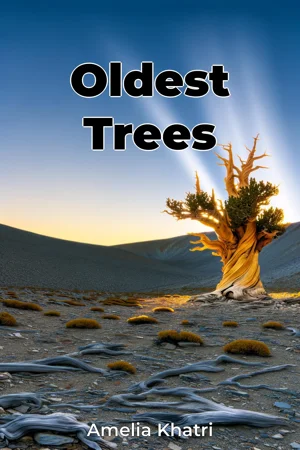
"Oldest Trees" explores the lives of the world's most ancient trees, revealing their historical significance and ecological adaptations that enable them to survive for millennia. These arboreal elders serve as living monuments, holding invaluable lessons about our planet's past, present, and future. One intriguing fact uncovered is how trees' genetic stability contributes to their exceptional lifespan, allowing them to endure environmental challenges over centuries. Additionally, the book highlights how tree rings provide a detailed historical narrative, revealing past climates and human activities. The book takes a narrative non-fiction approach, blending scientific rigor with engaging storytelling. It examines the biological mechanisms that facilitate tree longevity, the historical narratives embedded within tree rings, and the conservation challenges these ancient trees face. Beginning with an introduction to "old-growth" forests, the book progresses to unveil the secrets of tree longevity, explores historical insights from tree rings in locations like the White Mountains and Lebanon, and examines modern threats to these ancient organisms. Studying these trees offers critical perspectives on long-term environmental trends and the potential for adaptation, making this book a valuable resource for nature enthusiasts and those concerned with conservation.
Book Details
ISBN
9788233989026
Publisher
Publifye AS
Your Licenses
You don't own any licenses for this book
Purchase a license below to unlock this book and download the EPUB.
Purchase License
Select a tier to unlock this book
Need bulk licensing?
Contact us for enterprise agreements.