
About This Book
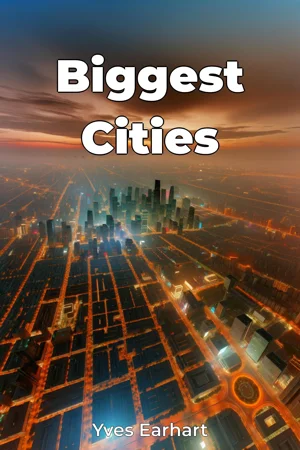
What will our world look like when vast urban centers, already teeming with millions, swell to unprecedented sizes? "Biggest Cities" delves into the phenomenon of megacities, exploring the world's largest urban areas by both population and geographical expanse, examining their dramatic and often challenging growth trajectories, and analyzing the multifaceted aspects of rapid urbanization. This book is important because understanding the dynamics of megacities is crucial for addressing global challenges related to sustainability, resource management, and social equity. This book begins by establishing a historical context, tracing the evolution of cities from ancient settlements to the sprawling metropolises of the 21st century. It examines the factors that have contributed to urban growth, including industrialization, technological advancements, and migration patterns. A foundational understanding of demographic trends and economic forces is provided, equipping the reader to analyze the complexities of modern urbanization. The core argument of "Biggest Cities" is that while urbanization offers significant opportunities for economic development and cultural exchange, the unmanaged growth of megacities poses substantial risks to environmental sustainability, social cohesion, and overall quality of life. The book presents a comprehensive analysis of these risks, supported by empirical data and case studies. The book is structured as follows: a) It begins by defining key concepts such as "megacity," "urban sprawl," and "urban density," providing a clear framework for understanding the subsequent analysis. b) The book explores the demographic and spatial characteristics of the world’s largest cities. Specific cases are examined, like Tokyo, Delhi, Shanghai, Sao Paulo and others, to show specific issues tied to size and scale. The book also addresses the challenges of infrastructure development, resource management, and inequality that accompany rapid urbanization. c) The argument culminates in a discussion of potential solutions and strategies for promoting sustainable urban development. d) The book concludes by exploring the implications of megacity growth for global governance, international relations, and the future of humanity. The evidence presented in "Biggest Cities" is drawn from a variety of sources, including census data, satellite imagery, economic indicators, and sociological studies. Original research is incorporated, drawing on urban planning case studies. The book also draws connections between earth sciences, geography, world history, and urban planning. The environmental impact of megacities is examined through the lens of earth sciences, while geographical analysis provides insights into spatial patterns and regional disparities. Historical perspectives shed light on the long-term consequences of urbanization, and urban planning principles offer practical solutions for addressing contemporary challenges. "Biggest Cities" distinguishes itself through its integrated approach to understanding the multifaceted challenges of megacity growth. Rather than focusing solely on economic or environmental aspects, the book adopts a holistic perspective that considers the social, political, and cultural dimensions of urbanization. It uses a fact-based methodology that offers data-driven insights into the complex forces shaping our urban future. The tone of the book is professional and informative, providing a balanced assessment of the opportunities and challenges associated with megacity growth. The writing style is accessible to a broad audience, avoiding technical jargon while maintaining intellectual rigor. This book is intended for students, researchers, policymakers, and anyone interested in understanding the forces shaping our urban future. It provides valuable insights for urban planners, environmental scientists, and social scientists, offering a comprehensive overview of the challenges and opportunities associated with megacity growth. Within the genres of History World, Earth Sciences Geography, and World History, this book adheres to the standards of factual accuracy and objective analysis. It presents a balanced perspective on the complex issues surrounding megacity growth, avoiding biased or unsubstantiated claims. The scope of "Biggest Cities" is global, covering megacities in both developed and developing countries. However, the book acknowledges that due to data constraints, some regions may be underrepresented in the analysis. The book also intentionally excludes smaller cities with regional concentrations of population to focus on scale. The insights presented can be applied to various real-world contexts, including urban planning, environmental management, and social policy. The book offers practical guidance for policymakers and urban planners seeking to promote sustainable and equitable urban development. Finally, the book addresses ongoing debates surrounding the role of urbanization in promoting economic growth and reducing poverty, presenting a nuanced perspective on the complex relationship between urbanization and development.
What will our world look like when vast urban centers, already teeming with millions, swell to unprecedented sizes? "Biggest Cities" delves into the phenomenon of megacities, exploring the world's largest urban areas by both population and geographical expanse, examining their dramatic and often challenging growth trajectories, and analyzing the multifaceted aspects of rapid urbanization. This book is important because understanding the dynamics of megacities is crucial for addressing global challenges related to sustainability, resource management, and social equity. This book begins by establishing a historical context, tracing the evolution of cities from ancient settlements to the sprawling metropolises of the 21st century. It examines the factors that have contributed to urban growth, including industrialization, technological advancements, and migration patterns. A foundational understanding of demographic trends and economic forces is provided, equipping the reader to analyze the complexities of modern urbanization. The core argument of "Biggest Cities" is that while urbanization offers significant opportunities for economic development and cultural exchange, the unmanaged growth of megacities poses substantial risks to environmental sustainability, social cohesion, and overall quality of life. The book presents a comprehensive analysis of these risks, supported by empirical data and case studies. The book is structured as follows: a) It begins by defining key concepts such as "megacity," "urban sprawl," and "urban density," providing a clear framework for understanding the subsequent analysis. b) The book explores the demographic and spatial characteristics of the world’s largest cities. Specific cases are examined, like Tokyo, Delhi, Shanghai, Sao Paulo and others, to show specific issues tied to size and scale. The book also addresses the challenges of infrastructure development, resource management, and inequality that accompany rapid urbanization. c) The argument culminates in a discussion of potential solutions and strategies for promoting sustainable urban development. d) The book concludes by exploring the implications of megacity growth for global governance, international relations, and the future of humanity. The evidence presented in "Biggest Cities" is drawn from a variety of sources, including census data, satellite imagery, economic indicators, and sociological studies. Original research is incorporated, drawing on urban planning case studies. The book also draws connections between earth sciences, geography, world history, and urban planning. The environmental impact of megacities is examined through the lens of earth sciences, while geographical analysis provides insights into spatial patterns and regional disparities. Historical perspectives shed light on the long-term consequences of urbanization, and urban planning principles offer practical solutions for addressing contemporary challenges. "Biggest Cities" distinguishes itself through its integrated approach to understanding the multifaceted challenges of megacity growth. Rather than focusing solely on economic or environmental aspects, the book adopts a holistic perspective that considers the social, political, and cultural dimensions of urbanization. It uses a fact-based methodology that offers data-driven insights into the complex forces shaping our urban future. The tone of the book is professional and informative, providing a balanced assessment of the opportunities and challenges associated with megacity growth. The writing style is accessible to a broad audience, avoiding technical jargon while maintaining intellectual rigor. This book is intended for students, researchers, policymakers, and anyone interested in understanding the forces shaping our urban future. It provides valuable insights for urban planners, environmental scientists, and social scientists, offering a comprehensive overview of the challenges and opportunities associated with megacity growth. Within the genres of History World, Earth Sciences Geography, and World History, this book adheres to the standards of factual accuracy and objective analysis. It presents a balanced perspective on the complex issues surrounding megacity growth, avoiding biased or unsubstantiated claims. The scope of "Biggest Cities" is global, covering megacities in both developed and developing countries. However, the book acknowledges that due to data constraints, some regions may be underrepresented in the analysis. The book also intentionally excludes smaller cities with regional concentrations of population to focus on scale. The insights presented can be applied to various real-world contexts, including urban planning, environmental management, and social policy. The book offers practical guidance for policymakers and urban planners seeking to promote sustainable and equitable urban development. Finally, the book addresses ongoing debates surrounding the role of urbanization in promoting economic growth and reducing poverty, presenting a nuanced perspective on the complex relationship between urbanization and development.
"Biggest Cities" explores the rise of megacities, massive urban areas reshaping our world. It investigates the historical context, from ancient settlements to modern metropolises, and analyzes the demographic and economic forces driving urbanization. The book unveils how factors like industrialization and migration patterns have fueled urban growth, leading to both opportunities and challenges. One intriguing fact is that while megacities can be hubs of economic development, their unmanaged expansion often strains resources and exacerbates social inequalities. The book progresses by defining key concepts, examining specific cases like Tokyo and Delhi, and then presenting potential solutions for sustainable urban development. It emphasizes an integrated approach, considering social, political, and cultural dimensions alongside economic and environmental aspects. By drawing connections between Earth Sciences, Geography, and World History, "Biggest Cities" offers a holistic perspective. For instance, the book highlights how geographical analysis reveals spatial patterns and regional disparities within megacities, while historical perspectives illuminate the long-term consequences of urbanization. This comprehensive analysis makes it a valuable resource for understanding the complex forces shaping our urban future.
Book Details
ISBN
9788233989002
Publisher
Publifye AS
Your Licenses
You don't own any licenses for this book
Purchase a license below to unlock this book and download the EPUB.
Purchase License
Select a tier to unlock this book
Need bulk licensing?
Contact us for enterprise agreements.