
About This Book
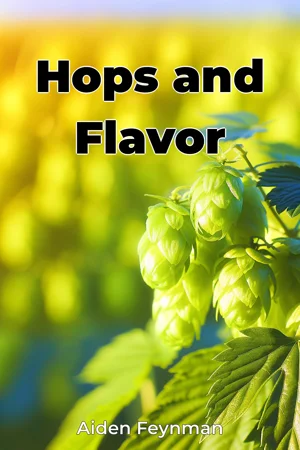
Have you ever wondered what truly distinguishes one beer from another, beyond the brewery's name and marketing claims? It's the hops, the tiny green flowers that contribute so much more than just bitterness to our favorite brews. "Hops and Flavor" delves into the intricate science and art behind hop utilization, exploring how different hop varieties impact beer's flavor, aroma, and overall character, shaping the landscape of modern craft brewing. This book addresses two fundamental areas: the chemical compounds within hops that influence beer characteristics, and the practical application of this knowledge in brewing. Understanding these elements is crucial for both homebrewers seeking to refine their recipes and beer enthusiasts wanting a deeper appreciation for the complexities of their pint. The historical context of hop cultivation and brewing traditions provides a foundation for examining modern hop breeding and its impact on beer styles. The central argument of "Hops and Flavor" is that a thorough understanding of hop chemistry and the nuances of different hop varieties empowers brewers to create more flavorful and innovative beers, while also enabling consumers to make more informed choices. This knowledge moves beyond simple bitterness ratings, providing a holistic view of how hops contribute to the sensory experience of beer. The book begins by introducing the botany and chemistry of hops, detailing the essential oils, alpha acids, and beta acids that contribute to flavor, aroma, and bitterness. We then move into the history of hop cultivation and how traditional varieties have evolved alongside brewing practices. Major sections of the book explore specific hop varieties, grouping them by flavor profiles (e.g., citrusy, floral, earthy) and providing guidance on their optimal use in different beer styles. We will investigate hopping techniques such as dry-hopping and whirlpool additions, explaining how these methods affect the final product. The culmination of the book presents real-world case studies from breweries, demonstrating how brewers successfully leverage hop knowledge to create award-winning beers. A practical guide to hop selection and recipe formulation allows readers to apply the book's principles directly. The arguments presented will be supported by scientific research, including peer-reviewed studies on hop chemistry and sensory analysis of beer. Data from hop breeding programs and brewery trials will further illustrate the effects of different hop varieties and brewing techniques. "Hops and Flavor" also connects to other fields, including agriculture (hop cultivation and breeding), chemistry (analysis of hop compounds), and sensory science (evaluating beer flavor and aroma). These interdisciplinary connections enhance the book's perspective. It will provide a unique focus on the intersection of scientific understanding and practical brewing application, offering a comprehensive guide for both brewers and beer enthusiasts. The tone of "Hops and Flavor" is informative and accessible, balancing scientific rigor with clear explanations and practical examples. The writing style avoids jargon where possible, ensuring that the book is engaging for a wide audience. The target audience includes homebrewers, professional brewers, beer aficionados, and anyone interested in the science of flavor. The book is valuable to this audience because it provides a deeper understanding of a crucial ingredient in beer, enabling them to create better beers or appreciate existing ones more fully. As a book in the 'Cooking, Science' genres, it provides both practical guidance and scientific explanations, catering to readers who appreciate both aspects. The scope of the book is limited to the role of hops in beer flavor and aroma, without delving into other brewing ingredients or processes in detail. This focused approach allows for a comprehensive exploration of hops. The information presented in "Hops and Flavor" can be applied in several ways: brewers can use it to select the right hops for their recipes, refine their brewing techniques, and create beers with specific flavor profiles. Beer enthusiasts can use it to understand and appreciate the nuances of different beers, making more informed choices and engaging in more meaningful conversations about beer. While the book is fact-based, we will acknowledge that there is ongoing discussion on the optimal methods for measuring and predicting hop utilization and flavor perception and we address conflicting perspectives.
Have you ever wondered what truly distinguishes one beer from another, beyond the brewery's name and marketing claims? It's the hops, the tiny green flowers that contribute so much more than just bitterness to our favorite brews. "Hops and Flavor" delves into the intricate science and art behind hop utilization, exploring how different hop varieties impact beer's flavor, aroma, and overall character, shaping the landscape of modern craft brewing. This book addresses two fundamental areas: the chemical compounds within hops that influence beer characteristics, and the practical application of this knowledge in brewing. Understanding these elements is crucial for both homebrewers seeking to refine their recipes and beer enthusiasts wanting a deeper appreciation for the complexities of their pint. The historical context of hop cultivation and brewing traditions provides a foundation for examining modern hop breeding and its impact on beer styles. The central argument of "Hops and Flavor" is that a thorough understanding of hop chemistry and the nuances of different hop varieties empowers brewers to create more flavorful and innovative beers, while also enabling consumers to make more informed choices. This knowledge moves beyond simple bitterness ratings, providing a holistic view of how hops contribute to the sensory experience of beer. The book begins by introducing the botany and chemistry of hops, detailing the essential oils, alpha acids, and beta acids that contribute to flavor, aroma, and bitterness. We then move into the history of hop cultivation and how traditional varieties have evolved alongside brewing practices. Major sections of the book explore specific hop varieties, grouping them by flavor profiles (e.g., citrusy, floral, earthy) and providing guidance on their optimal use in different beer styles. We will investigate hopping techniques such as dry-hopping and whirlpool additions, explaining how these methods affect the final product. The culmination of the book presents real-world case studies from breweries, demonstrating how brewers successfully leverage hop knowledge to create award-winning beers. A practical guide to hop selection and recipe formulation allows readers to apply the book's principles directly. The arguments presented will be supported by scientific research, including peer-reviewed studies on hop chemistry and sensory analysis of beer. Data from hop breeding programs and brewery trials will further illustrate the effects of different hop varieties and brewing techniques. "Hops and Flavor" also connects to other fields, including agriculture (hop cultivation and breeding), chemistry (analysis of hop compounds), and sensory science (evaluating beer flavor and aroma). These interdisciplinary connections enhance the book's perspective. It will provide a unique focus on the intersection of scientific understanding and practical brewing application, offering a comprehensive guide for both brewers and beer enthusiasts. The tone of "Hops and Flavor" is informative and accessible, balancing scientific rigor with clear explanations and practical examples. The writing style avoids jargon where possible, ensuring that the book is engaging for a wide audience. The target audience includes homebrewers, professional brewers, beer aficionados, and anyone interested in the science of flavor. The book is valuable to this audience because it provides a deeper understanding of a crucial ingredient in beer, enabling them to create better beers or appreciate existing ones more fully. As a book in the 'Cooking, Science' genres, it provides both practical guidance and scientific explanations, catering to readers who appreciate both aspects. The scope of the book is limited to the role of hops in beer flavor and aroma, without delving into other brewing ingredients or processes in detail. This focused approach allows for a comprehensive exploration of hops. The information presented in "Hops and Flavor" can be applied in several ways: brewers can use it to select the right hops for their recipes, refine their brewing techniques, and create beers with specific flavor profiles. Beer enthusiasts can use it to understand and appreciate the nuances of different beers, making more informed choices and engaging in more meaningful conversations about beer. While the book is fact-based, we will acknowledge that there is ongoing discussion on the optimal methods for measuring and predicting hop utilization and flavor perception and we address conflicting perspectives.
"Hops and Flavor" explores the profound influence of hops on beer, revealing how these small flowers shape aroma, flavor, and overall character, especially within the booming craft brewing scene. It dives into hop chemistry, explaining how compounds like alpha acids contribute bitterness, while essential oils create diverse aromas. The book highlights how understanding hop varieties empowers brewers and enhances consumers' appreciation. The book uniquely blends scientific insights with practical brewing applications. Beginning with hop botany and chemistry, it then traces the history of hop cultivation. Progressing through hop varieties categorized by flavor profiles, it culminates in case studies from breweries, showcasing successful hop utilization. It discusses hopping techniques, such as dry-hopping, and their impact, emphasizing the sensory experience. This comprehensive guide empowers brewers to refine recipes and create innovative beers, and equips beer enthusiasts to make informed choices. By connecting agriculture, chemistry, and sensory science, "Hops and Flavor" provides a holistic understanding, moving beyond simple bitterness to a full appreciation of beer's complex flavors.
Book Details
ISBN
9788233988890
Publisher
Publifye AS
Your Licenses
You don't own any licenses for this book
Purchase a license below to unlock this book and download the EPUB.
Purchase License
Select a tier to unlock this book
Need bulk licensing?
Contact us for enterprise agreements.