
About This Book
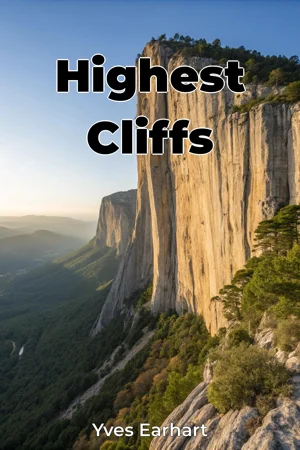
What formations on Earth offer not only the most dramatic panoramas but also represent crucial records of our planet's geological past? "Highest Cliffs" delves into the world's most imposing cliffs, exploring their formation, geological significance, and the unique ecosystems they harbor. This book is important because understanding these dramatic landforms provides insights into tectonic activity, erosion processes, and the adaptation of life in extreme environments. The book situates cliff formation within the broader context of mountain building and erosion, explaining the basics of plate tectonics, weathering, and the rock cycle. While a background in geology can enhance the reading experience, the core concepts will be explained accessibly. "Highest Cliffs" argues that the world's tallest cliffs are not merely geological wonders, but also vital indicators of Earth's dynamic processes and fragile ecosystems, making their study crucial for understanding and preserving our planet. The book unfolds in three major sections. First, we introduce the defining characteristics of cliffs, differentiating them from other steep slopes and establishing the criteria for determining "highest." This section covers cliff morphology, rock composition, and the various geological forces that shape them. Second, we examine several specific cliffs around the globe, detailing their geological history, the flora and fauna adapted to these locations, and the human impact on these environments. These detailed case studies highlight the diverse origins and ecological importance of cliffs worldwide. Third, the book synthesizes the lessons learned from these case studies to draw broader conclusions about cliff formation, ecosystem dynamics, and the effects of climate change and human activity. We will explore practical implications, such as the role of cliffs in coastal protection and the challenges of managing tourism in these fragile environments. The arguments presented are supported by a combination of topographical data, geological surveys, climate records, and ecological studies. The book also draws from expedition reports and scientific publications from researchers who have studied these cliffs firsthand. The study of high cliffs intersects with several disciplines, including climatology, ecology, and engineering. Climatology helps us understand how weather patterns impact erosion rates. Ecology reveals the unique adaptations species have developed to survive on cliffs. Engineering provides insight into cliff stabilization methods and the challenges of building infrastructure near these formations. "Highest Cliffs" offers a comprehensive and multidisciplinary perspective. The book focuses specifically on the geological processes that create and shape cliffs, the unique ecosystems that they support, and the geographical distribution of the world's tallest examples. Written in a style that balances scientific rigor with accessibility, "Highest Cliffs" aims to engage both academic and general readers. The tone is informative and objective, presenting facts and research findings in a clear and understandable manner. The book is aimed at geography enthusiasts, earth science students, and anyone interested in natural landscapes and geological processes. It provides a deeper understanding of the forces that shape our planet and the importance of preserving these natural wonders. As a work of non-fiction, the book adheres to the standards of accuracy, objectivity, and evidence-based analysis. All claims are supported by credible sources, and different perspectives are considered. While the book covers a wide range of cliffs globally, it does not delve into the specific cultural or historical significance of each location. The primary focus remains on the geological and ecological aspects. The information presented has applications in fields such as conservation, tourism management, and hazard mitigation. Understanding cliff stability is essential for protecting infrastructure and ensuring visitor safety. Studying the highest cliffs offers a unique window into Earth's past and present, highlighting the interplay between geological forces and ecological adaptation.
What formations on Earth offer not only the most dramatic panoramas but also represent crucial records of our planet's geological past? "Highest Cliffs" delves into the world's most imposing cliffs, exploring their formation, geological significance, and the unique ecosystems they harbor. This book is important because understanding these dramatic landforms provides insights into tectonic activity, erosion processes, and the adaptation of life in extreme environments. The book situates cliff formation within the broader context of mountain building and erosion, explaining the basics of plate tectonics, weathering, and the rock cycle. While a background in geology can enhance the reading experience, the core concepts will be explained accessibly. "Highest Cliffs" argues that the world's tallest cliffs are not merely geological wonders, but also vital indicators of Earth's dynamic processes and fragile ecosystems, making their study crucial for understanding and preserving our planet. The book unfolds in three major sections. First, we introduce the defining characteristics of cliffs, differentiating them from other steep slopes and establishing the criteria for determining "highest." This section covers cliff morphology, rock composition, and the various geological forces that shape them. Second, we examine several specific cliffs around the globe, detailing their geological history, the flora and fauna adapted to these locations, and the human impact on these environments. These detailed case studies highlight the diverse origins and ecological importance of cliffs worldwide. Third, the book synthesizes the lessons learned from these case studies to draw broader conclusions about cliff formation, ecosystem dynamics, and the effects of climate change and human activity. We will explore practical implications, such as the role of cliffs in coastal protection and the challenges of managing tourism in these fragile environments. The arguments presented are supported by a combination of topographical data, geological surveys, climate records, and ecological studies. The book also draws from expedition reports and scientific publications from researchers who have studied these cliffs firsthand. The study of high cliffs intersects with several disciplines, including climatology, ecology, and engineering. Climatology helps us understand how weather patterns impact erosion rates. Ecology reveals the unique adaptations species have developed to survive on cliffs. Engineering provides insight into cliff stabilization methods and the challenges of building infrastructure near these formations. "Highest Cliffs" offers a comprehensive and multidisciplinary perspective. The book focuses specifically on the geological processes that create and shape cliffs, the unique ecosystems that they support, and the geographical distribution of the world's tallest examples. Written in a style that balances scientific rigor with accessibility, "Highest Cliffs" aims to engage both academic and general readers. The tone is informative and objective, presenting facts and research findings in a clear and understandable manner. The book is aimed at geography enthusiasts, earth science students, and anyone interested in natural landscapes and geological processes. It provides a deeper understanding of the forces that shape our planet and the importance of preserving these natural wonders. As a work of non-fiction, the book adheres to the standards of accuracy, objectivity, and evidence-based analysis. All claims are supported by credible sources, and different perspectives are considered. While the book covers a wide range of cliffs globally, it does not delve into the specific cultural or historical significance of each location. The primary focus remains on the geological and ecological aspects. The information presented has applications in fields such as conservation, tourism management, and hazard mitigation. Understanding cliff stability is essential for protecting infrastructure and ensuring visitor safety. Studying the highest cliffs offers a unique window into Earth's past and present, highlighting the interplay between geological forces and ecological adaptation.
"Highest Cliffs" explores the dramatic formations of the world's tallest cliffs, offering insights into Earth's geological history, tectonic activity, and the unique ecosystems that thrive in these extreme environments. These natural landscapes serve as records of our planet's past, showcasing the powerful forces of erosion and weathering. Did you know that studying cliffs helps us understand how species adapt to survive in seemingly uninhabitable places? The book progresses systematically, first establishing the criteria for defining and categorizing cliffs based on their morphology and rock composition. It then examines specific cliffs worldwide, detailing their geological history, the flora and fauna adapted to these locations, and the human impact on these environments. Finally, it synthesizes these case studies to draw broader conclusions about cliff formation, ecosystem dynamics, and the effects of climate change. Ultimately, "Highest Cliffs" argues that these geological wonders are vital indicators of Earth's dynamic processes and fragile ecosystems, emphasizing the importance of their study for understanding and preserving our planet.
Book Details
ISBN
9788233988814
Publisher
Publifye AS
Your Licenses
You don't own any licenses for this book
Purchase a license below to unlock this book and download the EPUB.
Purchase License
Select a tier to unlock this book
Need bulk licensing?
Contact us for enterprise agreements.