
About This Book
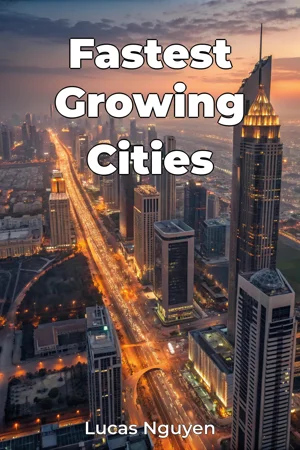
What if the blueprints for the future of our world are being drawn not in national capitals, but in the bustling streets of the fastest-growing cities? This book, "Fastest Growing Cities," delves into the phenomenon of rapid urban expansion, examining the key drivers behind their explosive growth and untangling the complex challenges they present. Understanding these cities is crucial because they are becoming increasingly influential in shaping global economies, social structures, and environmental sustainability. We explore urbanization, migration patterns, and economic development as central components of this growth. The book argues that the story of the 21st century is inextricably linked to understanding how these urban centers function, adapt, and impact the world around them. We unpack the argument that unprecedented growth, while presenting opportunities, requires careful planning and sustainable practices to avoid exacerbating existing inequalities and environmental issues. The book provides a historical overview of urbanization, tracing its roots from early settlements to the mega-cities of today. Familiarity with basic economic principles like supply and demand, as well as a general understanding of demographic trends, will enhance the reader's understanding, although these concepts will be explained as needed. The central thesis is that the sustainable growth of these cities is not solely an economic imperative, but a critical concern for global social and environmental stability. The book meticulously analyzes how governmental policies, technological advancements, and societal shifts contribute to or hinder sustainable growth. The book is structured into three major parts. Initially, it introduces the concept of "fastest-growing cities" and establishes a set of metrics for identifying and categorizing them. The second part focuses on the drivers of growth, examining factors like industrialization, technological innovation, migration, and foreign investment. Chapters in this section will explore specific case studies of cities experiencing rapid transformations, highlighting the unique factors at play in each location. The final part analyzes the challenges these cities face, including issues like infrastructure development, affordable housing, environmental degradation, social inequality, and governance. The book culminates by offering policy recommendations and strategies for promoting inclusive and sustainable urban development. The analysis is based on a wide array of data sources, including demographic data from the United Nations, economic indicators from the World Bank and the International Monetary Fund (IMF). We will also draw upon qualitative research, including case studies and interviews with urban planners, policymakers, and residents of these fast-growing cities. The book connects to a range of disciplines, including environmental science (examining the ecological impact of urbanization), sociology (analyzing the social implications of rapid population growth and inequality), and political science (investigating the role of governance in shaping urban development). These interdisciplinary connections highlight the multifaceted nature of urban growth and the need for holistic solutions. A unique aspect of this book is its focus on comparative analysis across different geographical regions, identifying common challenges and best practices in diverse contexts. It also addresses the often-overlooked role of informal economies and grassroots initiatives in shaping urban landscapes. The book employs an analytical, fact-based style, aiming to present the data and research objectively. The intended audience includes urban planners, policymakers, academics, students of social science and economics, and anyone interested in understanding the forces shaping the modern world. The book provides valuable insights for professionals working in urban development, as well as for engaged citizens seeking to understand the challenges and opportunities facing their communities. As a work in the social science and economics genres, the book adheres to the conventions of academic rigor, including clear referencing, data-driven analysis, and critical evaluation of existing theories. The scope of the book is global, encompassing examples from across continents. However, it does not delve into the specific infrastructure challenges of every individual city and focuses instead on identifying common patterns and overarching trends. The book provides practical guidance for policymakers and urban planners seeking to promote sustainable and equitable urban development. It also offers insights for businesses looking to invest in emerging markets and for individuals seeking to understand the impact of urbanization on their lives and communities. The book also addresses some of the ongoing debates surrounding urban planning and development, such as the trade-offs between economic growth and environmental sustainability, and the challenges of balancing the needs of different social groups. The rise of smart cities is creating discussions regarding the impact of technology and data privacy, which will be addressed.
What if the blueprints for the future of our world are being drawn not in national capitals, but in the bustling streets of the fastest-growing cities? This book, "Fastest Growing Cities," delves into the phenomenon of rapid urban expansion, examining the key drivers behind their explosive growth and untangling the complex challenges they present. Understanding these cities is crucial because they are becoming increasingly influential in shaping global economies, social structures, and environmental sustainability. We explore urbanization, migration patterns, and economic development as central components of this growth. The book argues that the story of the 21st century is inextricably linked to understanding how these urban centers function, adapt, and impact the world around them. We unpack the argument that unprecedented growth, while presenting opportunities, requires careful planning and sustainable practices to avoid exacerbating existing inequalities and environmental issues. The book provides a historical overview of urbanization, tracing its roots from early settlements to the mega-cities of today. Familiarity with basic economic principles like supply and demand, as well as a general understanding of demographic trends, will enhance the reader's understanding, although these concepts will be explained as needed. The central thesis is that the sustainable growth of these cities is not solely an economic imperative, but a critical concern for global social and environmental stability. The book meticulously analyzes how governmental policies, technological advancements, and societal shifts contribute to or hinder sustainable growth. The book is structured into three major parts. Initially, it introduces the concept of "fastest-growing cities" and establishes a set of metrics for identifying and categorizing them. The second part focuses on the drivers of growth, examining factors like industrialization, technological innovation, migration, and foreign investment. Chapters in this section will explore specific case studies of cities experiencing rapid transformations, highlighting the unique factors at play in each location. The final part analyzes the challenges these cities face, including issues like infrastructure development, affordable housing, environmental degradation, social inequality, and governance. The book culminates by offering policy recommendations and strategies for promoting inclusive and sustainable urban development. The analysis is based on a wide array of data sources, including demographic data from the United Nations, economic indicators from the World Bank and the International Monetary Fund (IMF). We will also draw upon qualitative research, including case studies and interviews with urban planners, policymakers, and residents of these fast-growing cities. The book connects to a range of disciplines, including environmental science (examining the ecological impact of urbanization), sociology (analyzing the social implications of rapid population growth and inequality), and political science (investigating the role of governance in shaping urban development). These interdisciplinary connections highlight the multifaceted nature of urban growth and the need for holistic solutions. A unique aspect of this book is its focus on comparative analysis across different geographical regions, identifying common challenges and best practices in diverse contexts. It also addresses the often-overlooked role of informal economies and grassroots initiatives in shaping urban landscapes. The book employs an analytical, fact-based style, aiming to present the data and research objectively. The intended audience includes urban planners, policymakers, academics, students of social science and economics, and anyone interested in understanding the forces shaping the modern world. The book provides valuable insights for professionals working in urban development, as well as for engaged citizens seeking to understand the challenges and opportunities facing their communities. As a work in the social science and economics genres, the book adheres to the conventions of academic rigor, including clear referencing, data-driven analysis, and critical evaluation of existing theories. The scope of the book is global, encompassing examples from across continents. However, it does not delve into the specific infrastructure challenges of every individual city and focuses instead on identifying common patterns and overarching trends. The book provides practical guidance for policymakers and urban planners seeking to promote sustainable and equitable urban development. It also offers insights for businesses looking to invest in emerging markets and for individuals seeking to understand the impact of urbanization on their lives and communities. The book also addresses some of the ongoing debates surrounding urban planning and development, such as the trade-offs between economic growth and environmental sustainability, and the challenges of balancing the needs of different social groups. The rise of smart cities is creating discussions regarding the impact of technology and data privacy, which will be addressed.
"Fastest Growing Cities" explores the rapid urbanization occurring worldwide and its profound implications. The book argues that understanding these urban centers is key to grasping the trajectory of the 21st century, emphasizing the crucial role they play in shaping global economies and social structures. It highlights how these cities, while engines of economic development, present complex challenges like infrastructure strain and increasing social inequality. A key insight is the significance of sustainable practices to mitigate environmental issues amid unprecedented urban expansion. The book begins by defining and categorizing these rapidly growing cities, then examines the drivers behind their expansion, such as migration and technological innovation. Through case studies, it illustrates the unique factors at play in different urban environments. The final section analyzes the challenges these cities face, from affordable housing shortages to environmental degradation, offering policy recommendations for sustainable urban development. The approach is analytical and fact-based, drawing on data from organizations like the UN and the World Bank to provide valuable insights for policymakers, urban planners, and anyone interested in the forces reshaping our world.
Book Details
ISBN
9788233988692
Publisher
Publifye AS
Your Licenses
You don't own any licenses for this book
Purchase a license below to unlock this book and download the EPUB.
Purchase License
Select a tier to unlock this book
Need bulk licensing?
Contact us for enterprise agreements.