
About This Book
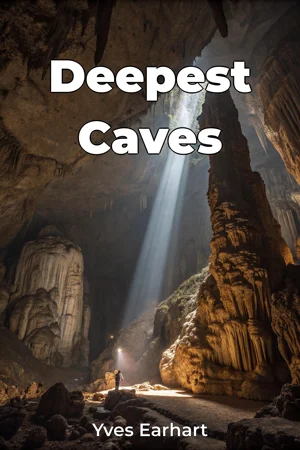
Have you ever wondered what lies beneath our feet, in the Earth's deepest, darkest recesses? "Deepest Caves" explores the hidden world of subterranean labyrinths, documenting the remarkable geological formations, fragile ecosystems, and the daring explorers who venture into these extreme environments. This book delves into the science and adventure of cave exploration, known as speleology, a field that intertwines geology, biology, and the human spirit of discovery. Understanding these cave systems is crucial not only for scientific advancement but also for comprehending the planet's hydrological cycles, preserving unique biomes, and appreciating the earth's complex geological history. The central argument of "Deepest Caves" emphasizes the importance of cave exploration as a means of understanding Earth's history and predicting its future. The book posits that caves serve as time capsules, preserving geological records and harboring unique life forms that offer insights into climate change, biodiversity, and even the origins of life. We highlight how the data gathered from these environments contributes significantly to our understanding of the planet's evolution and resilience. The book is structured into three major sections. First, we introduce the fundamental concepts of speleology, explaining cave formation processes, the geology of karst landscapes, and the unique chemistry found in subterranean environments. This section provides the reader with the necessary baseline knowledge for understanding the more complex topics discussed later. Second, we examine case studies of significant cave systems worldwide, including the Krubera-Voronja Cave, the deepest known cave on Earth, and others, detailing their geological features, biological inhabitants, and the challenges encountered during their exploration and mapping. Here, we present the human element, revealing the dedication, ingenuity, and risks involved in exploring these extreme environments. Third, we explore the modern techniques used in cave exploration and mapping, including advanced surveying equipment, 3D modeling technologies, and the application of Geographic Information Systems (GIS). We explore the ethical considerations and conservation efforts aimed at preserving these delicate environments. The book culminates with a discussion of the practical applications of speleological research, ranging from water resource management to astrobiology. The evidence presented within "Deepest Caves" draws upon a diverse range of sources, including fieldwork reports from leading speleological expeditions, peer-reviewed scientific publications, and original photographic and cartographic data collected by cave explorers. We showcase unique datasets, such as detailed cave maps, cross-sections, and photographic documentation of cave formations and subterranean life. "Deepest Caves" also connects to several other fields of study. It intersects with climatology through the analysis of cave formations as paleoclimate proxies; with biology through the study of extremophiles and subterranean ecosystems; and with engineering through the development of specialized equipment for cave exploration. These interdisciplinary connections enrich the book's argument by demonstrating the broad relevance of speleological research. This book takes a narrative non-fiction approach, blending scientific accuracy with engaging storytelling. The writing style aims to be accessible to a broad audience, avoiding excessive jargon while maintaining scientific rigor. It is targeted towards readers with an interest in earth sciences, adventure, and exploration, including students, amateur speleologists, and anyone curious about the hidden wonders beneath the surface of our planet. The book provides value by offering a comprehensive and up-to-date overview of cave exploration and its scientific significance. While "Deepest Caves" aims for a global perspective, covering cave systems on different continents and geological settings, the focus will stay on caves that are of extreme depth and therefore ignores marine cave systems for instance. Although it touches upon the social aspects of cave exploration, it refrains from delving into the specific cultural beliefs attached to cave systems by indigenous populations. The book also acknowledges ongoing debates within the speleological community, such as balancing exploration with conservation, and the ethical considerations involved in disturbing fragile cave ecosystems. Readers will gain a deeper understanding of these controversies and the challenges faced in managing and protecting these underground wonders.
Have you ever wondered what lies beneath our feet, in the Earth's deepest, darkest recesses? "Deepest Caves" explores the hidden world of subterranean labyrinths, documenting the remarkable geological formations, fragile ecosystems, and the daring explorers who venture into these extreme environments. This book delves into the science and adventure of cave exploration, known as speleology, a field that intertwines geology, biology, and the human spirit of discovery. Understanding these cave systems is crucial not only for scientific advancement but also for comprehending the planet's hydrological cycles, preserving unique biomes, and appreciating the earth's complex geological history. The central argument of "Deepest Caves" emphasizes the importance of cave exploration as a means of understanding Earth's history and predicting its future. The book posits that caves serve as time capsules, preserving geological records and harboring unique life forms that offer insights into climate change, biodiversity, and even the origins of life. We highlight how the data gathered from these environments contributes significantly to our understanding of the planet's evolution and resilience. The book is structured into three major sections. First, we introduce the fundamental concepts of speleology, explaining cave formation processes, the geology of karst landscapes, and the unique chemistry found in subterranean environments. This section provides the reader with the necessary baseline knowledge for understanding the more complex topics discussed later. Second, we examine case studies of significant cave systems worldwide, including the Krubera-Voronja Cave, the deepest known cave on Earth, and others, detailing their geological features, biological inhabitants, and the challenges encountered during their exploration and mapping. Here, we present the human element, revealing the dedication, ingenuity, and risks involved in exploring these extreme environments. Third, we explore the modern techniques used in cave exploration and mapping, including advanced surveying equipment, 3D modeling technologies, and the application of Geographic Information Systems (GIS). We explore the ethical considerations and conservation efforts aimed at preserving these delicate environments. The book culminates with a discussion of the practical applications of speleological research, ranging from water resource management to astrobiology. The evidence presented within "Deepest Caves" draws upon a diverse range of sources, including fieldwork reports from leading speleological expeditions, peer-reviewed scientific publications, and original photographic and cartographic data collected by cave explorers. We showcase unique datasets, such as detailed cave maps, cross-sections, and photographic documentation of cave formations and subterranean life. "Deepest Caves" also connects to several other fields of study. It intersects with climatology through the analysis of cave formations as paleoclimate proxies; with biology through the study of extremophiles and subterranean ecosystems; and with engineering through the development of specialized equipment for cave exploration. These interdisciplinary connections enrich the book's argument by demonstrating the broad relevance of speleological research. This book takes a narrative non-fiction approach, blending scientific accuracy with engaging storytelling. The writing style aims to be accessible to a broad audience, avoiding excessive jargon while maintaining scientific rigor. It is targeted towards readers with an interest in earth sciences, adventure, and exploration, including students, amateur speleologists, and anyone curious about the hidden wonders beneath the surface of our planet. The book provides value by offering a comprehensive and up-to-date overview of cave exploration and its scientific significance. While "Deepest Caves" aims for a global perspective, covering cave systems on different continents and geological settings, the focus will stay on caves that are of extreme depth and therefore ignores marine cave systems for instance. Although it touches upon the social aspects of cave exploration, it refrains from delving into the specific cultural beliefs attached to cave systems by indigenous populations. The book also acknowledges ongoing debates within the speleological community, such as balancing exploration with conservation, and the ethical considerations involved in disturbing fragile cave ecosystems. Readers will gain a deeper understanding of these controversies and the challenges faced in managing and protecting these underground wonders.
"Deepest Caves" unveils the captivating world of speleology, focusing on the exploration and scientific importance of subterranean labyrinths. The book delves into Earth sciences to explain how geological formations such as karst landscapes are created over millennia. One intriguing aspect is how caves act as time capsules, preserving geological records and unique life forms that provide insights into climate change. This exploration of cave systems highlights extreme environments and the daring adventurers who map them, often using Geographic Information Systems (GIS). "Deepest Caves" is structured to first introduce the basics of cave formation and chemistry, then examines specific cave systems like the Krubera-Voronja Cave, the deepest known cave on Earth. Finally, the book explores modern techniques in cave mapping and conservation, blending scientific accuracy with engaging storytelling. The book progresses by first providing the reader with the necessary baseline knowledge for understanding the more complex topics discussed later. The evidence presented within "Deepest Caves" draws upon a diverse range of sources, including fieldwork reports from leading speleological expeditions, and peer-reviewed scientific publications. This approach ensures that readers gain a deep appreciation for the science and adventure intertwined within cave exploration.
Book Details
ISBN
9788233988630
Publisher
Publifye AS
Your Licenses
You don't own any licenses for this book
Purchase a license below to unlock this book and download the EPUB.
Purchase License
Select a tier to unlock this book
Need bulk licensing?
Contact us for enterprise agreements.