
About This Book
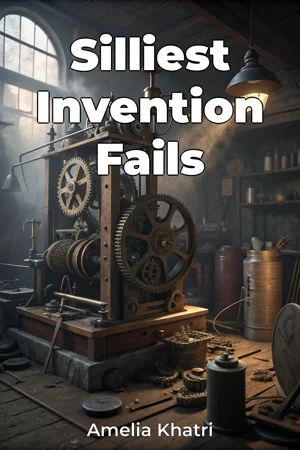
Have you ever wondered what happens to inventions that just don't quite make the cut? "Silliest Invention Fails" dives headfirst into the world of history and technology to unearth some of the most spectacularly unsuccessful inventions ever conceived. This book isn't just a collection of humorous anecdotes; it's an exploration of innovation gone awry, providing valuable insights into the inventive process, the role of failure, and the often-unpredictable relationship between human ingenuity and practical application. The core of this book examines three central themes. First, the book explores technological overreach – inventions that were simply too ambitious for their time, often exceeding the capabilities of available materials, resources, or scientific understanding. Second, it considers inventions designed to solve problems that didn't really exist, or that created more issues than they resolved. Third, the book analyzes inventions that suffered from fundamental design flaws, highlighting the importance of rigorous testing, user feedback, and a clear understanding of market needs. These themes are important because they demonstrate the critical factors that separate successful innovations from comical misfires. The historical context is crucial. The stories within reflect trends and prevailing attitudes towards technology and problem-solving during different eras from early examples to the modern day. It illuminates how social pressures, economic incentives, and even simple miscalculations have contributed to technological failure. This book argues that failure is an intrinsic part of the innovation process, and that studying these "silliest" inventions offers valuable lessons for inventors, engineers, and entrepreneurs. Each failed invention serves as a cautionary tale, highlighting the pitfalls of unchecked ambition, flawed assumptions, and inadequate planning. The book comprises an introduction outlining the central themes, followed by chapters dedicated to specific categories of failed inventions: transportation, communication, domestic technology, and military applications. Each chapter presents a series of case studies, providing detailed descriptions of the inventions, the motivations behind them, the reasons for their failure, and the lessons learned. The book culminates with a discussion of the broader implications of technological failure, emphasizing the importance of risk assessment, iterative design, and adaptability. The evidence presented consists of primary sources such as patent filings, contemporary news reports, technical drawings, and advertisements, as well as secondary sources including historical analyses, engineering studies, and design critiques. This book connects to several other disciplines. It draws upon economic theory to analyze the market forces that influence innovation, sociological studies to understand the cultural context of technological development, and psychological research to explore the cognitive biases that can lead inventors astray. These connections enrich the book's analysis and deepen its insights. The book's approach is to combine rigorous historical research with a lighthearted and engaging narrative style. While maintaining academic rigor, the writing is accessible and entertaining, making it appealing to a broad audience. The book's target audience includes technology enthusiasts, history buffs, students of engineering and design, entrepreneurs, and anyone with an interest in the quirky side of innovation. It offers valuable lessons for anyone involved in the process of creating new products or technologies. As a work of non-fiction, this book adheres to the highest standards of accuracy and objectivity. It avoids sensationalism and relies on verifiable evidence to support its claims. The book's scope is limited to inventions that were demonstrably unsuccessful and that offer valuable lessons for contemporary audiences. It does not attempt to provide an exhaustive catalog of all failed inventions but focuses on a carefully selected set of case studies that illustrate key principles. The information in this book can be applied in a variety of practical ways. Inventors and designers can use it to identify potential pitfalls, refine their design processes, and improve their chances of success. Business leaders can use it to make more informed investment decisions and manage risk more effectively. While there is general agreement on the definition of "failure," there are ongoing debates about the relative importance of different factors that contribute to it. This book addresses these debates by presenting a nuanced analysis of the complex interplay of technological, economic, social, and psychological forces.
Have you ever wondered what happens to inventions that just don't quite make the cut? "Silliest Invention Fails" dives headfirst into the world of history and technology to unearth some of the most spectacularly unsuccessful inventions ever conceived. This book isn't just a collection of humorous anecdotes; it's an exploration of innovation gone awry, providing valuable insights into the inventive process, the role of failure, and the often-unpredictable relationship between human ingenuity and practical application. The core of this book examines three central themes. First, the book explores technological overreach – inventions that were simply too ambitious for their time, often exceeding the capabilities of available materials, resources, or scientific understanding. Second, it considers inventions designed to solve problems that didn't really exist, or that created more issues than they resolved. Third, the book analyzes inventions that suffered from fundamental design flaws, highlighting the importance of rigorous testing, user feedback, and a clear understanding of market needs. These themes are important because they demonstrate the critical factors that separate successful innovations from comical misfires. The historical context is crucial. The stories within reflect trends and prevailing attitudes towards technology and problem-solving during different eras from early examples to the modern day. It illuminates how social pressures, economic incentives, and even simple miscalculations have contributed to technological failure. This book argues that failure is an intrinsic part of the innovation process, and that studying these "silliest" inventions offers valuable lessons for inventors, engineers, and entrepreneurs. Each failed invention serves as a cautionary tale, highlighting the pitfalls of unchecked ambition, flawed assumptions, and inadequate planning. The book comprises an introduction outlining the central themes, followed by chapters dedicated to specific categories of failed inventions: transportation, communication, domestic technology, and military applications. Each chapter presents a series of case studies, providing detailed descriptions of the inventions, the motivations behind them, the reasons for their failure, and the lessons learned. The book culminates with a discussion of the broader implications of technological failure, emphasizing the importance of risk assessment, iterative design, and adaptability. The evidence presented consists of primary sources such as patent filings, contemporary news reports, technical drawings, and advertisements, as well as secondary sources including historical analyses, engineering studies, and design critiques. This book connects to several other disciplines. It draws upon economic theory to analyze the market forces that influence innovation, sociological studies to understand the cultural context of technological development, and psychological research to explore the cognitive biases that can lead inventors astray. These connections enrich the book's analysis and deepen its insights. The book's approach is to combine rigorous historical research with a lighthearted and engaging narrative style. While maintaining academic rigor, the writing is accessible and entertaining, making it appealing to a broad audience. The book's target audience includes technology enthusiasts, history buffs, students of engineering and design, entrepreneurs, and anyone with an interest in the quirky side of innovation. It offers valuable lessons for anyone involved in the process of creating new products or technologies. As a work of non-fiction, this book adheres to the highest standards of accuracy and objectivity. It avoids sensationalism and relies on verifiable evidence to support its claims. The book's scope is limited to inventions that were demonstrably unsuccessful and that offer valuable lessons for contemporary audiences. It does not attempt to provide an exhaustive catalog of all failed inventions but focuses on a carefully selected set of case studies that illustrate key principles. The information in this book can be applied in a variety of practical ways. Inventors and designers can use it to identify potential pitfalls, refine their design processes, and improve their chances of success. Business leaders can use it to make more informed investment decisions and manage risk more effectively. While there is general agreement on the definition of "failure," there are ongoing debates about the relative importance of different factors that contribute to it. This book addresses these debates by presenting a nuanced analysis of the complex interplay of technological, economic, social, and psychological forces.
"Silliest Invention Fails" explores the fascinating world of technological failures, offering a blend of history and technology. It examines why some inventions, despite human ingenuity, never quite made it. Readers will discover that failed inventions often resulted from technological overreach, where ambition exceeded the era's capabilities, or from solving problems that didn't truly exist. These missteps highlight the critical role of practical application and market understanding in innovation. The book progresses through categories like transportation and communication, using case studies to illustrate design flaws and miscalculations. For instance, some inventions suffered from fundamental design flaws that were only revealed through inadequate testing. Examining these "silliest" inventions provides valuable lessons for inventors and entrepreneurs, emphasizing that failure is a crucial part of the innovation process. By analyzing historical context and drawing from primary sources, the book provides a unique understanding of innovation history and technological misfires.
Book Details
ISBN
9788233988562
Publisher
Publifye AS
Your Licenses
You don't own any licenses for this book
Purchase a license below to unlock this book and download the EPUB.
Purchase License
Select a tier to unlock this book
Need bulk licensing?
Contact us for enterprise agreements.