
About This Book
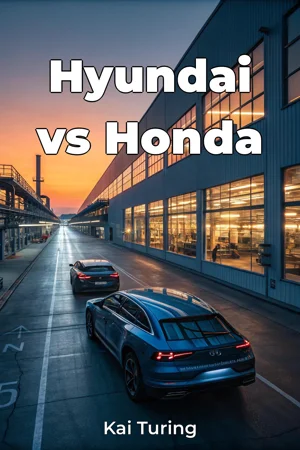
What propelled two vastly different automotive companies, originating from opposite ends of the Asian continent, to become global rivals? "Hyundai vs Honda" delves into the intricate dynamics of competition, innovation, and strategic maneuvering that define the automotive industry through the lens of these two giants. This book explores the technological advancements, business strategies, and market battles that characterize the Hyundai-Honda rivalry. The central argument posited is that the contrasting approaches to innovation, market penetration, and brand building pursued by Hyundai and Honda offer valuable lessons in navigating the complexities of a globalized automotive landscape. Understanding these differences illuminates the broader forces shaping the industry, from technological disruption to evolving consumer preferences. This understanding is crucial for industry professionals, investors, and anyone seeking to comprehend the forces driving success and failure in a rapidly changing world. This study begins with an introduction to the historical context of both companies, tracing their origins and early development. It then examines their contrasting philosophies regarding technological innovation. Honda, traditionally known for its engineering prowess and focus on internal combustion engines, took a different approach than Hyundai, which embraced rapid adoption of new technologies and aggressive market expansion. Key chapters will dissect their respective strategies in the electric vehicle (EV) market, their approaches to autonomous driving technology, and their distinct manufacturing and supply chain management models. The book provides detailed analyses of their performance in key markets, including North America, Europe, and Asia, examining the factors contributing to their successes and failures. "Hyundai vs Honda" relies on a diverse range of evidence, including industry reports, financial statements, market analyses, and technological specifications. It also incorporates case studies of specific models and market entries to illustrate the strategic decisions made by each company. The research draws upon publicly available data, academic literature, and expert opinions to provide a comprehensive and balanced perspective. The book connects to several other fields of study, including business strategy, technology management, and international economics. Its analysis of automotive technology interfaces with engineering and materials science. Its examination of market dynamics links to consumer behavior and marketing research. These interdisciplinary connections enhance the book’s argument by providing multiple angles on the Hyundai-Honda competition. "Hyundai vs Honda" adopts a fact-based, analytical approach, presenting information in a clear and objective manner. The writing style is accessible to a broad audience, avoiding technical jargon where possible and providing clear explanations of complex concepts. The intended audience includes business students, automotive industry professionals, investors, and anyone interested in understanding the dynamics of global competition and technological innovation. This book provides knowledge of competitive strategies and technological advancements in the automotive sector. The scope of the book is limited to a comparative analysis of Hyundai and Honda, focusing on their strategies and performance in key markets. It does not provide a comprehensive history of the automotive industry. The information presented can be applied practically by readers seeking to understand the competitive dynamics of the automotive industry, to evaluate investment opportunities in automotive companies, or to gain insights into the challenges and opportunities of technological disruption. The book also addresses ongoing debates regarding the future of the automotive industry, including the pace of EV adoption, the role of autonomous driving technology, and the impact of globalization on competition.
What propelled two vastly different automotive companies, originating from opposite ends of the Asian continent, to become global rivals? "Hyundai vs Honda" delves into the intricate dynamics of competition, innovation, and strategic maneuvering that define the automotive industry through the lens of these two giants. This book explores the technological advancements, business strategies, and market battles that characterize the Hyundai-Honda rivalry. The central argument posited is that the contrasting approaches to innovation, market penetration, and brand building pursued by Hyundai and Honda offer valuable lessons in navigating the complexities of a globalized automotive landscape. Understanding these differences illuminates the broader forces shaping the industry, from technological disruption to evolving consumer preferences. This understanding is crucial for industry professionals, investors, and anyone seeking to comprehend the forces driving success and failure in a rapidly changing world. This study begins with an introduction to the historical context of both companies, tracing their origins and early development. It then examines their contrasting philosophies regarding technological innovation. Honda, traditionally known for its engineering prowess and focus on internal combustion engines, took a different approach than Hyundai, which embraced rapid adoption of new technologies and aggressive market expansion. Key chapters will dissect their respective strategies in the electric vehicle (EV) market, their approaches to autonomous driving technology, and their distinct manufacturing and supply chain management models. The book provides detailed analyses of their performance in key markets, including North America, Europe, and Asia, examining the factors contributing to their successes and failures. "Hyundai vs Honda" relies on a diverse range of evidence, including industry reports, financial statements, market analyses, and technological specifications. It also incorporates case studies of specific models and market entries to illustrate the strategic decisions made by each company. The research draws upon publicly available data, academic literature, and expert opinions to provide a comprehensive and balanced perspective. The book connects to several other fields of study, including business strategy, technology management, and international economics. Its analysis of automotive technology interfaces with engineering and materials science. Its examination of market dynamics links to consumer behavior and marketing research. These interdisciplinary connections enhance the book’s argument by providing multiple angles on the Hyundai-Honda competition. "Hyundai vs Honda" adopts a fact-based, analytical approach, presenting information in a clear and objective manner. The writing style is accessible to a broad audience, avoiding technical jargon where possible and providing clear explanations of complex concepts. The intended audience includes business students, automotive industry professionals, investors, and anyone interested in understanding the dynamics of global competition and technological innovation. This book provides knowledge of competitive strategies and technological advancements in the automotive sector. The scope of the book is limited to a comparative analysis of Hyundai and Honda, focusing on their strategies and performance in key markets. It does not provide a comprehensive history of the automotive industry. The information presented can be applied practically by readers seeking to understand the competitive dynamics of the automotive industry, to evaluate investment opportunities in automotive companies, or to gain insights into the challenges and opportunities of technological disruption. The book also addresses ongoing debates regarding the future of the automotive industry, including the pace of EV adoption, the role of autonomous driving technology, and the impact of globalization on competition.
"Hyundai vs Honda" explores the intense rivalry between two automotive giants, dissecting their contrasting approaches to innovation and market dominance in the global automotive industry. It examines how Hyundai and Honda, despite their different origins and corporate cultures, have become major players, each vying for leadership in a rapidly evolving market. One intriguing aspect is their differing strategies in the EV market. Honda has traditionally focused on engineering excellence in internal combustion engines, while Hyundai adopted a more aggressive approach to embrace new technologies. The book analyzes each company's business strategy, technology management, and market analysis, offering insights into their successes and failures in key regions like North America, Europe, and Asia. By examining their competitive strategies, including those related to autonomous driving, the book presents a nuanced understanding of the forces shaping the automotive industry. It uses industry reports, market analyses, and case studies to illustrate critical decisions made by each company. The book progresses by first introducing the historical context of both companies, then delving into their technological innovation philosophies, and finally dissecting strategies in the EV market. The value of "Hyundai vs Honda" lies in its comparative analysis, offering practical lessons for industry professionals, investors, and anyone interested in technology, business, and international economics. It adopts a fact-based approach, presenting information objectively and accessibly, avoiding technical jargon and explaining complex concepts clearly. The book provides a comprehensive perspective on global competition and technological innovation, including manufacturing and supply chain management and ultimately contributing to a deeper understanding of the automotive sector's future.
Book Details
ISBN
9788233988487
Publisher
Publifye AS
Your Licenses
You don't own any licenses for this book
Purchase a license below to unlock this book and download the EPUB.
Purchase License
Select a tier to unlock this book
Need bulk licensing?
Contact us for enterprise agreements.