
About This Book
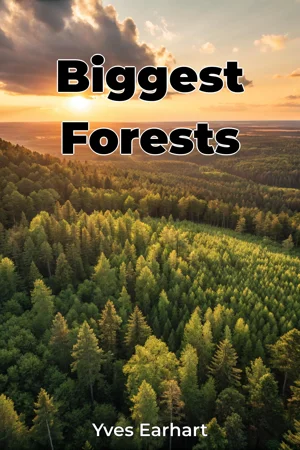
Are the world’s largest forests silently slipping away? In Biggest Forests, we embark on a journey to explore these vast ecosystems, unraveling their complex role in regulating our planet's climate and exposing the escalating threats they face. This book delves into the heart of the world's most expansive forests, examining their ecological significance, the pressures they endure, and the urgent need for their preservation. The central argument of Biggest Forests is that the health and survival of these massive forests are inextricably linked to global climate stability and biodiversity conservation, demanding immediate and coordinated international action. This argument is critical because these forests act as significant carbon sinks, mitigating climate change, and harbor an unparalleled diversity of plant and animal life, essential for maintaining ecological balance. We begin by introducing the concept of ‘megaforests’ – forests exceeding a million square kilometers – and their geographical distribution across the globe from the Amazon to the boreal forests of Russia and Canada. We then provide a historical context, tracing the evolution of these forests over millennia and the impact of human activities, starting from indigenous practices to modern industrial exploitation. The book will also examine the social context, investigating indigenous populations and their traditional ecological knowledge which can inform contemporary conservation. The book unfolds in three major sections. The first section establishes the ecological importance of megaforests. It explores their role in carbon sequestration, water cycling, and biodiversity conservation, presenting data on the biomass storage capacity of different forest types and the species richness they support. The second section investigates the multifaceted threats these forests face, including deforestation driven by agriculture and logging, the impacts of climate change such as increased wildfires and pest outbreaks, and the consequences of mining and infrastructure development. The third section proposes strategies for sustainable forest management and conservation, examining international agreements, community-based conservation initiatives, and technological innovations for monitoring and protecting these vital ecosystems. The evidence presented throughout the book draws upon a wide range of scientific research, including remote sensing data, ecological surveys, climate models, and economic analyses. We utilize case studies from various megaforests around the world, highlighting both successful conservation efforts and regions where degradation is progressing rapidly. Biggest Forests connects to various disciplines, including climate science, ecology, economics, and political science. The book’s examination of carbon sequestration relates directly to climate models and mitigation strategies. Its analysis of biodiversity links to ecological studies and conservation biology. Its exploration of economic drivers connects to development economics and resource management. Its discussion of international agreements intersects with international relations and environmental law. This book adopts an approach that combines rigorous scientific analysis with accessible storytelling. While grounded in empirical data, it also incorporates narratives of people living in and around these forests, providing a human dimension to the challenges and opportunities of megaforest conservation. The intended audience includes environmental scientists, policymakers, conservation practitioners, students, and anyone interested in understanding the critical role of forests in safeguarding our planet. It will be useful to readers seeking a comprehensive overview of megaforest ecology, threats, and conservation strategies, offering insights and evidence to inform both academic research and real-world action. As a work of environmental non-fiction, Biggest Forests presents a factual, evidence-based account of the state of the world's largest forests, adhering to the genre's conventions of accuracy, clarity, and objectivity. The book aims to be comprehensive in its coverage, addressing the major issues facing megaforests while acknowledging the limitations of our current knowledge and the complexities of the challenges. The information presented in Biggest Forests has direct real-world applications, informing policy decisions related to land use, climate change mitigation, and biodiversity conservation and providing practical guidance for conservation organizations and communities working to protect these vital ecosystems. The book also touches upon the controversies surrounding deforestation and land use, acknowledging differing perspectives and vested interests while advocating for evidence-based solutions that prioritize the long-term health of both the environment and human communities.
Are the world’s largest forests silently slipping away? In Biggest Forests, we embark on a journey to explore these vast ecosystems, unraveling their complex role in regulating our planet's climate and exposing the escalating threats they face. This book delves into the heart of the world's most expansive forests, examining their ecological significance, the pressures they endure, and the urgent need for their preservation. The central argument of Biggest Forests is that the health and survival of these massive forests are inextricably linked to global climate stability and biodiversity conservation, demanding immediate and coordinated international action. This argument is critical because these forests act as significant carbon sinks, mitigating climate change, and harbor an unparalleled diversity of plant and animal life, essential for maintaining ecological balance. We begin by introducing the concept of ‘megaforests’ – forests exceeding a million square kilometers – and their geographical distribution across the globe from the Amazon to the boreal forests of Russia and Canada. We then provide a historical context, tracing the evolution of these forests over millennia and the impact of human activities, starting from indigenous practices to modern industrial exploitation. The book will also examine the social context, investigating indigenous populations and their traditional ecological knowledge which can inform contemporary conservation. The book unfolds in three major sections. The first section establishes the ecological importance of megaforests. It explores their role in carbon sequestration, water cycling, and biodiversity conservation, presenting data on the biomass storage capacity of different forest types and the species richness they support. The second section investigates the multifaceted threats these forests face, including deforestation driven by agriculture and logging, the impacts of climate change such as increased wildfires and pest outbreaks, and the consequences of mining and infrastructure development. The third section proposes strategies for sustainable forest management and conservation, examining international agreements, community-based conservation initiatives, and technological innovations for monitoring and protecting these vital ecosystems. The evidence presented throughout the book draws upon a wide range of scientific research, including remote sensing data, ecological surveys, climate models, and economic analyses. We utilize case studies from various megaforests around the world, highlighting both successful conservation efforts and regions where degradation is progressing rapidly. Biggest Forests connects to various disciplines, including climate science, ecology, economics, and political science. The book’s examination of carbon sequestration relates directly to climate models and mitigation strategies. Its analysis of biodiversity links to ecological studies and conservation biology. Its exploration of economic drivers connects to development economics and resource management. Its discussion of international agreements intersects with international relations and environmental law. This book adopts an approach that combines rigorous scientific analysis with accessible storytelling. While grounded in empirical data, it also incorporates narratives of people living in and around these forests, providing a human dimension to the challenges and opportunities of megaforest conservation. The intended audience includes environmental scientists, policymakers, conservation practitioners, students, and anyone interested in understanding the critical role of forests in safeguarding our planet. It will be useful to readers seeking a comprehensive overview of megaforest ecology, threats, and conservation strategies, offering insights and evidence to inform both academic research and real-world action. As a work of environmental non-fiction, Biggest Forests presents a factual, evidence-based account of the state of the world's largest forests, adhering to the genre's conventions of accuracy, clarity, and objectivity. The book aims to be comprehensive in its coverage, addressing the major issues facing megaforests while acknowledging the limitations of our current knowledge and the complexities of the challenges. The information presented in Biggest Forests has direct real-world applications, informing policy decisions related to land use, climate change mitigation, and biodiversity conservation and providing practical guidance for conservation organizations and communities working to protect these vital ecosystems. The book also touches upon the controversies surrounding deforestation and land use, acknowledging differing perspectives and vested interests while advocating for evidence-based solutions that prioritize the long-term health of both the environment and human communities.
"Biggest Forests" explores vital megaforests, ecosystems exceeding one million square kilometers, and their crucial role in Earth's climate and biodiversity. It highlights how these forests, spanning from the Amazon to boreal regions, act as major carbon sinks, aiding in climate change mitigation, and support a wealth of plant and animal species essential for ecological balance. The book argues for immediate international action to protect these invaluable resources, especially as they face escalating threats. The book progresses by first establishing the ecological importance of megaforests, detailing their role in carbon sequestration, water cycling, and biodiversity conservation. It then investigates threats like deforestation, climate change impacts (wildfires and pest outbreaks), and mining. Finally, it proposes sustainable management and conservation strategies, examining international agreements and community initiatives. The approach combines rigorous scientific analysis with real-world narratives of people living within these ecosystems, offering a comprehensive view of both the challenges and opportunities for megaforest conservation.
Book Details
ISBN
9788233988388
Publisher
Publifye AS
Your Licenses
You don't own any licenses for this book
Purchase a license below to unlock this book and download the EPUB.
Purchase License
Select a tier to unlock this book
Need bulk licensing?
Contact us for enterprise agreements.