
About This Book
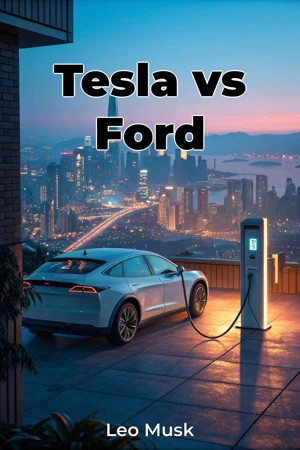
Can one company truly revolutionize a century-old industry? "Tesla vs Ford" delves into the dynamic battle unfolding within the automotive world, exploring Tesla's disruptive influence and Ford's determined response in the electric and hybrid vehicle market. This book analyzes the strategies, innovations, and market forces shaping the future of transportation. The book focuses on the key topics of technological innovation, entrepreneurial leadership, and the adaptation of established business models in the face of disruption. These topics are significant because they reflect a broader trend of industries being reshaped by new technologies and innovative companies. Understanding the legacy of Ford and the emergence of Tesla requires a brief look at automotive history. Ford's mass production techniques in the early 20th century democratized car ownership. A century later, Tesla's focus on electric vehicles and sustainable energy solutions has challenged the internal combustion engine's dominance. The book assumes a basic understanding of business principles and an interest in the automotive and technology sectors. The central argument is that Tesla's success stems from a combination of technological innovation and a direct-to-consumer sales model, forcing traditional automakers like Ford to re-evaluate their strategies and accelerate their transition to electric vehicles. This argument is important because it highlights the challenges established companies face when confronted with disruptive innovation and offers insights into how they can adapt and compete. "Tesla vs Ford" begins by introducing the historical context of both companies and the automotive industry. It then examines Tesla's rise, focusing on its technological advancements in battery technology, autonomous driving, and over-the-air software updates. The book dedicates sections to Ford's response, detailing its investments in electric vehicle development, partnerships with technology companies, and efforts to modernize its manufacturing processes. A crucial part of this analysis considers consumer adoption of electric vehicles, exploring factors such as range anxiety, charging infrastructure availability, and government incentives. The book culminates by analyzing the future of the automotive industry, considering the potential impact of autonomous vehicles, shared mobility services, and evolving consumer preferences while making projections based on the ongoing competitive dynamics. The book will present evidence from industry reports, financial analyses, and case studies of both Tesla and Ford. It will draw upon data from government agencies, market research firms, and interviews with industry experts. The analysis will integrate financial data, technological trends, and consumer behavior insights to build a comprehensive picture of the competition. The book connects to fields such as environmental science, exploring the impact of electric vehicles on reducing carbon emissions; economics, analyzing the economic effects of technological innovation on employment and industry structure; and marketing, examining the strategies used by Tesla and Ford to attract and retain customers. These connections enrich the book's central argument by placing it within a broader context. "Tesla vs Ford" offers a competitive analysis, contrasting Tesla's disruptive approach with Ford's efforts to adapt and innovate. This perspective provides insights into the challenges and opportunities facing established companies in the age of technological disruption. The book employs a fact-based, analytical style to present information. It strives to create a balanced and objective analysis of the competition between Tesla and Ford. The writing is accessible to a broad audience interested in business, technology, and the automotive industry. The target audience includes business professionals, investors, technology enthusiasts, and anyone interested in the future of the automotive industry. The book provides valuable insights into the strategies, challenges, and opportunities facing companies in a rapidly evolving market. As a work of business analysis, the book adheres to the conventions of presenting factual information, supporting arguments with evidence, and providing objective analysis. It aims to contribute to the understanding of competitive dynamics and strategic decision-making in the automotive industry. The scope of the book is limited to the competition between Tesla and Ford in the electric and hybrid vehicle market. While it touches upon broader industry trends, it primarily focuses on these two companies. Readers can apply the information in this book to understand the challenges and opportunities facing their own organizations in the face of technological disruption. It provides insights into strategic decision-making, innovation management, and competitive analysis. The book will address ongoing debates regarding the pace of electric vehicle adoption, the role of government regulation in promoting electric vehicles, and the long-term viability of Tesla's business model. These debates are important because they shape the future of the automotive industry and the environment.
Can one company truly revolutionize a century-old industry? "Tesla vs Ford" delves into the dynamic battle unfolding within the automotive world, exploring Tesla's disruptive influence and Ford's determined response in the electric and hybrid vehicle market. This book analyzes the strategies, innovations, and market forces shaping the future of transportation. The book focuses on the key topics of technological innovation, entrepreneurial leadership, and the adaptation of established business models in the face of disruption. These topics are significant because they reflect a broader trend of industries being reshaped by new technologies and innovative companies. Understanding the legacy of Ford and the emergence of Tesla requires a brief look at automotive history. Ford's mass production techniques in the early 20th century democratized car ownership. A century later, Tesla's focus on electric vehicles and sustainable energy solutions has challenged the internal combustion engine's dominance. The book assumes a basic understanding of business principles and an interest in the automotive and technology sectors. The central argument is that Tesla's success stems from a combination of technological innovation and a direct-to-consumer sales model, forcing traditional automakers like Ford to re-evaluate their strategies and accelerate their transition to electric vehicles. This argument is important because it highlights the challenges established companies face when confronted with disruptive innovation and offers insights into how they can adapt and compete. "Tesla vs Ford" begins by introducing the historical context of both companies and the automotive industry. It then examines Tesla's rise, focusing on its technological advancements in battery technology, autonomous driving, and over-the-air software updates. The book dedicates sections to Ford's response, detailing its investments in electric vehicle development, partnerships with technology companies, and efforts to modernize its manufacturing processes. A crucial part of this analysis considers consumer adoption of electric vehicles, exploring factors such as range anxiety, charging infrastructure availability, and government incentives. The book culminates by analyzing the future of the automotive industry, considering the potential impact of autonomous vehicles, shared mobility services, and evolving consumer preferences while making projections based on the ongoing competitive dynamics. The book will present evidence from industry reports, financial analyses, and case studies of both Tesla and Ford. It will draw upon data from government agencies, market research firms, and interviews with industry experts. The analysis will integrate financial data, technological trends, and consumer behavior insights to build a comprehensive picture of the competition. The book connects to fields such as environmental science, exploring the impact of electric vehicles on reducing carbon emissions; economics, analyzing the economic effects of technological innovation on employment and industry structure; and marketing, examining the strategies used by Tesla and Ford to attract and retain customers. These connections enrich the book's central argument by placing it within a broader context. "Tesla vs Ford" offers a competitive analysis, contrasting Tesla's disruptive approach with Ford's efforts to adapt and innovate. This perspective provides insights into the challenges and opportunities facing established companies in the age of technological disruption. The book employs a fact-based, analytical style to present information. It strives to create a balanced and objective analysis of the competition between Tesla and Ford. The writing is accessible to a broad audience interested in business, technology, and the automotive industry. The target audience includes business professionals, investors, technology enthusiasts, and anyone interested in the future of the automotive industry. The book provides valuable insights into the strategies, challenges, and opportunities facing companies in a rapidly evolving market. As a work of business analysis, the book adheres to the conventions of presenting factual information, supporting arguments with evidence, and providing objective analysis. It aims to contribute to the understanding of competitive dynamics and strategic decision-making in the automotive industry. The scope of the book is limited to the competition between Tesla and Ford in the electric and hybrid vehicle market. While it touches upon broader industry trends, it primarily focuses on these two companies. Readers can apply the information in this book to understand the challenges and opportunities facing their own organizations in the face of technological disruption. It provides insights into strategic decision-making, innovation management, and competitive analysis. The book will address ongoing debates regarding the pace of electric vehicle adoption, the role of government regulation in promoting electric vehicles, and the long-term viability of Tesla's business model. These debates are important because they shape the future of the automotive industry and the environment.
"Tesla vs Ford" explores the intense competition reshaping the automotive industry, primarily focusing on Tesla's disruptive innovation in electric vehicles and Ford's strategic response. It delves into how Tesla's direct-to-consumer model and technological advancements, particularly in battery technology and autonomous driving, have spurred traditional automakers to accelerate their EV transition. The book examines the strategies employed by both companies, providing a competitive analysis of their business models and technological innovations. The book begins with a historical overview, contrasting Ford's mass production legacy with Tesla's modern approach to sustainable transportation. Subsequent chapters analyze Tesla's rise and Ford's adaptation, including their investments in electric vehicle development and partnerships. A key aspect is the assessment of consumer EV adoption, considering factors like charging infrastructure and government incentives. Ultimately, "Tesla vs Ford" considers the future of the automotive industry, touching on autonomous vehicles and evolving consumer preferences, offering valuable insights for anyone interested in technology, entrepreneurship, and business strategy.
Book Details
ISBN
9788233988364
Publisher
Publifye AS
Your Licenses
You don't own any licenses for this book
Purchase a license below to unlock this book and download the EPUB.
Purchase License
Select a tier to unlock this book
Need bulk licensing?
Contact us for enterprise agreements.