
About This Book
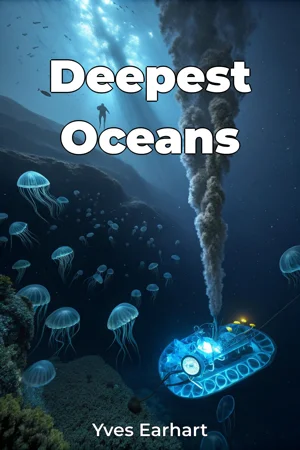
What mysteries lie hidden beneath the ocean's surface, in the crushing depths where sunlight fails to penetrate? "Deepest Oceans" explores this final frontier on our planet, venturing into the abyssal plains and trench systems that remain largely unknown. The book delves into the unique ecosystems teeming with bizarre life forms adapted to extreme pressures, darkness, and scarce resources. Equally important, it examines the cutting-edge technology that allows us to reach these depths and unravel their geological and biological secrets. These explorations are important because they are key to understanding Earth's overall environmental health, climate regulation, and the potential for undiscovered resources and unique biological processes. "Deepest Oceans" provides essential context by exploring the history of deep-sea exploration, from early bathysphere descents to modern remotely operated vehicles (ROVs) and autonomous underwater vehicles (AUVs). It explains how advances in materials science, sonar technology, and underwater imaging have gradually opened up these regions to scientific investigation. No prior extensive knowledge is needed, but a basic understanding of Earth science principles will enhance the reader's appreciation of the material. The central argument of "Deepest Oceans" is that the deep ocean, despite its remoteness, is inextricably linked to the surface world and plays a vital role in global processes. By understanding its geology, biology, and chemistry, we can better manage our impact on the entire planet. The book begins by introducing the fundamental concepts of oceanography, including pressure gradients, temperature profiles, and the chemistry of seawater. The book then transitions to an in-depth look at the topography of the deep ocean, specifically focusing on abyssal plains, hydrothermal vent systems, and deep-sea trenches. The next section explores the diverse and often bizarre life found at these depths, covering topics such as extremophiles, bioluminescence, and deep-sea gigantism. The book also addresses the challenges posed by human activities, including deep-sea mining and plastic pollution. The concluding chapter synthesizes the information presented and highlights the importance of ongoing research and conservation efforts. The arguments are supported by a wealth of scientific data, including oceanographic surveys, biological experiments, and geological analyses. The book draws on research published in peer-reviewed journals, government reports, and data from oceanographic institutions. It features detailed maps, illustrations, and photographs to bring the deep ocean to life for the reader. "Deepest Oceans" connects to other fields like climate science, microbiology, and materials engineering. The deep ocean acts as a major carbon sink, influencing global climate patterns. The extremophiles found in hydrothermal vents provide insights into the origins of life and potential biotechnological applications. The development of deep-sea exploration technology requires advancements in materials science and engineering. A distinctive aspect of this book is its interdisciplinary approach, integrating geological, biological, chemical, and technological perspectives to paint a holistic picture of the deep ocean. It goes beyond simply describing the environment, and instead, explains the complex interactions that shape it. The book presents information in a clear, concise, and engaging manner, avoiding technical jargon where possible. The tone is informative and objective. The target audience is broad, including students, researchers, policymakers, and anyone with an interest in marine science and environmental issues. It will be valuable to anyone seeking a comprehensive overview of the deep ocean and its significance. As a work of Earth Sciences Geography and Nature, the book adheres to scientific accuracy. Coverage extends to all major deep-sea environments globally, while focusing on specific locations that represent key features or research sites. The real-world applications of the information presented in "Deepest Oceans" are multifaceted. Understanding deep-sea ecosystems can inform conservation efforts, while knowledge of deep-sea resources is relevant to policymakers involved in resource management.
What mysteries lie hidden beneath the ocean's surface, in the crushing depths where sunlight fails to penetrate? "Deepest Oceans" explores this final frontier on our planet, venturing into the abyssal plains and trench systems that remain largely unknown. The book delves into the unique ecosystems teeming with bizarre life forms adapted to extreme pressures, darkness, and scarce resources. Equally important, it examines the cutting-edge technology that allows us to reach these depths and unravel their geological and biological secrets. These explorations are important because they are key to understanding Earth's overall environmental health, climate regulation, and the potential for undiscovered resources and unique biological processes. "Deepest Oceans" provides essential context by exploring the history of deep-sea exploration, from early bathysphere descents to modern remotely operated vehicles (ROVs) and autonomous underwater vehicles (AUVs). It explains how advances in materials science, sonar technology, and underwater imaging have gradually opened up these regions to scientific investigation. No prior extensive knowledge is needed, but a basic understanding of Earth science principles will enhance the reader's appreciation of the material. The central argument of "Deepest Oceans" is that the deep ocean, despite its remoteness, is inextricably linked to the surface world and plays a vital role in global processes. By understanding its geology, biology, and chemistry, we can better manage our impact on the entire planet. The book begins by introducing the fundamental concepts of oceanography, including pressure gradients, temperature profiles, and the chemistry of seawater. The book then transitions to an in-depth look at the topography of the deep ocean, specifically focusing on abyssal plains, hydrothermal vent systems, and deep-sea trenches. The next section explores the diverse and often bizarre life found at these depths, covering topics such as extremophiles, bioluminescence, and deep-sea gigantism. The book also addresses the challenges posed by human activities, including deep-sea mining and plastic pollution. The concluding chapter synthesizes the information presented and highlights the importance of ongoing research and conservation efforts. The arguments are supported by a wealth of scientific data, including oceanographic surveys, biological experiments, and geological analyses. The book draws on research published in peer-reviewed journals, government reports, and data from oceanographic institutions. It features detailed maps, illustrations, and photographs to bring the deep ocean to life for the reader. "Deepest Oceans" connects to other fields like climate science, microbiology, and materials engineering. The deep ocean acts as a major carbon sink, influencing global climate patterns. The extremophiles found in hydrothermal vents provide insights into the origins of life and potential biotechnological applications. The development of deep-sea exploration technology requires advancements in materials science and engineering. A distinctive aspect of this book is its interdisciplinary approach, integrating geological, biological, chemical, and technological perspectives to paint a holistic picture of the deep ocean. It goes beyond simply describing the environment, and instead, explains the complex interactions that shape it. The book presents information in a clear, concise, and engaging manner, avoiding technical jargon where possible. The tone is informative and objective. The target audience is broad, including students, researchers, policymakers, and anyone with an interest in marine science and environmental issues. It will be valuable to anyone seeking a comprehensive overview of the deep ocean and its significance. As a work of Earth Sciences Geography and Nature, the book adheres to scientific accuracy. Coverage extends to all major deep-sea environments globally, while focusing on specific locations that represent key features or research sites. The real-world applications of the information presented in "Deepest Oceans" are multifaceted. Understanding deep-sea ecosystems can inform conservation efforts, while knowledge of deep-sea resources is relevant to policymakers involved in resource management.
"Deepest Oceans" unveils the largely unexplored realm of the deep ocean, highlighting its vital role in Earth's systems. This book ventures into the abyssal plains and deep-sea trenches, revealing unique ecosystems thriving under extreme pressure and darkness. One intriguing aspect is the presence of extremophiles near hydrothermal vents, offering clues about the origins of life. The book also emphasizes the importance of underwater technology in unraveling the geological and biological secrets of these depths. The book progresses from basic oceanography concepts to detailed explorations of deep-sea topography, life forms, and the impact of human activities like deep-sea mining. It adopts an interdisciplinary approach, integrating Earth science, marine science, and technological perspectives. "Deepest Oceans" underscores that the deep ocean, despite its remoteness, is inextricably linked to the surface world, influencing climate regulation and global environmental health.
Book Details
ISBN
9788233988289
Publisher
Publifye AS
Your Licenses
You don't own any licenses for this book
Purchase a license below to unlock this book and download the EPUB.
Purchase License
Select a tier to unlock this book
Need bulk licensing?
Contact us for enterprise agreements.