
About This Book
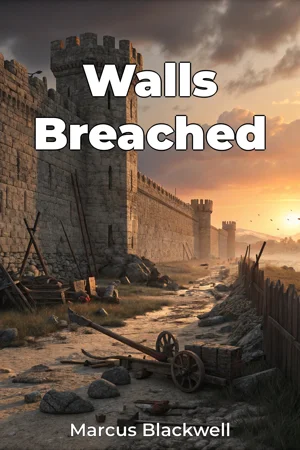
Have you ever wondered what it takes to shatter the seemingly unbreakable? "Walls Breached" delves into the dramatic and often brutal history of sieges, exploring not only the imposing fortresses of the past, but also the innovative tactics and sheer human determination that led to their downfall. This book examines the pivotal moments when these defenses were overcome, revealing the strategies employed by attackers, the weaknesses exploited, and the ultimate fate of these once-mighty strongholds. By understanding what caused these fortresses to fail, we gain invaluable insights into military history and the enduring power of ingenuity and adaptation. This exploration centers around three core themes: the evolution of siege warfare, the critical role of technology and engineering, and the psychological impact of sieges on both defenders and attackers. The progression of siege warfare from rudimentary assaults to complex, coordinated operations is a testament to human resourcefulness. Technological advancements, from the trebuchet to gunpowder artillery, fundamentally altered the balance of power between besiegers and the besieged. Furthermore, the psychological dimensions of siege warfare, including morale, resilience, and the brutal realities of prolonged conflict, provide critical context for understanding the dynamics of these historical events. To fully grasp the significance of these sieges, the book provides a necessary historical backdrop, examining the political, social, and economic factors that shaped the construction and defense of fortresses throughout different eras. This includes understanding the context of the societies that built and relied upon these fortifications, the resources they commanded, and the strategic imperatives that drove their creation. The central argument of "Walls Breached" posits that the fall of even the most formidable fortress is rarely attributable to a single factor. Rather, it is a complex interplay of technological innovation, strategic planning, human error, and sheer luck. This multifaceted approach challenges the simplistic notion of invincibility and underscores how a combination of ingenuity, determination, and circumstance can overcome even the most daunting obstacles. The book is structured to introduce the core concepts of siege warfare and fortified defenses, then proceeds to examine specific case studies across diverse historical periods and geographical locations. These case studies will detail the siege of Constantinople (1453), the siege of Tenochtitlan (1521), and the siege of Vicksburg (1863), among others. Each chapter will present a detailed account of the siege, analyzing the strategic context, the forces involved, the key events, and the ultimate outcome. The book will culminate by synthesizing the lessons learned from these examples to draw broader conclusions about the nature of siege warfare and its impact on history. It will also explore the application of these insights to modern security strategies, demonstrating the enduring relevance of historical analysis. The arguments presented in "Walls Breached" are supported by a wide range of historical evidence, including primary source accounts, archaeological findings, military treatises, and contemporary illustrations. The book also draws upon recent scholarship in military history, engineering, and social science, offering a comprehensive and nuanced perspective on the topic. "Walls Breached" benefits from interdisciplinary connections across fields like archaeology, engineering, and psychology. Archaeological findings provide tangible evidence of siege tactics and defensive structures. Engineering principles explain the design and capabilities of fortifications and siege weaponry. Psychological insights shed light on the motivations and behaviors of individuals under the extreme stress of siege warfare. These interdisciplinary connections enrich the analysis and provide a more holistic understanding of the events. The book takes a fresh approach by integrating military and social history, looking at the impact on civilian populations and the ethical considerations involved in siege tactics. This approach offers new perspectives on the human dimensions of siege warfare. Written in a clear and engaging narrative style, "Walls Breached" aims to be accessible to a broad audience while maintaining scholarly rigor. The book is designed for enthusiasts of military history, world history, and anyone interested in the dynamics of conflict and strategy. Readers interested in the study of fortifications and siegecraft, as well as those seeking to understand the broader implications of these historical events, will find "Walls Breached" a valuable resource. As a work of military history, "Walls Breached" adheres to the genre's emphasis on factual accuracy, strategic analysis, and detailed reconstruction of events. At the same time, as a work of world history, it emphasizes the broader context of the sieges discussed. The scope of "Walls Breached" is primarily focused on sieges that resulted in breaches, rather than those that were successfully resisted. This focus allows for a deeper exploration of the factors leading to failure, although it acknowledges that successful defenses are equally important to the overall history of fortifications. The lessons learned from the study of sieges can be applied to contemporary security challenges, such as protecting critical infrastructure, defending against cyberattacks, and understanding the dynamics of asymmetric warfare. The book seeks to show how careful analysis of past events is crucial for understanding present-day challenges. While the topic of siege warfare can be seen as a purely military matter, "Walls Breached" addresses the ethical questions surrounding siege tactics, such as the targeting of civilians and the use of starvation as a weapon. By acknowledging these controversies, the book aims to provide a balanced and thought-provoking analysis of this complex and often brutal aspect of human history.
Have you ever wondered what it takes to shatter the seemingly unbreakable? "Walls Breached" delves into the dramatic and often brutal history of sieges, exploring not only the imposing fortresses of the past, but also the innovative tactics and sheer human determination that led to their downfall. This book examines the pivotal moments when these defenses were overcome, revealing the strategies employed by attackers, the weaknesses exploited, and the ultimate fate of these once-mighty strongholds. By understanding what caused these fortresses to fail, we gain invaluable insights into military history and the enduring power of ingenuity and adaptation. This exploration centers around three core themes: the evolution of siege warfare, the critical role of technology and engineering, and the psychological impact of sieges on both defenders and attackers. The progression of siege warfare from rudimentary assaults to complex, coordinated operations is a testament to human resourcefulness. Technological advancements, from the trebuchet to gunpowder artillery, fundamentally altered the balance of power between besiegers and the besieged. Furthermore, the psychological dimensions of siege warfare, including morale, resilience, and the brutal realities of prolonged conflict, provide critical context for understanding the dynamics of these historical events. To fully grasp the significance of these sieges, the book provides a necessary historical backdrop, examining the political, social, and economic factors that shaped the construction and defense of fortresses throughout different eras. This includes understanding the context of the societies that built and relied upon these fortifications, the resources they commanded, and the strategic imperatives that drove their creation. The central argument of "Walls Breached" posits that the fall of even the most formidable fortress is rarely attributable to a single factor. Rather, it is a complex interplay of technological innovation, strategic planning, human error, and sheer luck. This multifaceted approach challenges the simplistic notion of invincibility and underscores how a combination of ingenuity, determination, and circumstance can overcome even the most daunting obstacles. The book is structured to introduce the core concepts of siege warfare and fortified defenses, then proceeds to examine specific case studies across diverse historical periods and geographical locations. These case studies will detail the siege of Constantinople (1453), the siege of Tenochtitlan (1521), and the siege of Vicksburg (1863), among others. Each chapter will present a detailed account of the siege, analyzing the strategic context, the forces involved, the key events, and the ultimate outcome. The book will culminate by synthesizing the lessons learned from these examples to draw broader conclusions about the nature of siege warfare and its impact on history. It will also explore the application of these insights to modern security strategies, demonstrating the enduring relevance of historical analysis. The arguments presented in "Walls Breached" are supported by a wide range of historical evidence, including primary source accounts, archaeological findings, military treatises, and contemporary illustrations. The book also draws upon recent scholarship in military history, engineering, and social science, offering a comprehensive and nuanced perspective on the topic. "Walls Breached" benefits from interdisciplinary connections across fields like archaeology, engineering, and psychology. Archaeological findings provide tangible evidence of siege tactics and defensive structures. Engineering principles explain the design and capabilities of fortifications and siege weaponry. Psychological insights shed light on the motivations and behaviors of individuals under the extreme stress of siege warfare. These interdisciplinary connections enrich the analysis and provide a more holistic understanding of the events. The book takes a fresh approach by integrating military and social history, looking at the impact on civilian populations and the ethical considerations involved in siege tactics. This approach offers new perspectives on the human dimensions of siege warfare. Written in a clear and engaging narrative style, "Walls Breached" aims to be accessible to a broad audience while maintaining scholarly rigor. The book is designed for enthusiasts of military history, world history, and anyone interested in the dynamics of conflict and strategy. Readers interested in the study of fortifications and siegecraft, as well as those seeking to understand the broader implications of these historical events, will find "Walls Breached" a valuable resource. As a work of military history, "Walls Breached" adheres to the genre's emphasis on factual accuracy, strategic analysis, and detailed reconstruction of events. At the same time, as a work of world history, it emphasizes the broader context of the sieges discussed. The scope of "Walls Breached" is primarily focused on sieges that resulted in breaches, rather than those that were successfully resisted. This focus allows for a deeper exploration of the factors leading to failure, although it acknowledges that successful defenses are equally important to the overall history of fortifications. The lessons learned from the study of sieges can be applied to contemporary security challenges, such as protecting critical infrastructure, defending against cyberattacks, and understanding the dynamics of asymmetric warfare. The book seeks to show how careful analysis of past events is crucial for understanding present-day challenges. While the topic of siege warfare can be seen as a purely military matter, "Walls Breached" addresses the ethical questions surrounding siege tactics, such as the targeting of civilians and the use of starvation as a weapon. By acknowledging these controversies, the book aims to provide a balanced and thought-provoking analysis of this complex and often brutal aspect of human history.
"Walls Breached" explores the gripping history of siege warfare, revealing how seemingly impenetrable fortifications were overcome through military strategy, engineering ingenuity, and human resilience. From ancient strongholds to medieval castles and beyond, the book examines pivotal sieges throughout world history, emphasizing the evolution of siege tactics and the critical role of technology. One intriguing aspect is the psychological impact of these prolonged conflicts on both attackers and defenders, highlighting the role of morale and determination in achieving victory or succumbing to defeat. The book approaches the topic by blending military history with social considerations, providing a context that includes the civilian populations affected and the ethical dimensions of siege tactics. Case studies, such as the sieges of Constantinople, Tenochtitlan, and Vicksburg, illustrate how a combination of strategic planning, technological advancements, and even sheer luck could breach even the most formidable defenses. Each chapter dissects a specific siege, analyzing the forces involved, key events, and ultimate outcomes. The book progresses by first introducing the core concepts of siege warfare before delving into those specific historical examples. Ultimately, "Walls Breached" synthesizes the lessons learned to draw broader conclusions about siege warfare's impact on history and its relevance to modern security strategies, demonstrating that understanding the past is essential for navigating present-day challenges.
Book Details
ISBN
9788233988241
Publisher
Publifye AS
Your Licenses
You don't own any licenses for this book
Purchase a license below to unlock this book and download the EPUB.
Purchase License
Select a tier to unlock this book
Need bulk licensing?
Contact us for enterprise agreements.