
About This Book
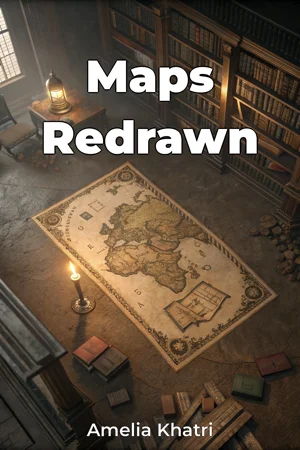
Have you ever considered the story a map silently tells, not just of terrain, but of power, perception, and progress? "Maps Redrawn" delves into the dynamic history of cartography to reveal how maps have not merely reflected the world but actively shaped it. This book explores the fascinating evolution of maps, the disappearance of lands once thought to exist, and the redrawing of borders that have defined nations and altered the course of history. These are not just geographical transformations; they represent shifts in scientific understanding, political dominance, and cultural perspectives, topics that resonate across many disciplines and impact our understanding of the modern world. "Maps Redrawn" argues that maps are never neutral representations of reality. Instead, they are powerful tools that reflect the biases, knowledge, and agendas of their creators. Understanding this inherent subjectivity is crucial for interpreting historical and contemporary geopolitical landscapes. The book supports this argument through careful examination of historical maps, geographical surveys, and geopolitical treaties, highlighting instances where cartographic errors, deliberate distortions, or evolving scientific knowledge led to significant real-world consequences. Detailed case studies and comparative analyses are used to provide concrete examples of how maps have been used to legitimize territorial claims, promote exploration, and even justify conflict The book is structured to provide a comprehensive overview of the subject. Initially, fundamental cartographic principles and the history of mapmaking from ancient civilizations to the Renaissance are introduced. This section establishes a baseline understanding of how early maps were constructed based on available knowledge and technology. Next, the book examines specific instances of "lost lands," such as mythical islands or inaccurately charted continents, analyzing the reasons for their initial inclusion on maps and their subsequent removal as geographic knowledge expanded during the Age of Exploration and beyond. This exploration segues into a more detailed analysis of border disputes and political cartography focusing on major instances in history such as the Scramble for Africa, the redrawing of Europe after World War I, and the ongoing disputes in regions like the South China Sea, focusing on the role of maps in shaping international relations and national identities. The book utilizes a variety of sources, including historical maps from various archives, contemporary geographic surveys, diplomatic records, and scholarly analyses of cartographic history. The methodology involves comparing maps from different time periods and regions to identify changes in representation and to analyze the underlying political, social, and scientific factors driving these changes. "Maps Redrawn" connects to various fields, including history, political science, and international relations. The book analyzes how maps have been used to legitimize territorial claims and influence geopolitical strategies. It also touches upon the philosophy of science, examining how evolving scientific knowledge impacts the accuracy and reliability of maps. Finally, it links to cultural studies by exploring how maps reflect cultural perceptions and shape national identities. A key aspect of "Maps Redrawn" is its emphasis on the subjective nature of mapmaking. The book challenges the traditional view of maps as objective representations of the world, highlighting the potential for bias, error, and manipulation.This approach encourages readers to critically evaluate maps as historical and political artifacts. Written in a scholarly yet accessible style, "Maps Redrawn" aims to appeal to a wide audience. This book will be valuable to students, researchers, and anyone interested in understanding the complex relationship between maps, power, and history. It provides a unique perspective on how maps have shaped our world and continue to influence our understanding of it. As a work of non-fiction, "Maps Redrawn" adheres to the genre's expectations of accuracy, objectivity, and evidence-based analysis. It presents a balanced and nuanced account of the topic, acknowledging different perspectives and avoiding overly simplistic interpretations. The scope of the book is global, covering a wide range of geographical regions and historical periods. However, it does not delve into highly technical aspects which are typically covered in advanced cartography textbooks. Instead, the focus remains on the broader historical, political, and cultural implications of mapmaking. The knowledge gained from "Maps Redrawn" can be applied in various real-world contexts. It can inform policy decisions related to border disputes, resource management, and international relations. It can also enhance critical thinking skills by encouraging readers to question the information presented in maps and other visual representations of data. Furthermore, the book addresses ongoing debates surrounding the role of maps in shaping cultural identities and promoting national narratives. By examining these controversies, "Maps Redrawn" provides a more comprehensive and nuanced understanding of the power of maps in the modern world.
Have you ever considered the story a map silently tells, not just of terrain, but of power, perception, and progress? "Maps Redrawn" delves into the dynamic history of cartography to reveal how maps have not merely reflected the world but actively shaped it. This book explores the fascinating evolution of maps, the disappearance of lands once thought to exist, and the redrawing of borders that have defined nations and altered the course of history. These are not just geographical transformations; they represent shifts in scientific understanding, political dominance, and cultural perspectives, topics that resonate across many disciplines and impact our understanding of the modern world. "Maps Redrawn" argues that maps are never neutral representations of reality. Instead, they are powerful tools that reflect the biases, knowledge, and agendas of their creators. Understanding this inherent subjectivity is crucial for interpreting historical and contemporary geopolitical landscapes. The book supports this argument through careful examination of historical maps, geographical surveys, and geopolitical treaties, highlighting instances where cartographic errors, deliberate distortions, or evolving scientific knowledge led to significant real-world consequences. Detailed case studies and comparative analyses are used to provide concrete examples of how maps have been used to legitimize territorial claims, promote exploration, and even justify conflict The book is structured to provide a comprehensive overview of the subject. Initially, fundamental cartographic principles and the history of mapmaking from ancient civilizations to the Renaissance are introduced. This section establishes a baseline understanding of how early maps were constructed based on available knowledge and technology. Next, the book examines specific instances of "lost lands," such as mythical islands or inaccurately charted continents, analyzing the reasons for their initial inclusion on maps and their subsequent removal as geographic knowledge expanded during the Age of Exploration and beyond. This exploration segues into a more detailed analysis of border disputes and political cartography focusing on major instances in history such as the Scramble for Africa, the redrawing of Europe after World War I, and the ongoing disputes in regions like the South China Sea, focusing on the role of maps in shaping international relations and national identities. The book utilizes a variety of sources, including historical maps from various archives, contemporary geographic surveys, diplomatic records, and scholarly analyses of cartographic history. The methodology involves comparing maps from different time periods and regions to identify changes in representation and to analyze the underlying political, social, and scientific factors driving these changes. "Maps Redrawn" connects to various fields, including history, political science, and international relations. The book analyzes how maps have been used to legitimize territorial claims and influence geopolitical strategies. It also touches upon the philosophy of science, examining how evolving scientific knowledge impacts the accuracy and reliability of maps. Finally, it links to cultural studies by exploring how maps reflect cultural perceptions and shape national identities. A key aspect of "Maps Redrawn" is its emphasis on the subjective nature of mapmaking. The book challenges the traditional view of maps as objective representations of the world, highlighting the potential for bias, error, and manipulation.This approach encourages readers to critically evaluate maps as historical and political artifacts. Written in a scholarly yet accessible style, "Maps Redrawn" aims to appeal to a wide audience. This book will be valuable to students, researchers, and anyone interested in understanding the complex relationship between maps, power, and history. It provides a unique perspective on how maps have shaped our world and continue to influence our understanding of it. As a work of non-fiction, "Maps Redrawn" adheres to the genre's expectations of accuracy, objectivity, and evidence-based analysis. It presents a balanced and nuanced account of the topic, acknowledging different perspectives and avoiding overly simplistic interpretations. The scope of the book is global, covering a wide range of geographical regions and historical periods. However, it does not delve into highly technical aspects which are typically covered in advanced cartography textbooks. Instead, the focus remains on the broader historical, political, and cultural implications of mapmaking. The knowledge gained from "Maps Redrawn" can be applied in various real-world contexts. It can inform policy decisions related to border disputes, resource management, and international relations. It can also enhance critical thinking skills by encouraging readers to question the information presented in maps and other visual representations of data. Furthermore, the book addresses ongoing debates surrounding the role of maps in shaping cultural identities and promoting national narratives. By examining these controversies, "Maps Redrawn" provides a more comprehensive and nuanced understanding of the power of maps in the modern world.
"Maps Redrawn" explores the captivating history of maps, demonstrating how they've shaped our world, reflecting not just geography but also power dynamics and cultural perspectives. The book argues that maps are subjective creations influenced by the biases and knowledge of their makers, challenging the notion of maps as neutral representations. It highlights how cartographic errors or deliberate distortions have had real-world consequences, influencing territorial claims and international relations. The book begins by introducing fundamental cartographic principles and tracing the history of mapmaking from ancient times to the Renaissance. It then examines instances of "lost lands" that once appeared on maps but were later removed as scientific knowledge expanded. Progressing further, the book delves into border disputes and political cartography, analyzing how maps have shaped national identities and fueled conflicts, offering a comprehensive understanding of the interplay between maps, history, and geopolitics.
Book Details
ISBN
9788233987947
Publisher
Publifye AS
Your Licenses
You don't own any licenses for this book
Purchase a license below to unlock this book and download the EPUB.
Purchase License
Select a tier to unlock this book
Need bulk licensing?
Contact us for enterprise agreements.