
About This Book
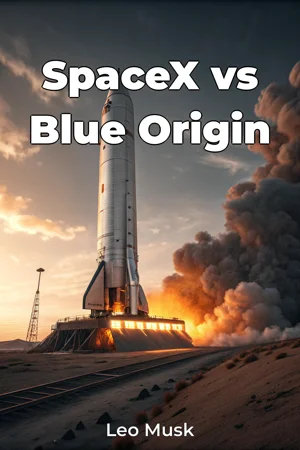
As humanity stands on the precipice of a new space age, the rivalry between SpaceX and Blue Origin is not just a business competition, but a defining force shaping the future of space exploration and colonization. This book delves into the multifaceted contest between Elon Musk's SpaceX and Jeff Bezos' Blue Origin, analyzing their contrasting approaches to rocket technology, their ambitious visions for human presence beyond Earth, and the implications of their strategies for the broader space industry. Understanding this competition is crucial for anyone interested in the technological, economic, and philosophical dimensions of humanity’s expansion into the cosmos. This book examines the space race between SpaceX and Blue Origin through the lens of technological innovation, business strategy, and long-term vision. We will dissect the core rocket technologies employed by each company, contrasting SpaceX's rapid iteration and focus on reusability with Blue Origin's emphasis on incremental development and operational safety. Furthermore, we will assess the business models that underpin their respective approaches, exploring how SpaceX’s aggressive pursuit of government contracts and commercial launches differs from Blue Origin’s patient, privately funded development of space infrastructure. Ultimately, the book will analyze the diverging visions of Musk and Bezos for establishing a permanent human presence on Mars and beyond, evaluating the feasibility and potential impact of each company’s plans. The book is structured to provide a comprehensive understanding of the SpaceX-Blue Origin dynamic. It begins with an overview of the historical context of private space exploration, tracing the evolution from early government-led programs to the emergence of entrepreneurial ventures. The subsequent sections will delve into the technological underpinnings of each company, examining the design, engineering, and operational characteristics of their respective rocket systems, including SpaceX's Falcon and Starship programs, and Blue Origin's New Shepard and New Glenn rockets. Business strategies will also be thoroughly explored, highlighting revenue models, investment strategies, and competitive positioning within the evolving space market. Finally, the book will culminate in an analysis of the long-term implications of each company's ambitions, considering the ethical, environmental, and societal challenges associated with space colonization. The analysis presented in this book will be supported by publicly available data, including company reports, regulatory filings, and industry analysis. It also draws on insights gleaned from interviews with experts in the space industry, including engineers, scientists, and business analysts. Case studies of key SpaceX and Blue Origin missions, such as SpaceX’s Crew Dragon launches and Blue Origin’s suborbital flights, will provide concrete examples of their respective capabilities and achievements. This book connects to several other fields of study, including engineering, economics, and space policy. From an engineering perspective, we will analyze the technical challenges of rocket design, propulsion systems, and spacecraft development. From an economic perspective, we will examine the financial dynamics of the space industry, including market trends, investment flows, and competitive strategies. From a space policy perspective, we will explore the regulatory frameworks and international agreements that govern space activities. The book adopts a balanced and objective tone, presenting factual information and reasoned analysis without bias towards either company. The writing style is accessible to a broad audience, avoiding excessive technical jargon while maintaining accuracy and rigor. The target audience includes anyone interested in space exploration, technology, entrepreneurship, or business strategy. The book will be valuable to students, researchers, industry professionals, and general readers seeking a deeper understanding of the forces shaping the future of space. The scope of this book is limited to the competition between SpaceX and Blue Origin and their direct impact on space exploration. While other players in the space industry will be mentioned, the primary focus will remain on these two companies and their distinct approaches. The information presented in this book has real-world applications for investors, policymakers, and aspiring entrepreneurs. Investors can use the analysis to inform their decisions about investing in the space industry. Policymakers can use the insights to develop effective regulations and promote responsible space exploration. Entrepreneurs can use the case studies to learn valuable lessons about building successful space ventures. The book also addresses some of the controversies surrounding space exploration, such as the environmental impact of rocket launches and the ethical considerations of space colonization. By presenting different perspectives and analyzing the available evidence, we aim to foster informed discussion and critical thinking about these important issues.
As humanity stands on the precipice of a new space age, the rivalry between SpaceX and Blue Origin is not just a business competition, but a defining force shaping the future of space exploration and colonization. This book delves into the multifaceted contest between Elon Musk's SpaceX and Jeff Bezos' Blue Origin, analyzing their contrasting approaches to rocket technology, their ambitious visions for human presence beyond Earth, and the implications of their strategies for the broader space industry. Understanding this competition is crucial for anyone interested in the technological, economic, and philosophical dimensions of humanity’s expansion into the cosmos. This book examines the space race between SpaceX and Blue Origin through the lens of technological innovation, business strategy, and long-term vision. We will dissect the core rocket technologies employed by each company, contrasting SpaceX's rapid iteration and focus on reusability with Blue Origin's emphasis on incremental development and operational safety. Furthermore, we will assess the business models that underpin their respective approaches, exploring how SpaceX’s aggressive pursuit of government contracts and commercial launches differs from Blue Origin’s patient, privately funded development of space infrastructure. Ultimately, the book will analyze the diverging visions of Musk and Bezos for establishing a permanent human presence on Mars and beyond, evaluating the feasibility and potential impact of each company’s plans. The book is structured to provide a comprehensive understanding of the SpaceX-Blue Origin dynamic. It begins with an overview of the historical context of private space exploration, tracing the evolution from early government-led programs to the emergence of entrepreneurial ventures. The subsequent sections will delve into the technological underpinnings of each company, examining the design, engineering, and operational characteristics of their respective rocket systems, including SpaceX's Falcon and Starship programs, and Blue Origin's New Shepard and New Glenn rockets. Business strategies will also be thoroughly explored, highlighting revenue models, investment strategies, and competitive positioning within the evolving space market. Finally, the book will culminate in an analysis of the long-term implications of each company's ambitions, considering the ethical, environmental, and societal challenges associated with space colonization. The analysis presented in this book will be supported by publicly available data, including company reports, regulatory filings, and industry analysis. It also draws on insights gleaned from interviews with experts in the space industry, including engineers, scientists, and business analysts. Case studies of key SpaceX and Blue Origin missions, such as SpaceX’s Crew Dragon launches and Blue Origin’s suborbital flights, will provide concrete examples of their respective capabilities and achievements. This book connects to several other fields of study, including engineering, economics, and space policy. From an engineering perspective, we will analyze the technical challenges of rocket design, propulsion systems, and spacecraft development. From an economic perspective, we will examine the financial dynamics of the space industry, including market trends, investment flows, and competitive strategies. From a space policy perspective, we will explore the regulatory frameworks and international agreements that govern space activities. The book adopts a balanced and objective tone, presenting factual information and reasoned analysis without bias towards either company. The writing style is accessible to a broad audience, avoiding excessive technical jargon while maintaining accuracy and rigor. The target audience includes anyone interested in space exploration, technology, entrepreneurship, or business strategy. The book will be valuable to students, researchers, industry professionals, and general readers seeking a deeper understanding of the forces shaping the future of space. The scope of this book is limited to the competition between SpaceX and Blue Origin and their direct impact on space exploration. While other players in the space industry will be mentioned, the primary focus will remain on these two companies and their distinct approaches. The information presented in this book has real-world applications for investors, policymakers, and aspiring entrepreneurs. Investors can use the analysis to inform their decisions about investing in the space industry. Policymakers can use the insights to develop effective regulations and promote responsible space exploration. Entrepreneurs can use the case studies to learn valuable lessons about building successful space ventures. The book also addresses some of the controversies surrounding space exploration, such as the environmental impact of rocket launches and the ethical considerations of space colonization. By presenting different perspectives and analyzing the available evidence, we aim to foster informed discussion and critical thinking about these important issues.
"SpaceX vs Blue Origin" explores the dynamic rivalry between Elon Musk's SpaceX and Jeff Bezos' Blue Origin, two companies at the forefront of the new space age. It examines how their contrasting approaches to rocket technology, business strategy, and visions for space colonization are shaping the future of the space industry. The book delves into their core technologies, contrasting SpaceX's focus on rapid iteration and reusability, exemplified by the Falcon and Starship programs, with Blue Origin's incremental development and operational safety, seen in their New Shepard and New Glenn rockets. This competition is more than just business; it's about defining humanity's future beyond Earth. The book analyzes the business models underpinning each company, highlighting SpaceX's aggressive pursuit of government contracts versus Blue Origin's patient, privately funded approach. It further assesses the feasibility and potential impact of their divergent visions for establishing a permanent human presence on Mars and beyond. Through publicly available data, expert interviews, and case studies of key missions like SpaceX’s Crew Dragon launches, the book provides concrete examples of their capabilities and achievements. Ultimately, the book progresses by first giving historical context, then delving into the technologies and business strategies, and finally, analyzing the long-term implications of each company's ambitions, offering valuable insights for anyone interested in technology, entrepreneurship, and the evolving space industry.
Book Details
ISBN
9788233987909
Publisher
Publifye AS
Your Licenses
You don't own any licenses for this book
Purchase a license below to unlock this book and download the EPUB.
Purchase License
Select a tier to unlock this book
Need bulk licensing?
Contact us for enterprise agreements.