
About This Book
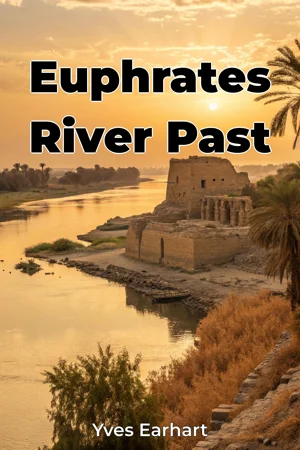
What if the key to understanding the rise and fall of civilizations lies not in grand strategies or legendary rulers, but in the gentle flow of a river? "Euphrates River Past" explores exactly that, delving into the crucial role the Euphrates River has played in shaping human history, from the earliest settlements to the complexities of the modern world. This book will reveal the deep, often overlooked connection between the Euphrates and the civilizations that thrived along its banks. We will explore the Euphrates through three key lenses: its significance as a cradle of early civilization, its fundamental role in the development of agriculture, and its enduring presence in mythology and legend. Understanding these interconnected themes is critical to appreciating how a single river could wield such profound influence on the course of human events. The book argues that the Euphrates is more than just a geographical feature; it is a dynamic force that shaped the social, economic, and cultural landscapes of Mesopotamia and beyond. To fully understand this dynamic, we will first establish the geological and historical context of the Euphrates, examining its origins, its changing course over millennia, and its environmental impact on the surrounding lands. This groundwork is essential to understanding the river's influence on Mesopotamian societies. The book's core argument centers around the Euphrates as an engine of innovation and a catalyst for societal development. It examines how the river facilitated the rise of agriculture through irrigation, leading to surplus food production, population growth, and the emergence of complex social structures. "Euphrates River Past" is structured in three parts. First, we introduce the geographical and environmental character of the river, setting the stage for understanding its impact. Second, we delve into the rise of Mesopotamian civilizations, examining how the Euphrates facilitated agriculture, trade, and the development of urban centers like Ur and Babylon. This section explores the legal and economic systems that emerged to manage the river's resources, looking at innovations like irrigation techniques and water distribution laws. Third, we explore the river's place in Mesopotamian mythology, religion, and literature, revealing how it was perceived as both a life-giving force and a source of destruction. We will also trace the river's role through the rise and fall of empires, from the Assyrians to the Ottomans, and conclude with an examination of the challenges facing the Euphrates today, including water scarcity and geopolitical conflict. The arguments presented are supported by archaeological evidence, ancient texts, and modern scientific research. We draw upon primary sources such as cuneiform tablets, historical accounts from Greek and Roman writers, and contemporary hydrological studies. Statistical data on agricultural yields, population densities, and water usage are used to quantify the river's impact. The book intersects with several disciplines, including archaeology, environmental science, and religious studies. By integrating insights from these fields, we offer a holistic understanding of the Euphrates' multifaceted role in human history. "Euphrates River Past" offers a unique perspective by focusing on the long-term relationship between humans and a single river system. It challenges conventional narratives of civilization by highlighting the crucial role of environmental factors in shaping human societies. The book employs a style that is both informative and accessible. It presents complex information in a clear and engaging manner, making it suitable for a broad audience. The intended audience includes students of history, archaeology, and environmental studies, as well as general readers interested in learning more about the ancient world and the relationship between humans and the environment. As a work of world history, "Euphrates River Past" adheres to the genre's conventions of providing well-researched, fact-based accounts. It also incorporates elements of Earth Sciences, Geography by exploring the geological and hydrological aspects of the river. The scope of the book is limited to the Euphrates River and its immediate surrounding areas, primarily Mesopotamia. While it touches upon broader historical trends, its focus remains on the river's specific influence. Discussions of other major rivers, such as the Tigris, are included only when relevant to understanding the Euphrates. The insights gained can inform contemporary debates about water management, environmental sustainability, and geopolitical conflict in the region. It can also provide lessons for other river-based societies facing similar challenges. One of the ongoing debates concerns the impact of modern dam construction on the Euphrates, with conflicting perspectives on its benefits and drawbacks. This book analyzes these different viewpoints and assesses their long-term implications.
What if the key to understanding the rise and fall of civilizations lies not in grand strategies or legendary rulers, but in the gentle flow of a river? "Euphrates River Past" explores exactly that, delving into the crucial role the Euphrates River has played in shaping human history, from the earliest settlements to the complexities of the modern world. This book will reveal the deep, often overlooked connection between the Euphrates and the civilizations that thrived along its banks. We will explore the Euphrates through three key lenses: its significance as a cradle of early civilization, its fundamental role in the development of agriculture, and its enduring presence in mythology and legend. Understanding these interconnected themes is critical to appreciating how a single river could wield such profound influence on the course of human events. The book argues that the Euphrates is more than just a geographical feature; it is a dynamic force that shaped the social, economic, and cultural landscapes of Mesopotamia and beyond. To fully understand this dynamic, we will first establish the geological and historical context of the Euphrates, examining its origins, its changing course over millennia, and its environmental impact on the surrounding lands. This groundwork is essential to understanding the river's influence on Mesopotamian societies. The book's core argument centers around the Euphrates as an engine of innovation and a catalyst for societal development. It examines how the river facilitated the rise of agriculture through irrigation, leading to surplus food production, population growth, and the emergence of complex social structures. "Euphrates River Past" is structured in three parts. First, we introduce the geographical and environmental character of the river, setting the stage for understanding its impact. Second, we delve into the rise of Mesopotamian civilizations, examining how the Euphrates facilitated agriculture, trade, and the development of urban centers like Ur and Babylon. This section explores the legal and economic systems that emerged to manage the river's resources, looking at innovations like irrigation techniques and water distribution laws. Third, we explore the river's place in Mesopotamian mythology, religion, and literature, revealing how it was perceived as both a life-giving force and a source of destruction. We will also trace the river's role through the rise and fall of empires, from the Assyrians to the Ottomans, and conclude with an examination of the challenges facing the Euphrates today, including water scarcity and geopolitical conflict. The arguments presented are supported by archaeological evidence, ancient texts, and modern scientific research. We draw upon primary sources such as cuneiform tablets, historical accounts from Greek and Roman writers, and contemporary hydrological studies. Statistical data on agricultural yields, population densities, and water usage are used to quantify the river's impact. The book intersects with several disciplines, including archaeology, environmental science, and religious studies. By integrating insights from these fields, we offer a holistic understanding of the Euphrates' multifaceted role in human history. "Euphrates River Past" offers a unique perspective by focusing on the long-term relationship between humans and a single river system. It challenges conventional narratives of civilization by highlighting the crucial role of environmental factors in shaping human societies. The book employs a style that is both informative and accessible. It presents complex information in a clear and engaging manner, making it suitable for a broad audience. The intended audience includes students of history, archaeology, and environmental studies, as well as general readers interested in learning more about the ancient world and the relationship between humans and the environment. As a work of world history, "Euphrates River Past" adheres to the genre's conventions of providing well-researched, fact-based accounts. It also incorporates elements of Earth Sciences, Geography by exploring the geological and hydrological aspects of the river. The scope of the book is limited to the Euphrates River and its immediate surrounding areas, primarily Mesopotamia. While it touches upon broader historical trends, its focus remains on the river's specific influence. Discussions of other major rivers, such as the Tigris, are included only when relevant to understanding the Euphrates. The insights gained can inform contemporary debates about water management, environmental sustainability, and geopolitical conflict in the region. It can also provide lessons for other river-based societies facing similar challenges. One of the ongoing debates concerns the impact of modern dam construction on the Euphrates, with conflicting perspectives on its benefits and drawbacks. This book analyzes these different viewpoints and assesses their long-term implications.
"Euphrates River Past" explores the profound influence of the Euphrates River on civilization, arguing that its waters were vital to shaping societies in Mesopotamia and beyond. The book examines how the river fostered agriculture through irrigation techniques, which led to surplus food production and the rise of complex urban centers like Babylon and Ur. It also highlights the river's presence in ancient mythology, where it was both a life-giving force and a source of destruction, reflecting its dual nature in shaping human destinies. The narrative progresses by first establishing the river's geographical and environmental context, then delving into the rise of Mesopotamian civilizations and their dependence on the Euphrates for agriculture and trade. Finally, the book explores the river's role in mythology and its impact on empires throughout history. By focusing on the long-term relationship between humans and the Euphrates, the book offers a unique perspective on how environmental factors have shaped human societies.
Book Details
ISBN
9788233987862
Publisher
Publifye AS
Your Licenses
You don't own any licenses for this book
Purchase a license below to unlock this book and download the EPUB.
Purchase License
Select a tier to unlock this book
Need bulk licensing?
Contact us for enterprise agreements.