
About This Book
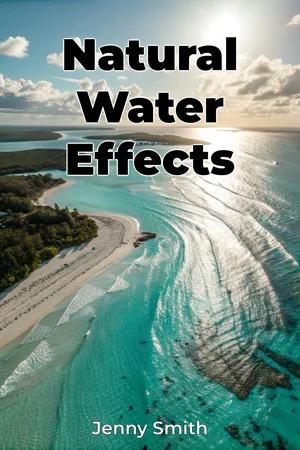
Have you ever considered the profound impact that natural water environments have on your body and mind? "Natural Water Effects" delves into the science behind the revitalizing and therapeutic benefits of immersing ourselves in oceans, lakes, rivers, and even the simple act of showering. This book explores the physiological and psychological responses triggered by natural water exposure, focusing on improved circulation, stress reduction, and the enhancement of overall well-being. These topics are vital in today's fast-paced world, where stress and chronic health issues are increasingly prevalent. Understanding the science-backed benefits of natural water can empower individuals to incorporate simple, accessible practices into their daily lives to promote better health. This exploration is set against a backdrop of centuries of hydrotherapy practices, from ancient Roman baths to modern-day spa treatments. While anecdotal evidence abounds regarding the positive effects of water, this book goes further, grounding these claims in rigorous scientific research. Readers need no specialized knowledge to understand the concepts presented; instead, a general interest in health and wellness is all that is required. The central argument of "Natural Water Effects" is that exposure to natural water elicits a cascade of beneficial physiological and psychological responses that contribute significantly to human health and well-being. It's not merely about relaxation; it's about activating the body's natural healing mechanisms through a readily available resource: water. This argument is crucial because it provides a scientifically valid framework for understanding and utilizing water as a therapeutic tool. The book begins by introducing the fundamental principles of hydrotherapy and its historical context. Then, it systematically examines the body's responses to water exposure, covering topics such as the circulatory system, the nervous system, and the endocrine system. Major sections detail the impact of water temperature on blood flow and inflammation, the role of buoyancy in reducing joint stress, and the psychological effects of natural water environments on mood and anxiety. The culmination of the argument emphasizes the cumulative effect of these individual benefits and their synergetic impact on overall health. The concluding section presents practical applications of these findings, offering guidance on incorporating natural water practices into daily routines for enhanced well-being. The evidence presented is drawn from a wide range of scientific studies, including clinical trials, physiological experiments, and epidemiological surveys. It synthesizes data from diverse sources, including peer-reviewed journals, government health reports, and academic research databases. A unique aspect of the research involves analyzing data from studies conducted in diverse aquatic environments, ranging from cold-water immersion to thermal springs, to identify common physiological responses. "Natural Water Effects" connects to other fields, such as environmental psychology, which explores the impact of natural environments on mental health, sports medicine, which utilizes hydrotherapy for recovery and rehabilitation, and even evolutionary biology, considering the innate human connection to water environments. These interdisciplinary connections enrich the discussion and underscore the multifaceted relevance of the topic. A unique facet of this book is its emphasis on the accessibility of natural water therapy. It moves beyond expensive spa treatments to focus on readily available resources, such as home showers, neighborhood swimming pools, and local bodies of water. It also offers a realistic and balanced perspective, acknowledging the potential risks associated with water exposure (such as hypothermia or waterborne illnesses) and providing guidelines for safe practices. The tone is informative, engaging, and evidence-based, designed to appeal to a broad audience interested in health, wellness, and natural therapies. The writing style balances scientific rigor with accessible language, avoiding jargon and using clear explanations to convey complex concepts. The target audience includes health enthusiasts, athletes, individuals seeking stress reduction techniques, and healthcare professionals interested in integrative medicine approaches. It will be valuable to these readers by providing them with a comprehensive and scientifically grounded understanding of the benefits of natural water exposure. Genre-specific elements include comprehensive citations and a clear index for cross-referencing information. The scope of the book is broad, covering a wide range of physiological and psychological effects. However, it is intentionally limited to the effects of natural water exposure, excluding the chemical properties of water itself. In the real world, the information in the book can be applied to design personalized hydrotherapy routines, optimize athletic recovery, manage stress, and promote overall well-being. While the benefits of hydrotherapy are generally well-accepted, there are some ongoing debates regarding the optimal duration, frequency, and temperature of water exposure for specific health outcomes. The book addresses these debates by presenting a balanced overview of the available evidence and highlighting areas where further research is needed.
Have you ever considered the profound impact that natural water environments have on your body and mind? "Natural Water Effects" delves into the science behind the revitalizing and therapeutic benefits of immersing ourselves in oceans, lakes, rivers, and even the simple act of showering. This book explores the physiological and psychological responses triggered by natural water exposure, focusing on improved circulation, stress reduction, and the enhancement of overall well-being. These topics are vital in today's fast-paced world, where stress and chronic health issues are increasingly prevalent. Understanding the science-backed benefits of natural water can empower individuals to incorporate simple, accessible practices into their daily lives to promote better health. This exploration is set against a backdrop of centuries of hydrotherapy practices, from ancient Roman baths to modern-day spa treatments. While anecdotal evidence abounds regarding the positive effects of water, this book goes further, grounding these claims in rigorous scientific research. Readers need no specialized knowledge to understand the concepts presented; instead, a general interest in health and wellness is all that is required. The central argument of "Natural Water Effects" is that exposure to natural water elicits a cascade of beneficial physiological and psychological responses that contribute significantly to human health and well-being. It's not merely about relaxation; it's about activating the body's natural healing mechanisms through a readily available resource: water. This argument is crucial because it provides a scientifically valid framework for understanding and utilizing water as a therapeutic tool. The book begins by introducing the fundamental principles of hydrotherapy and its historical context. Then, it systematically examines the body's responses to water exposure, covering topics such as the circulatory system, the nervous system, and the endocrine system. Major sections detail the impact of water temperature on blood flow and inflammation, the role of buoyancy in reducing joint stress, and the psychological effects of natural water environments on mood and anxiety. The culmination of the argument emphasizes the cumulative effect of these individual benefits and their synergetic impact on overall health. The concluding section presents practical applications of these findings, offering guidance on incorporating natural water practices into daily routines for enhanced well-being. The evidence presented is drawn from a wide range of scientific studies, including clinical trials, physiological experiments, and epidemiological surveys. It synthesizes data from diverse sources, including peer-reviewed journals, government health reports, and academic research databases. A unique aspect of the research involves analyzing data from studies conducted in diverse aquatic environments, ranging from cold-water immersion to thermal springs, to identify common physiological responses. "Natural Water Effects" connects to other fields, such as environmental psychology, which explores the impact of natural environments on mental health, sports medicine, which utilizes hydrotherapy for recovery and rehabilitation, and even evolutionary biology, considering the innate human connection to water environments. These interdisciplinary connections enrich the discussion and underscore the multifaceted relevance of the topic. A unique facet of this book is its emphasis on the accessibility of natural water therapy. It moves beyond expensive spa treatments to focus on readily available resources, such as home showers, neighborhood swimming pools, and local bodies of water. It also offers a realistic and balanced perspective, acknowledging the potential risks associated with water exposure (such as hypothermia or waterborne illnesses) and providing guidelines for safe practices. The tone is informative, engaging, and evidence-based, designed to appeal to a broad audience interested in health, wellness, and natural therapies. The writing style balances scientific rigor with accessible language, avoiding jargon and using clear explanations to convey complex concepts. The target audience includes health enthusiasts, athletes, individuals seeking stress reduction techniques, and healthcare professionals interested in integrative medicine approaches. It will be valuable to these readers by providing them with a comprehensive and scientifically grounded understanding of the benefits of natural water exposure. Genre-specific elements include comprehensive citations and a clear index for cross-referencing information. The scope of the book is broad, covering a wide range of physiological and psychological effects. However, it is intentionally limited to the effects of natural water exposure, excluding the chemical properties of water itself. In the real world, the information in the book can be applied to design personalized hydrotherapy routines, optimize athletic recovery, manage stress, and promote overall well-being. While the benefits of hydrotherapy are generally well-accepted, there are some ongoing debates regarding the optimal duration, frequency, and temperature of water exposure for specific health outcomes. The book addresses these debates by presenting a balanced overview of the available evidence and highlighting areas where further research is needed.
"Natural Water Effects" explores the science-backed benefits of immersing ourselves in natural water environments for improved health and wellness. The book delves into how oceans, lakes, rivers, and even showers can trigger physiological and psychological responses that promote stress reduction and enhance circulation. Interestingly, the book highlights how water temperature variations significantly impact blood flow and inflammation, offering a therapeutic effect beyond simple relaxation. The book begins by introducing the historical context of hydrotherapy, from ancient practices to modern applications. It then systematically examines the body's responses to water exposure, detailing the impact on the circulatory, nervous, and endocrine systems. By grounding its claims in scientific research and using accessible language, "Natural Water Effects" provides a unique and valuable resource for health enthusiasts and healthcare professionals alike, emphasizing the accessibility of natural water as a readily available therapeutic tool.
Book Details
ISBN
9788233987671
Publisher
Publifye AS
Your Licenses
You don't own any licenses for this book
Purchase a license below to unlock this book and download the EPUB.
Purchase License
Select a tier to unlock this book
Need bulk licensing?
Contact us for enterprise agreements.