
About This Book
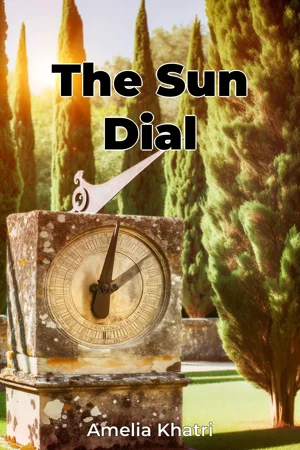
Imagine a world without clocks, where the sun's journey across the sky dictated the rhythm of daily life. "The Sun Dial" explores this fascinating era, revealing how sundials served as the primary timekeeping devices for millennia and profoundly influenced the development of modern timekeeping practices. This book delves into the history and science behind these ancient instruments, demonstrating their enduring legacy in our contemporary understanding of time. We embark on a journey through the evolution of sundials, from their earliest iterations in ancient civilizations to their sophisticated designs during the Renaissance. This historical exploration reveals the ingenuity of early scientists and craftsmen who harnessed the sun's power to measure the passage of time. We will also investigate the scientific principles that underpin sundials' operation, exploring the relationship between the Earth's rotation, the sun's position, and the accurate measurement of hours and minutes. Understanding these principles is crucial to appreciating the precision and complexity of these seemingly simple devices. The historical context is critical. Sundials were not merely tools; they were integral components of social, religious, and economic life. The book examines how sundials influenced daily routines, agricultural practices, and even architectural design in various cultures throughout history. No specialized knowledge is needed from the readers. The clear writing style will provide all necessary background. The central argument of "The Sun Dial" is that sundials represent more than just primitive timekeeping tools; they embody a fundamental shift in humanity's perception and measurement of time, laying the groundwork for the mechanical clocks and digital devices we rely on today. Their design and widespread use directly impacted how societies organized work, leisure, and religious observances. The book is structured chronologically and thematically. It begins by introducing the basic concepts of solar time and the construction of simple sundials. It then proceeds to examine the historical development of sundials in different cultures, highlighting regional variations and technological advancements. Major sections focus on the sundials of ancient Egypt, Greece, and Rome, as well as their evolution during the medieval period and the Renaissance. A significant chapter explores the mathematical principles behind sundial design, detailing the calculations necessary to create accurate and functional instruments. The book culminates by discussing the decline of sundials with the advent of mechanical clocks and their continuing role as decorative and educational objects. Historical artifacts, diagrams of sundial designs, and analyses of historical texts are all included as evidence. The book also draws upon recent archaeological discoveries and scholarly research on the history of science and technology. It takes an interdisciplinary approach, connecting the history of timekeeping with astronomy, mathematics, and cultural studies. The construction of sundials required a practical understanding of astronomy, while their design often reflected prevailing cultural and artistic trends. Their use and accuracy were intertwined with societal needs and technological capabilities. This book stands out by offering a comprehensive and accessible account of sundials, bridging the gap between scientific analysis and historical narrative. It avoids overly technical jargon, making it appealing to a broad audience while maintaining scholarly rigor. "The Sun Dial" is aimed at general readers interested in history, science, and the evolution of technology. It will also appeal to educators looking for engaging material on the history of timekeeping for middle and high school students. The book provides a valuable resource for understanding the roots of modern timekeeping and appreciating the ingenuity of past civilizations. As a work of historical and scientific non-fiction, "The Sun Dial" adheres to genre conventions by presenting factual information in a clear, organized, and well-documented manner. While it covers a broad sweep of history, the book intentionally focuses on the design, function, and cultural significance of sundials, rather than delving into minute details of specific civilizations or eras. The knowledge gained can be applied in practical ways, such as understanding the principles of solar time, constructing a simple sundial as a hands-on science project, or appreciating the historical context of timekeeping devices displayed in museums. While the book primarily focuses on the historical use of sundials, it also touches on the ongoing debates about the accuracy of different timekeeping methods and the social implications of standardized time.
Imagine a world without clocks, where the sun's journey across the sky dictated the rhythm of daily life. "The Sun Dial" explores this fascinating era, revealing how sundials served as the primary timekeeping devices for millennia and profoundly influenced the development of modern timekeeping practices. This book delves into the history and science behind these ancient instruments, demonstrating their enduring legacy in our contemporary understanding of time. We embark on a journey through the evolution of sundials, from their earliest iterations in ancient civilizations to their sophisticated designs during the Renaissance. This historical exploration reveals the ingenuity of early scientists and craftsmen who harnessed the sun's power to measure the passage of time. We will also investigate the scientific principles that underpin sundials' operation, exploring the relationship between the Earth's rotation, the sun's position, and the accurate measurement of hours and minutes. Understanding these principles is crucial to appreciating the precision and complexity of these seemingly simple devices. The historical context is critical. Sundials were not merely tools; they were integral components of social, religious, and economic life. The book examines how sundials influenced daily routines, agricultural practices, and even architectural design in various cultures throughout history. No specialized knowledge is needed from the readers. The clear writing style will provide all necessary background. The central argument of "The Sun Dial" is that sundials represent more than just primitive timekeeping tools; they embody a fundamental shift in humanity's perception and measurement of time, laying the groundwork for the mechanical clocks and digital devices we rely on today. Their design and widespread use directly impacted how societies organized work, leisure, and religious observances. The book is structured chronologically and thematically. It begins by introducing the basic concepts of solar time and the construction of simple sundials. It then proceeds to examine the historical development of sundials in different cultures, highlighting regional variations and technological advancements. Major sections focus on the sundials of ancient Egypt, Greece, and Rome, as well as their evolution during the medieval period and the Renaissance. A significant chapter explores the mathematical principles behind sundial design, detailing the calculations necessary to create accurate and functional instruments. The book culminates by discussing the decline of sundials with the advent of mechanical clocks and their continuing role as decorative and educational objects. Historical artifacts, diagrams of sundial designs, and analyses of historical texts are all included as evidence. The book also draws upon recent archaeological discoveries and scholarly research on the history of science and technology. It takes an interdisciplinary approach, connecting the history of timekeeping with astronomy, mathematics, and cultural studies. The construction of sundials required a practical understanding of astronomy, while their design often reflected prevailing cultural and artistic trends. Their use and accuracy were intertwined with societal needs and technological capabilities. This book stands out by offering a comprehensive and accessible account of sundials, bridging the gap between scientific analysis and historical narrative. It avoids overly technical jargon, making it appealing to a broad audience while maintaining scholarly rigor. "The Sun Dial" is aimed at general readers interested in history, science, and the evolution of technology. It will also appeal to educators looking for engaging material on the history of timekeeping for middle and high school students. The book provides a valuable resource for understanding the roots of modern timekeeping and appreciating the ingenuity of past civilizations. As a work of historical and scientific non-fiction, "The Sun Dial" adheres to genre conventions by presenting factual information in a clear, organized, and well-documented manner. While it covers a broad sweep of history, the book intentionally focuses on the design, function, and cultural significance of sundials, rather than delving into minute details of specific civilizations or eras. The knowledge gained can be applied in practical ways, such as understanding the principles of solar time, constructing a simple sundial as a hands-on science project, or appreciating the historical context of timekeeping devices displayed in museums. While the book primarily focuses on the historical use of sundials, it also touches on the ongoing debates about the accuracy of different timekeeping methods and the social implications of standardized time.
"The Sun Dial" explores the history and science of sundials, revealing their crucial role in ancient timekeeping and their influence on modern time measurement. For millennia, sundials dictated daily life, reflecting humanity's ingenuity in harnessing the sun's power. These devices weren't just tools; they were integral to social, religious, and economic practices across cultures, influencing everything from agricultural schedules to architectural designs. The book journeys from the earliest sundial iterations in ancient civilizations to the sophisticated designs of the Renaissance, highlighting regional variations and technological advancements. It examines the scientific principles underpinning their operation, such as the Earth's rotation and the sun's position, and explores how these principles allowed for surprisingly accurate time measurement. One intriguing fact is how sundials, despite their simplicity, required a practical understanding of astronomy and mathematics for accurate construction. Structured chronologically and thematically, "The Sun Dial" begins with basic concepts of solar time and progresses through historical development in various cultures. Major sections focus on sundials in ancient Egypt, Greece, and Rome, their evolution during the medieval period and the Renaissance. It culminates by discussing their decline with mechanical clocks while emphasizing their continuing role as decorative and educational objects, offering a comprehensive yet accessible account bridging scientific analysis and historical narrative.
Book Details
ISBN
9788233987473
Publisher
Publifye AS
Your Licenses
You don't own any licenses for this book
Purchase a license below to unlock this book and download the EPUB.
Purchase License
Select a tier to unlock this book
Need bulk licensing?
Contact us for enterprise agreements.