
About This Book
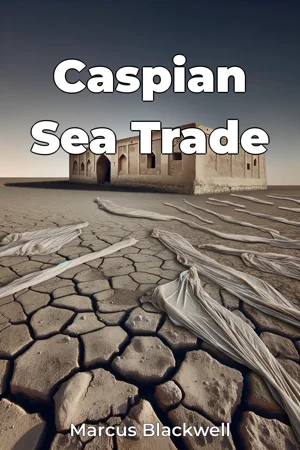
Can the secrets of empires past be unlocked by the rise and fall of water levels? "Caspian Sea Trade" unveils the pivotal geopolitical role of the Caspian Sea, exploring its historical trade routes and spotlighting lost civilizations whose fates were intertwined with this vast inland body of water. This book delves into how the Caspian Sea has functioned not merely as a geographical feature, but as a dynamic stage where empires rose and fell, trade flourished and faltered, and cultures collided and commingled. We will examine two key concepts: firstly, the Caspian Sea as a crucial artery in the Silk Road network and its influence on East-West trade relations. Secondly, this book will analyze the environmental changes of the Caspian Sea and their impact on the demographics, economies, and geopolitical strategies of the surrounding regions, revealing the degree to which climate and geography have shaped human history. These topics are crucial for understanding the complex interplay between geography, trade, and power in shaping the course of civilizations. Understanding the formation of the Silk Road, the rise and fall of empires like the Khazars, Persians, and Russians around the Caspian Sea, and basic knowledge of climate change patterns is helpful for the reader, though not strictly required. Each chapter will build upon the previous one, systematically constructing a comprehensive picture of the Caspian Sea's impact on world history. Our central argument is that the Caspian Sea, often overlooked in traditional historical narratives, has been a critical, dynamic force in shaping regional and global geopolitics for millennia, influencing trade, power dynamics, and the rise and fall of civilizations. This book is structured to first introduce the geographical and historical context of the Caspian Sea, providing a foundation for understanding its significance. We then explore the major trade routes that traversed the sea, focusing on key commodities and the cultures that facilitated their exchange. Next, we examine the lost or diminished civilizations that flourished along its shores, analyzing the factors that led to their decline, with a particular emphasis on environmental changes and shifting trade patterns. The book culminates in an analysis of the Caspian Sea's current geopolitical relevance, discussing contemporary issues such as energy resources, border disputes, and environmental concerns, highlighting the lessons from the past that continue to shape the present. To support our arguments, we draw upon a diverse range of sources, including archeological findings, historical texts, trade records, and scientific data on climate change and sea-level fluctuations. Where relevant, we will incorporate recent satellite imagery and geological reports to offer fresh perspectives on the region's environmental history. This book connects to other fields such as environmental history, political science, and economics. By considering the environmental impact on trade routes and societal structures, it complements environmental history; understanding the political maneuvering around resources in the region enriches the field of political science; and the analysis of trade dynamics and economic dependencies adds to economic studies. A unique aspect of this book is its multidisciplinary approach, combining historical analysis with environmental science and geopolitical studies to offer a holistic understanding of the Caspian Sea's significance. The tone is academic yet accessible, striving to present complex information in a clear and engaging manner suitable for a broad audience. The target audience includes students of history, geography, political science, and anyone interested in the intersection of trade, environment, and geopolitical strategy. Given the current focus on resource scarcity and environmental change, this book provides valuable insights into how these factors have shaped human history in a critical region. As a work of non-fiction, "Caspian Sea Trade" adheres to the principles of factual accuracy and unbiased analysis, presenting evidence-based arguments and acknowledging alternative viewpoints where appropriate. The book acknowledges that geopolitical analysis is contested and that there are varying narratives about the role of the Caspian Sea in history. The scope of the book is limited to the historical and geopolitical significance of the Caspian Sea and its surrounding regions, with a focus on trade and the rise and fall of civilizations. It does not delve into the cultural practices or artistic traditions of the region in great detail, focusing instead on the impact of the Sea itself. The information in this book can be applied to contemporary issues such as resource management, international relations, and sustainable development, providing historical context for understanding current challenges and opportunities in the Caspian region.
Can the secrets of empires past be unlocked by the rise and fall of water levels? "Caspian Sea Trade" unveils the pivotal geopolitical role of the Caspian Sea, exploring its historical trade routes and spotlighting lost civilizations whose fates were intertwined with this vast inland body of water. This book delves into how the Caspian Sea has functioned not merely as a geographical feature, but as a dynamic stage where empires rose and fell, trade flourished and faltered, and cultures collided and commingled. We will examine two key concepts: firstly, the Caspian Sea as a crucial artery in the Silk Road network and its influence on East-West trade relations. Secondly, this book will analyze the environmental changes of the Caspian Sea and their impact on the demographics, economies, and geopolitical strategies of the surrounding regions, revealing the degree to which climate and geography have shaped human history. These topics are crucial for understanding the complex interplay between geography, trade, and power in shaping the course of civilizations. Understanding the formation of the Silk Road, the rise and fall of empires like the Khazars, Persians, and Russians around the Caspian Sea, and basic knowledge of climate change patterns is helpful for the reader, though not strictly required. Each chapter will build upon the previous one, systematically constructing a comprehensive picture of the Caspian Sea's impact on world history. Our central argument is that the Caspian Sea, often overlooked in traditional historical narratives, has been a critical, dynamic force in shaping regional and global geopolitics for millennia, influencing trade, power dynamics, and the rise and fall of civilizations. This book is structured to first introduce the geographical and historical context of the Caspian Sea, providing a foundation for understanding its significance. We then explore the major trade routes that traversed the sea, focusing on key commodities and the cultures that facilitated their exchange. Next, we examine the lost or diminished civilizations that flourished along its shores, analyzing the factors that led to their decline, with a particular emphasis on environmental changes and shifting trade patterns. The book culminates in an analysis of the Caspian Sea's current geopolitical relevance, discussing contemporary issues such as energy resources, border disputes, and environmental concerns, highlighting the lessons from the past that continue to shape the present. To support our arguments, we draw upon a diverse range of sources, including archeological findings, historical texts, trade records, and scientific data on climate change and sea-level fluctuations. Where relevant, we will incorporate recent satellite imagery and geological reports to offer fresh perspectives on the region's environmental history. This book connects to other fields such as environmental history, political science, and economics. By considering the environmental impact on trade routes and societal structures, it complements environmental history; understanding the political maneuvering around resources in the region enriches the field of political science; and the analysis of trade dynamics and economic dependencies adds to economic studies. A unique aspect of this book is its multidisciplinary approach, combining historical analysis with environmental science and geopolitical studies to offer a holistic understanding of the Caspian Sea's significance. The tone is academic yet accessible, striving to present complex information in a clear and engaging manner suitable for a broad audience. The target audience includes students of history, geography, political science, and anyone interested in the intersection of trade, environment, and geopolitical strategy. Given the current focus on resource scarcity and environmental change, this book provides valuable insights into how these factors have shaped human history in a critical region. As a work of non-fiction, "Caspian Sea Trade" adheres to the principles of factual accuracy and unbiased analysis, presenting evidence-based arguments and acknowledging alternative viewpoints where appropriate. The book acknowledges that geopolitical analysis is contested and that there are varying narratives about the role of the Caspian Sea in history. The scope of the book is limited to the historical and geopolitical significance of the Caspian Sea and its surrounding regions, with a focus on trade and the rise and fall of civilizations. It does not delve into the cultural practices or artistic traditions of the region in great detail, focusing instead on the impact of the Sea itself. The information in this book can be applied to contemporary issues such as resource management, international relations, and sustainable development, providing historical context for understanding current challenges and opportunities in the Caspian region.
"Caspian Sea Trade" reveals the underappreciated geopolitical significance of the Caspian Sea throughout world history. It argues that the sea was not just a geographical feature, but a dynamic force shaping empires, trade, and civilizations. The book uniquely combines historical analysis with environmental science and geopolitical studies to demonstrate how changes in the Caspian Sea's water levels impacted the demographics, economies, and political strategies of surrounding regions. It highlights the Caspian Sea's crucial role as an artery in the Silk Road network, influencing East-West trade relations and the rise and fall of powerful groups. The book progresses systematically, building from geographical and historical context to exploring major trade routes, diminished civilizations, and the sea's modern geopolitical relevance. Drawing on archeological findings, historical texts, and scientific data, it analyzes how environmental shifts and trade patterns contributed to the decline of civilizations. Ultimately, "Caspian Sea Trade" provides valuable historical context for understanding contemporary issues like resource management and international relations in this critical region.
Book Details
ISBN
9788233987459
Publisher
Publifye AS
Your Licenses
You don't own any licenses for this book
Purchase a license below to unlock this book and download the EPUB.
Purchase License
Select a tier to unlock this book
Need bulk licensing?
Contact us for enterprise agreements.