
About This Book
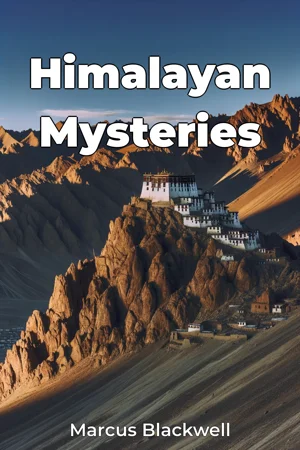
What if the towering peaks of the Himalayas guard more than just snow and ice? "Himalayan Mysteries" delves into the enigmatic heart of the world's highest mountain range, exploring its rich tapestry of legends, its geographically isolated valleys, and its profound historical significance as a cradle of ancient cultures and a sanctuary for lost civilizations. This book will examine the ways the physical geography of the Himalayas has shaped the development of unique cultural practices and served as a refuge for historical preservation. The Himalayas are more than just a mountain range; they are a living museum of human history and cultural evolution. They have served as a sanctuary, a barrier, and a crossroads for civilizations. The book will explore three primary themes: the enduring power of Himalayan legends and myths, the secrets held within its isolated valleys, and the historical significance of its monasteries and the communities that surround them. Understanding these elements is critical to grasping the region's unique character and its impact on global history and culture. To fully appreciate the mysteries of the Himalayas, the book provides essential background on the region’s geological formation, its diverse ecological zones, and the various ethnic groups that call it home. Knowledge of basic Himalayan geography, including the major river systems such as the Indus and the Ganges, and an understanding of the region’s complex political landscape is helpful for readers as well. The central argument of "Himalayan Mysteries" is that the unique geographical and cultural isolation of the Himalayas has fostered the preservation of ancient traditions and hidden histories, offering invaluable insights into the development of human civilization and the enduring power of belief systems. This argument challenges conventional narratives of historical progress, suggesting that pockets of cultural preservation can offer alternative perspectives on our shared past. The book is structured to systematically unravel the mysteries of the Himalayas. First, it introduces the major legends and belief systems associated with the mountains, such as the myths surrounding Mount Kailash and the concept of "Shangri-La." Second, it examines specific isolated valleys, using case studies of communities like the Hunza Valley and the Mustang region to explore how geographical isolation has shaped their cultures and preserved ancient traditions. Third, the book explores the history and significance of Himalayan monasteries, focusing on their role as centers of learning, pilgrimage, and cultural preservation, highlighting the transmission of Buddhist philosophy and the preservation of ancient texts. Finally, the book culminates by considering the implications of these discoveries for our understanding of history, culture, and the human spirit, discussing topics such as cultural preservation and ethical tourism. Evidence presented throughout the book is drawn from a variety of sources, including historical texts, archaeological findings, ethnographic studies, and firsthand accounts from explorers and researchers. Particular attention is given to the analysis of ancient manuscripts found in Himalayan monasteries and the interpretation of oral traditions passed down through generations. "Himalayan Mysteries" builds bridges between several disciplines. It connects to anthropology through the study of isolated cultures, to religious studies through the examination of Himalayan Buddhism and other belief systems, and to geography through the analysis of the region's unique environmental challenges. These interdisciplinary connections enhance the book's argument by providing a holistic perspective on the Himalayan region. The book adopts a narrative non-fiction style, blending rigorous research with engaging storytelling. It avoids overly academic jargon, aiming to make complex topics accessible to a broad audience while maintaining scholarly integrity. The target audience includes readers interested in travel, world history, cultural anthropology, and comparative religion. It will particularly appeal to those who are fascinated by unexplored regions and alternative perspectives on history. In keeping with the conventions of the travel and history genres, the book combines detailed factual information with vivid descriptions of landscapes and cultures, transporting the reader on a journey of discovery. While "Himalayan Mysteries" covers a broad geographical area, it focuses primarily on the Indian Himalayas, Nepal, Bhutan, and the Tibetan Autonomous Region of China, deliberately limiting its scope to allow for a more in-depth analysis of these key areas. The information in the book can be applied practically by readers who are interested in responsible travel to the Himalayas, cultural preservation, and understanding the challenges faced by communities in isolated regions. The book also touches upon controversies surrounding environmental conservation, and the impact of tourism on traditional cultures, and highlights the debates among scholars regarding the interpretation of ancient texts and the reconstruction of Himalayan history.
What if the towering peaks of the Himalayas guard more than just snow and ice? "Himalayan Mysteries" delves into the enigmatic heart of the world's highest mountain range, exploring its rich tapestry of legends, its geographically isolated valleys, and its profound historical significance as a cradle of ancient cultures and a sanctuary for lost civilizations. This book will examine the ways the physical geography of the Himalayas has shaped the development of unique cultural practices and served as a refuge for historical preservation. The Himalayas are more than just a mountain range; they are a living museum of human history and cultural evolution. They have served as a sanctuary, a barrier, and a crossroads for civilizations. The book will explore three primary themes: the enduring power of Himalayan legends and myths, the secrets held within its isolated valleys, and the historical significance of its monasteries and the communities that surround them. Understanding these elements is critical to grasping the region's unique character and its impact on global history and culture. To fully appreciate the mysteries of the Himalayas, the book provides essential background on the region’s geological formation, its diverse ecological zones, and the various ethnic groups that call it home. Knowledge of basic Himalayan geography, including the major river systems such as the Indus and the Ganges, and an understanding of the region’s complex political landscape is helpful for readers as well. The central argument of "Himalayan Mysteries" is that the unique geographical and cultural isolation of the Himalayas has fostered the preservation of ancient traditions and hidden histories, offering invaluable insights into the development of human civilization and the enduring power of belief systems. This argument challenges conventional narratives of historical progress, suggesting that pockets of cultural preservation can offer alternative perspectives on our shared past. The book is structured to systematically unravel the mysteries of the Himalayas. First, it introduces the major legends and belief systems associated with the mountains, such as the myths surrounding Mount Kailash and the concept of "Shangri-La." Second, it examines specific isolated valleys, using case studies of communities like the Hunza Valley and the Mustang region to explore how geographical isolation has shaped their cultures and preserved ancient traditions. Third, the book explores the history and significance of Himalayan monasteries, focusing on their role as centers of learning, pilgrimage, and cultural preservation, highlighting the transmission of Buddhist philosophy and the preservation of ancient texts. Finally, the book culminates by considering the implications of these discoveries for our understanding of history, culture, and the human spirit, discussing topics such as cultural preservation and ethical tourism. Evidence presented throughout the book is drawn from a variety of sources, including historical texts, archaeological findings, ethnographic studies, and firsthand accounts from explorers and researchers. Particular attention is given to the analysis of ancient manuscripts found in Himalayan monasteries and the interpretation of oral traditions passed down through generations. "Himalayan Mysteries" builds bridges between several disciplines. It connects to anthropology through the study of isolated cultures, to religious studies through the examination of Himalayan Buddhism and other belief systems, and to geography through the analysis of the region's unique environmental challenges. These interdisciplinary connections enhance the book's argument by providing a holistic perspective on the Himalayan region. The book adopts a narrative non-fiction style, blending rigorous research with engaging storytelling. It avoids overly academic jargon, aiming to make complex topics accessible to a broad audience while maintaining scholarly integrity. The target audience includes readers interested in travel, world history, cultural anthropology, and comparative religion. It will particularly appeal to those who are fascinated by unexplored regions and alternative perspectives on history. In keeping with the conventions of the travel and history genres, the book combines detailed factual information with vivid descriptions of landscapes and cultures, transporting the reader on a journey of discovery. While "Himalayan Mysteries" covers a broad geographical area, it focuses primarily on the Indian Himalayas, Nepal, Bhutan, and the Tibetan Autonomous Region of China, deliberately limiting its scope to allow for a more in-depth analysis of these key areas. The information in the book can be applied practically by readers who are interested in responsible travel to the Himalayas, cultural preservation, and understanding the challenges faced by communities in isolated regions. The book also touches upon controversies surrounding environmental conservation, and the impact of tourism on traditional cultures, and highlights the debates among scholars regarding the interpretation of ancient texts and the reconstruction of Himalayan history.
"Himalayan Mysteries" explores the enigmatic allure of the Himalayas, focusing on its unique blend of legends, isolated cultures, and historical significance. The book argues that the region's geographical isolation has fostered the preservation of ancient traditions, offering unique insights into human civilization. Did you know that the Himalayas are not just a mountain range but a living museum of human history? Or that the region has served as both a sanctuary and a crossroads for civilizations? The book examines the enduring power of Himalayan legends, the secrets held within its isolated valleys, and the historical importance of its monasteries. It begins by introducing major legends and belief systems, then examines specific isolated valleys to understand how geography has shaped cultures. Finally, it explores the role of monasteries as centers of learning and cultural preservation. By blending rigorous research with engaging storytelling, "Himalayan Mysteries" offers a narrative non-fiction journey through the heart of the Himalayas.
Book Details
ISBN
9788233987404
Publisher
Publifye AS
Your Licenses
You don't own any licenses for this book
Purchase a license below to unlock this book and download the EPUB.
Purchase License
Select a tier to unlock this book
Need bulk licensing?
Contact us for enterprise agreements.