
About This Book
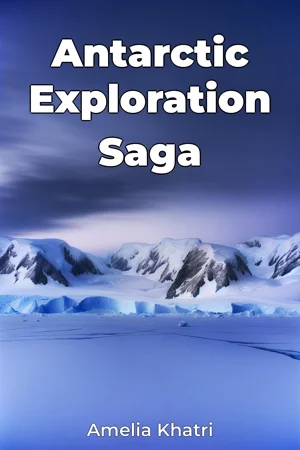
What drove humanity to brave the unyielding ice and perpetual twilight of Antarctica? "Antarctic Exploration Saga" delves into this compelling question, charting the perilous journeys, the scientific breakthroughs, and the profound historical significance of the southernmost continent. This book intertwines the gripping narratives of early exploration with the crucial scientific insights Antarctica offers today, appealing to readers interested in Earth Sciences, Geography, and History. The narrative explores two central themes: the evolution of Antarctic exploration and the continent’s growing importance in understanding global climate change. Early explorers faced unimaginable hardships, battling extreme cold, isolation, and the unknown. Their stories, marked by courage, resilience, and sometimes tragedy, are pivotal to understanding humankind's enduring spirit of discovery. Concurrently, the book reveals Antarctica’s critical role in modern scientific research, focusing on its ice sheets, unique ecosystems, and value as a record of Earth’s past climate. The book provides the historical context necessary to understand the motivations and challenges of early exploration, tracing the gradual mapping of the continent and the establishment of research bases. It is not assumed that the reader possesses specialized scientific knowledge; key concepts in glaciology, climatology, and polar ecology are explained clearly and concisely. The central argument of "Antarctic Exploration Saga" is that Antarctica's history of human interaction, from early exploration to present-day research, is inextricably linked to its profound scientific significance. The book underscores the importance of understanding both the human history and the Earth's history preserved in the ice, and how one informs the other. The book unfolds in three major acts. First, it introduces the early explorers, highlighting figures like Amundsen, Scott, and Shackleton, detailing their expeditions and the geographical discoveries they made. Second, the focus shifts to the rise of scientific research in Antarctica during the 20th and 21st centuries, emphasizing the establishment of research stations and the development of fields such as glaciology, paleoclimatology, and marine biology. Finally, the book examines the future of Antarctica in light of increasing climate change, looking at its melting ice sheets and the implications for global sea levels. Evidence presented includes first-hand accounts from explorers' journals, archival photographs, and scientific data from research institutions operating in Antarctica. The book also draws on scientific reports and geographic surveys to provide a comprehensive overview of Antarctic research. "Antarctic Exploration Saga" exists at the intersection of history, geography, and Earth sciences. Its historical analysis of exploration dovetails with geographical insights into the continent's unique features, while the Earth sciences component grounds the narrative in empirical data concerning climate change and geological history. The book takes a balanced approach, respecting the historical narratives while prioritizing accuracy in its scientific explanations. The writing style blends narrative storytelling with clear, precise scientific reporting, presenting information in an accessible way for general readers. It offers a blend of adventure, human drama, and rigorous science. This book is written for anyone with an interest in exploration, geography, Earth sciences, or history. It will appeal to readers curious about the heroic age of Antarctic exploration, the science conducted on the continent, and the potential impact of climate change on this remote and important region of the world. In keeping with the conventions of non-fiction, "Antarctic Exploration Saga" features maps, photographs, and explanatory diagrams, which help to illustrate the text while maintaining a high level of factual accuracy. The book's scope is intentionally broad, covering both the history of exploration and contemporary scientific research. While it aims to be comprehensive, it does not delve into the fine details of specific scientific projects or individual biographies of researchers. The information presented has practical applications for understanding the nature of scientific data, the challenges of climate change, and the importance of international cooperation in scientific research. It also allows readers to understand the implications of glacial melting in the Antarctic, and how the global community is approaching these issues. "Antarctic Exploration Saga" engages with the ongoing debates, such as the environmental impact of research activities and the balance between scientific research and environmental preservation. By examining these contentious issues, the book fosters informed discussions about the future of Antarctic governance and environmental stewardship.
What drove humanity to brave the unyielding ice and perpetual twilight of Antarctica? "Antarctic Exploration Saga" delves into this compelling question, charting the perilous journeys, the scientific breakthroughs, and the profound historical significance of the southernmost continent. This book intertwines the gripping narratives of early exploration with the crucial scientific insights Antarctica offers today, appealing to readers interested in Earth Sciences, Geography, and History. The narrative explores two central themes: the evolution of Antarctic exploration and the continent’s growing importance in understanding global climate change. Early explorers faced unimaginable hardships, battling extreme cold, isolation, and the unknown. Their stories, marked by courage, resilience, and sometimes tragedy, are pivotal to understanding humankind's enduring spirit of discovery. Concurrently, the book reveals Antarctica’s critical role in modern scientific research, focusing on its ice sheets, unique ecosystems, and value as a record of Earth’s past climate. The book provides the historical context necessary to understand the motivations and challenges of early exploration, tracing the gradual mapping of the continent and the establishment of research bases. It is not assumed that the reader possesses specialized scientific knowledge; key concepts in glaciology, climatology, and polar ecology are explained clearly and concisely. The central argument of "Antarctic Exploration Saga" is that Antarctica's history of human interaction, from early exploration to present-day research, is inextricably linked to its profound scientific significance. The book underscores the importance of understanding both the human history and the Earth's history preserved in the ice, and how one informs the other. The book unfolds in three major acts. First, it introduces the early explorers, highlighting figures like Amundsen, Scott, and Shackleton, detailing their expeditions and the geographical discoveries they made. Second, the focus shifts to the rise of scientific research in Antarctica during the 20th and 21st centuries, emphasizing the establishment of research stations and the development of fields such as glaciology, paleoclimatology, and marine biology. Finally, the book examines the future of Antarctica in light of increasing climate change, looking at its melting ice sheets and the implications for global sea levels. Evidence presented includes first-hand accounts from explorers' journals, archival photographs, and scientific data from research institutions operating in Antarctica. The book also draws on scientific reports and geographic surveys to provide a comprehensive overview of Antarctic research. "Antarctic Exploration Saga" exists at the intersection of history, geography, and Earth sciences. Its historical analysis of exploration dovetails with geographical insights into the continent's unique features, while the Earth sciences component grounds the narrative in empirical data concerning climate change and geological history. The book takes a balanced approach, respecting the historical narratives while prioritizing accuracy in its scientific explanations. The writing style blends narrative storytelling with clear, precise scientific reporting, presenting information in an accessible way for general readers. It offers a blend of adventure, human drama, and rigorous science. This book is written for anyone with an interest in exploration, geography, Earth sciences, or history. It will appeal to readers curious about the heroic age of Antarctic exploration, the science conducted on the continent, and the potential impact of climate change on this remote and important region of the world. In keeping with the conventions of non-fiction, "Antarctic Exploration Saga" features maps, photographs, and explanatory diagrams, which help to illustrate the text while maintaining a high level of factual accuracy. The book's scope is intentionally broad, covering both the history of exploration and contemporary scientific research. While it aims to be comprehensive, it does not delve into the fine details of specific scientific projects or individual biographies of researchers. The information presented has practical applications for understanding the nature of scientific data, the challenges of climate change, and the importance of international cooperation in scientific research. It also allows readers to understand the implications of glacial melting in the Antarctic, and how the global community is approaching these issues. "Antarctic Exploration Saga" engages with the ongoing debates, such as the environmental impact of research activities and the balance between scientific research and environmental preservation. By examining these contentious issues, the book fosters informed discussions about the future of Antarctic governance and environmental stewardship.
"Antarctic Exploration Saga" explores humanity's endeavors in Antarctica, blending historical expeditions with the continent's vital role in understanding Earth's climate and geography. It unveils the gripping narratives of early explorers who faced unimaginable challenges, illustrating their resilience and the geographical discoveries they made. Simultaneously, the book emphasizes Antarctica's significance in modern scientific research, particularly its ice sheets and unique ecosystems, which serve as invaluable records of past climate. The book underscores the connection between human history and the Earth's history preserved in the ice, emphasizing how each informs the other. The book progresses by first introducing the early explorers and their geographical discoveries. It then shifts to the rise of scientific research in Antarctica, focusing on the establishment of research stations and the development of fields like glaciology and paleoclimatology. Finally, it examines the future of Antarctica in light of increasing climate change, addressing melting ice sheets and the implications for global sea levels. The approach balances historical storytelling with clear scientific reporting, making complex concepts accessible to a broad audience interested in Earth sciences, geography, and history.
Book Details
ISBN
9788233987299
Publisher
Publifye AS
Your Licenses
You don't own any licenses for this book
Purchase a license below to unlock this book and download the EPUB.
Purchase License
Select a tier to unlock this book
Need bulk licensing?
Contact us for enterprise agreements.