
About This Book
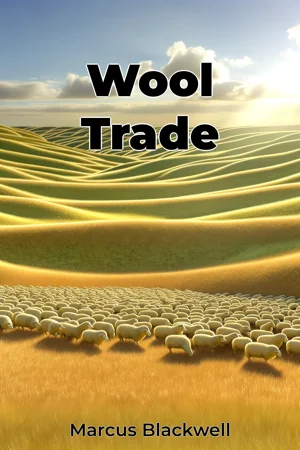
Imagine a single commodity shaping the course of history, influencing economies, and dictating fashion trends across continents. This book, *Wool Trade*, delves into the captivating story of wool, tracing its evolution from a basic necessity to a global economic powerhouse. We will uncover how this humble fiber transformed societies, fueled empires, and left an indelible mark on the world. At the heart of this exploration are three key themes: the economic impact of wool production and trade, its social and cultural significance across different historical periods, and its persistent influence on global fashion. Understanding these themes is crucial because wool provides a unique lens through which to examine the interconnectedness of history, economics, and culture. It demonstrates how a seemingly simple product could become a catalyst for profound societal changes. Before embarking on this journey, a basic understanding of historical trade routes and early economic systems will prove beneficial, enabling a more comprehensive grasp of wool's pervasive influence. The central argument of *Wool Trade* is that wool, far from being a mere textile, acted repeatedly as a primary driver of economic growth, social stratification, and cultural exchange throughout history. Its story reveals the complex interplay between human ingenuity, resource management, and global commerce. This argument challenges the traditional view of textiles as passive commodities by highlighting wool's active role in shaping historical events. The book unfolds in a structured manner. First, it introduces the origins of wool production, tracing its development from early domestication of sheep to the establishment of localized textile industries. Then, it examines the rise of wool as a major trade commodity, exploring its impact on medieval economies, the English enclosure movements, and the establishment of global trade networks. The book also includes a chapter on the social structures created by wool, from wealthy merchants to farm owners, and the laborers who worked in terrible conditions. The book culminates by analyzing wool's enduring influence on fashion, from the luxurious fabrics worn by royalty to the mass-produced garments of the modern era. The evidence presented in *Wool Trade* is drawn from a variety of sources, including historical records, archaeological findings, economic data, and fashion archives. Specific attention is given to primary source documents, such as merchant ledgers, royal decrees, and textile manufacturing records. The study of wool naturally intersects with several other disciplines. Its economic dimensions connect to fields like international trade, economic history, and resource management. Its social and cultural impacts are relevant to sociology, anthropology, and art history. Finally, the book’s treatment of fashion links it to design studies, cultural studies, and the history of technology. These interdisciplinary connections enrich the analysis and provide a more holistic understanding of wool's significance. *Wool Trade* adopts a narrative non-fiction style, presenting complex information in an accessible and engaging manner. The book is aimed at readers interested in world history, economic history, and the cultural impact of commodities. It offers valuable insights for students, researchers, and anyone seeking a deeper understanding of how a seemingly ordinary material could shape the course of civilization. The scope of *Wool Trade* is global, covering wool production and trade across different continents and historical periods. However, it focuses primarily on Europe, particularly England, due to their historical dominance in wool production and trade. While we acknowledge the existence of many ethical and social issues, the book's primary focus is not to examine the modern fashion industry. The information presented in *Wool Trade* can be applied to contemporary economic and social issues. Understanding the historical dynamics of wool production and trade can provide valuable lessons for navigating modern global supply chains, promoting sustainable resource management, and addressing social inequalities within the textile industry. The historical significance of wool trade is not without its controversies. Ongoing debates surround the historical impact of enclosure movements on rural communities, the ethical implications of early textile manufacturing practices, and the distribution of wealth generated by the wool trade. These debates are addressed in the book, offering a balanced perspective on the complex legacy of wool.
Imagine a single commodity shaping the course of history, influencing economies, and dictating fashion trends across continents. This book, *Wool Trade*, delves into the captivating story of wool, tracing its evolution from a basic necessity to a global economic powerhouse. We will uncover how this humble fiber transformed societies, fueled empires, and left an indelible mark on the world. At the heart of this exploration are three key themes: the economic impact of wool production and trade, its social and cultural significance across different historical periods, and its persistent influence on global fashion. Understanding these themes is crucial because wool provides a unique lens through which to examine the interconnectedness of history, economics, and culture. It demonstrates how a seemingly simple product could become a catalyst for profound societal changes. Before embarking on this journey, a basic understanding of historical trade routes and early economic systems will prove beneficial, enabling a more comprehensive grasp of wool's pervasive influence. The central argument of *Wool Trade* is that wool, far from being a mere textile, acted repeatedly as a primary driver of economic growth, social stratification, and cultural exchange throughout history. Its story reveals the complex interplay between human ingenuity, resource management, and global commerce. This argument challenges the traditional view of textiles as passive commodities by highlighting wool's active role in shaping historical events. The book unfolds in a structured manner. First, it introduces the origins of wool production, tracing its development from early domestication of sheep to the establishment of localized textile industries. Then, it examines the rise of wool as a major trade commodity, exploring its impact on medieval economies, the English enclosure movements, and the establishment of global trade networks. The book also includes a chapter on the social structures created by wool, from wealthy merchants to farm owners, and the laborers who worked in terrible conditions. The book culminates by analyzing wool's enduring influence on fashion, from the luxurious fabrics worn by royalty to the mass-produced garments of the modern era. The evidence presented in *Wool Trade* is drawn from a variety of sources, including historical records, archaeological findings, economic data, and fashion archives. Specific attention is given to primary source documents, such as merchant ledgers, royal decrees, and textile manufacturing records. The study of wool naturally intersects with several other disciplines. Its economic dimensions connect to fields like international trade, economic history, and resource management. Its social and cultural impacts are relevant to sociology, anthropology, and art history. Finally, the book’s treatment of fashion links it to design studies, cultural studies, and the history of technology. These interdisciplinary connections enrich the analysis and provide a more holistic understanding of wool's significance. *Wool Trade* adopts a narrative non-fiction style, presenting complex information in an accessible and engaging manner. The book is aimed at readers interested in world history, economic history, and the cultural impact of commodities. It offers valuable insights for students, researchers, and anyone seeking a deeper understanding of how a seemingly ordinary material could shape the course of civilization. The scope of *Wool Trade* is global, covering wool production and trade across different continents and historical periods. However, it focuses primarily on Europe, particularly England, due to their historical dominance in wool production and trade. While we acknowledge the existence of many ethical and social issues, the book's primary focus is not to examine the modern fashion industry. The information presented in *Wool Trade* can be applied to contemporary economic and social issues. Understanding the historical dynamics of wool production and trade can provide valuable lessons for navigating modern global supply chains, promoting sustainable resource management, and addressing social inequalities within the textile industry. The historical significance of wool trade is not without its controversies. Ongoing debates surround the historical impact of enclosure movements on rural communities, the ethical implications of early textile manufacturing practices, and the distribution of wealth generated by the wool trade. These debates are addressed in the book, offering a balanced perspective on the complex legacy of wool.
"Wool Trade" explores the profound influence of wool on world history, economics, and culture. Far from being a simple textile, wool acted as a major driver of economic growth and social stratification. The book examines wool's journey from its origins to its role in shaping global commerce and fashion. Readers will discover how this single commodity influenced societies, fueled empires, and left a lasting mark on the world. For example, the English enclosure movements, which transformed agricultural practices, were largely driven by the profitability of wool production. The narrative unfolds chronologically, beginning with the early domestication of sheep and progressing through the rise of wool as a global trade commodity. The book explores the impact on medieval economies, the rise of global trade networks, and also the social structures created by wool. By drawing on historical records, archaeological findings, and economic data, "Wool Trade" offers a comprehensive look at the interconnectedness of history, economics, and culture through the lens of this ubiquitous fiber. The book emphasizes wool's active role in shaping events.
Book Details
ISBN
9788233987053
Publisher
Publifye AS
Your Licenses
You don't own any licenses for this book
Purchase a license below to unlock this book and download the EPUB.
Purchase License
Select a tier to unlock this book
Need bulk licensing?
Contact us for enterprise agreements.