
About This Book
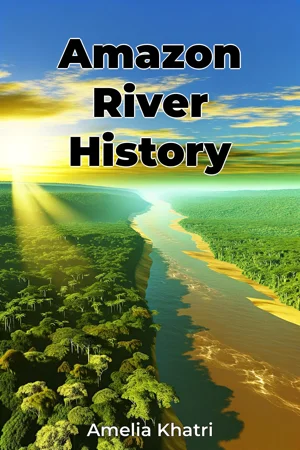
What secrets lie hidden within the world's largest rainforest, nourished by a river that dwarfs all others? "Amazon River History" embarks on a comprehensive exploration of this vital waterway, its impact on human societies, the abundance of life it sustains, and the mysteries that still shroud its depths. This book addresses the enduring significance of the Amazon River, examining its profound influence on regional and global histories, its unparalleled biodiversity, and the ongoing efforts to understand and protect this invaluable resource. The book argues that the Amazon River is more than just a geographical feature; it is a dynamic and vital component of global history, ecological balance, and the future sustainability of our planet. Understanding its past, appreciating its present, and anticipating its future challenges are crucial to addressing contemporary environmental and societal issues. "Amazon River History" is structured to provide a holistic view of the Amazon's multifaceted story. The initial chapters introduce the geographical context of the Amazon Basin, its geological formation, and the complex hydrological systems that feed the river. This provides a foundational understanding of the river's physical characteristics and its unique position within the South American continent. Following this, the book delves into the pre-Columbian history of the Amazon, exploring the diverse indigenous cultures that thrived along its banks for millennia. Drawing upon archaeological evidence, ethnohistorical accounts, and linguistic analyses, it reconstructs the social, economic, and political structures of these societies, challenging long-held misconceptions about their complexity and impact on the environment. This section covers the impact of European exploration and colonization on the Amazon region, examining the devastating effects of disease, exploitation, and forced labor on indigenous populations. It analyzes the subsequent struggles for control of the river and its resources, including the rubber boom of the late 19th and early 20th centuries. The book then pivots to an exploration of the Amazon's unparalleled biodiversity, investigating the intricate relationships between the river and its surrounding rainforest. It highlights the crucial role of the Amazon in global climate regulation, carbon sequestration, and the provision of essential ecosystem services. Further chapters examine the current environmental threats facing the Amazon, including deforestation, mining, agriculture, and climate change, and assesses the potential consequences of these threats for the region and the world. The book incorporates the latest scientific research and data, including satellite imagery, climate models, and biodiversity surveys, to provide a clear and accurate picture of the Amazon's current state of health. The concluding sections explore contemporary challenges and opportunities for sustainable development in the Amazon, examining the roles of governments, NGOs, and local communities in protecting the river and its resources. It analyzes the complex interplay of economic, social, and environmental factors that shape the future of the Amazon, and proposes strategies for balancing conservation with economic development. This book draws upon a wide range of sources, including historical archives, scientific publications, ethnographic studies, and firsthand accounts from explorers, researchers, and indigenous communities. It integrates perspectives from history, ecology, anthropology, geography, and environmental science to offer a nuanced and interdisciplinary understanding of the Amazon River. "Amazon River History" is written in an accessible and engaging style, suitable for students, researchers, and general readers interested in world history, environmental studies, and Latin American cultures. It provides a valuable resource for anyone seeking to understand the past, present, and future of this vital waterway and its importance to the planet. While the book aims to provide a broad overview, it acknowledges the vastness of the topic and focuses primarily on the river's historical, ecological, and socio-economic significance, acknowledging that certain aspects, such as detailed botanical surveys, fall outside its primary scope. The book also addresses ongoing debates surrounding deforestation, indigenous land rights, and the impact of development projects on the Amazon's ecosystem. Readers can apply the knowledge gained from this book to inform their understanding of global environmental challenges, advocate for sustainable practices, and support efforts to protect the Amazon River and its surrounding rainforest.
What secrets lie hidden within the world's largest rainforest, nourished by a river that dwarfs all others? "Amazon River History" embarks on a comprehensive exploration of this vital waterway, its impact on human societies, the abundance of life it sustains, and the mysteries that still shroud its depths. This book addresses the enduring significance of the Amazon River, examining its profound influence on regional and global histories, its unparalleled biodiversity, and the ongoing efforts to understand and protect this invaluable resource. The book argues that the Amazon River is more than just a geographical feature; it is a dynamic and vital component of global history, ecological balance, and the future sustainability of our planet. Understanding its past, appreciating its present, and anticipating its future challenges are crucial to addressing contemporary environmental and societal issues. "Amazon River History" is structured to provide a holistic view of the Amazon's multifaceted story. The initial chapters introduce the geographical context of the Amazon Basin, its geological formation, and the complex hydrological systems that feed the river. This provides a foundational understanding of the river's physical characteristics and its unique position within the South American continent. Following this, the book delves into the pre-Columbian history of the Amazon, exploring the diverse indigenous cultures that thrived along its banks for millennia. Drawing upon archaeological evidence, ethnohistorical accounts, and linguistic analyses, it reconstructs the social, economic, and political structures of these societies, challenging long-held misconceptions about their complexity and impact on the environment. This section covers the impact of European exploration and colonization on the Amazon region, examining the devastating effects of disease, exploitation, and forced labor on indigenous populations. It analyzes the subsequent struggles for control of the river and its resources, including the rubber boom of the late 19th and early 20th centuries. The book then pivots to an exploration of the Amazon's unparalleled biodiversity, investigating the intricate relationships between the river and its surrounding rainforest. It highlights the crucial role of the Amazon in global climate regulation, carbon sequestration, and the provision of essential ecosystem services. Further chapters examine the current environmental threats facing the Amazon, including deforestation, mining, agriculture, and climate change, and assesses the potential consequences of these threats for the region and the world. The book incorporates the latest scientific research and data, including satellite imagery, climate models, and biodiversity surveys, to provide a clear and accurate picture of the Amazon's current state of health. The concluding sections explore contemporary challenges and opportunities for sustainable development in the Amazon, examining the roles of governments, NGOs, and local communities in protecting the river and its resources. It analyzes the complex interplay of economic, social, and environmental factors that shape the future of the Amazon, and proposes strategies for balancing conservation with economic development. This book draws upon a wide range of sources, including historical archives, scientific publications, ethnographic studies, and firsthand accounts from explorers, researchers, and indigenous communities. It integrates perspectives from history, ecology, anthropology, geography, and environmental science to offer a nuanced and interdisciplinary understanding of the Amazon River. "Amazon River History" is written in an accessible and engaging style, suitable for students, researchers, and general readers interested in world history, environmental studies, and Latin American cultures. It provides a valuable resource for anyone seeking to understand the past, present, and future of this vital waterway and its importance to the planet. While the book aims to provide a broad overview, it acknowledges the vastness of the topic and focuses primarily on the river's historical, ecological, and socio-economic significance, acknowledging that certain aspects, such as detailed botanical surveys, fall outside its primary scope. The book also addresses ongoing debates surrounding deforestation, indigenous land rights, and the impact of development projects on the Amazon's ecosystem. Readers can apply the knowledge gained from this book to inform their understanding of global environmental challenges, advocate for sustainable practices, and support efforts to protect the Amazon River and its surrounding rainforest.
"Amazon River History" presents a comprehensive exploration of the Amazon River, a vital artery of South America and a key player in world history and global ecology. The book emphasizes the river's profound influence on indigenous cultures, its unparalleled biodiversity within the Amazon Rainforest, and its role in global climate regulation. Readers will discover how the Amazon's geological formation and unique hydrological systems have fostered an environment teeming with life, influencing human societies for millennia. The book delves into the pre-Columbian history of the Amazon, highlighting the complex societies that thrived along its banks, challenging previous misconceptions about their environmental impact. It examines the devastating effects of European colonization, including disease and exploitation, and the subsequent struggles for control of the river's resources. Shifting to the present, the book analyzes current environmental threats such as deforestation and climate change, incorporating the latest scientific research to paint a clear picture of the Amazon's health. Finally, the book addresses sustainable development, evaluating the roles of governments, NGOs, and local communities. Through an interdisciplinary approach, drawing from history, ecology, and anthropology, "Amazon River History" offers a nuanced understanding of the Amazon, progressing from its geological origins to contemporary challenges, providing a comprehensive view of this critical waterway and its future.
Book Details
ISBN
9788233987022
Publisher
Publifye AS
Your Licenses
You don't own any licenses for this book
Purchase a license below to unlock this book and download the EPUB.
Purchase License
Select a tier to unlock this book
Need bulk licensing?
Contact us for enterprise agreements.