
About This Book
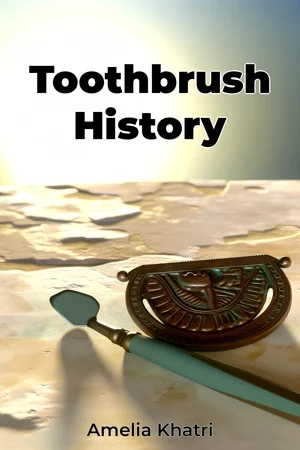
Have you ever stopped to consider the long and fascinating history behind something as commonplace as your toothbrush? This book, "Toothbrush History," delves into the surprisingly rich story of oral hygiene practices, from ancient civilizations to the cutting-edge advancements of modern dentistry. It's a journey through time that reveals not just how we clean our teeth, but also what those practices say about our cultures, our understanding of health, and our relationship with our bodies. The primary focus is threefold. First, we explore the diverse and often ingenious methods people used to maintain oral hygiene before the invention of the toothbrush as we know it. This section highlights the resourcefulness of past societies and their understanding of dental health, often based on rudimentary scientific knowledge but driven by the universal desire to alleviate pain and maintain social presentability. Second, the book traces the evolution of the toothbrush itself, from its earliest iterations using natural materials to the mass-produced, technologically advanced devices we use today. This involves an analysis of the materials used, the manufacturing processes, and the impact of these innovations on public health. Finally, we examine the modern advancements in oral care, including electric toothbrushes, interdental cleaning devices, and the scientific breakthroughs that have shaped our understanding of plaque, bacteria, and the prevention of dental diseases. Understanding this evolution requires an appreciation of the historical context. Therefore, the book provides a backdrop of social norms, medical beliefs, and technological capabilities of different eras. No specific prior knowledge is absolutely required; the book provides basic explanations of dental anatomy and common oral diseases, ensuring the content is accessible to a wide audience. The central argument of "Toothbrush History" is that the evolution of oral hygiene practices is a compelling microcosm of human innovation, driven by a constant pursuit of better health and well-being. It demonstrates how cultural habits, scientific discoveries, and technological progress have intertwined to shape our daily routines. This argument is significant because it highlights the importance of oral health as an integral part of overall health and demonstrates how simple tools can play a profound role in improving quality of life. The book unfolds in a chronological manner, beginning with an exploration of ancient oral hygiene practices in various cultures, including those of Egypt, Rome, and China. It then moves into the development and popularization of the first toothbrushes, examining the materials and designs used. Next, the book analyzes the impact of industrialization and scientific advancements on toothbrush manufacturing and dental hygiene products. Finally, "Toothbrush History" concludes with a survey of contemporary oral care technologies and practices, including the science behind fluoride, the use of dental implants, and the ongoing research into personalized oral hygiene. The narratives within "Toothbrush History" are supported by archaeological evidence, historical documents, scientific studies, and dental product advertisements. Unique sources include early dental patents, historical accounts of dental practices, and ethnographic studies of oral hygiene customs in different societies. The book connects to several other fields of study, including archaeology, exploring ancient tools and residue; anthropology, highlighting cultural variations in hygiene practices; and public health, analyzing the impact of oral hygiene on overall population health. "Toothbrush History" takes a unique approach by examining the history of oral hygiene through the lens of technological and cultural evolution. It is not simply a list of dates and inventions, but a narrative that explores the human desire for better health and the innovative solutions we have devised over time. The book adopts a narrative non-fiction writing style, presenting information in an engaging and accessible manner while maintaining historical accuracy and scientific rigor. The target audience includes anyone interested in history, culture, health, or technology. It will particularly appeal to readers who are curious about the origins of everyday objects and practices and how they have shaped our lives. As a work of non-fiction, the book adheres to the standards of accuracy, objectivity, and responsible sourcing. It is well-researched and provides a balanced perspective on the history of oral hygiene. The scope of the book is broad, covering a wide range of historical periods and cultures. However, it focuses primarily on the evolution of the toothbrush and related tools, with less emphasis on specific dental procedures or detailed medical information. The information presented in "Toothbrush History" can be applied practically by readers to gain a deeper appreciation for the importance of oral hygiene and to make informed choices about their own dental care routines. While the benefits of modern oral hygiene practices are widely accepted, ongoing debates exist about the best approaches to fluoride use, the role of diet in dental health, and the potential impact of new technologies on oral hygiene practices. The book addresses these debates by presenting different perspectives and providing evidence-based information for readers to form their own opinions.
Have you ever stopped to consider the long and fascinating history behind something as commonplace as your toothbrush? This book, "Toothbrush History," delves into the surprisingly rich story of oral hygiene practices, from ancient civilizations to the cutting-edge advancements of modern dentistry. It's a journey through time that reveals not just how we clean our teeth, but also what those practices say about our cultures, our understanding of health, and our relationship with our bodies. The primary focus is threefold. First, we explore the diverse and often ingenious methods people used to maintain oral hygiene before the invention of the toothbrush as we know it. This section highlights the resourcefulness of past societies and their understanding of dental health, often based on rudimentary scientific knowledge but driven by the universal desire to alleviate pain and maintain social presentability. Second, the book traces the evolution of the toothbrush itself, from its earliest iterations using natural materials to the mass-produced, technologically advanced devices we use today. This involves an analysis of the materials used, the manufacturing processes, and the impact of these innovations on public health. Finally, we examine the modern advancements in oral care, including electric toothbrushes, interdental cleaning devices, and the scientific breakthroughs that have shaped our understanding of plaque, bacteria, and the prevention of dental diseases. Understanding this evolution requires an appreciation of the historical context. Therefore, the book provides a backdrop of social norms, medical beliefs, and technological capabilities of different eras. No specific prior knowledge is absolutely required; the book provides basic explanations of dental anatomy and common oral diseases, ensuring the content is accessible to a wide audience. The central argument of "Toothbrush History" is that the evolution of oral hygiene practices is a compelling microcosm of human innovation, driven by a constant pursuit of better health and well-being. It demonstrates how cultural habits, scientific discoveries, and technological progress have intertwined to shape our daily routines. This argument is significant because it highlights the importance of oral health as an integral part of overall health and demonstrates how simple tools can play a profound role in improving quality of life. The book unfolds in a chronological manner, beginning with an exploration of ancient oral hygiene practices in various cultures, including those of Egypt, Rome, and China. It then moves into the development and popularization of the first toothbrushes, examining the materials and designs used. Next, the book analyzes the impact of industrialization and scientific advancements on toothbrush manufacturing and dental hygiene products. Finally, "Toothbrush History" concludes with a survey of contemporary oral care technologies and practices, including the science behind fluoride, the use of dental implants, and the ongoing research into personalized oral hygiene. The narratives within "Toothbrush History" are supported by archaeological evidence, historical documents, scientific studies, and dental product advertisements. Unique sources include early dental patents, historical accounts of dental practices, and ethnographic studies of oral hygiene customs in different societies. The book connects to several other fields of study, including archaeology, exploring ancient tools and residue; anthropology, highlighting cultural variations in hygiene practices; and public health, analyzing the impact of oral hygiene on overall population health. "Toothbrush History" takes a unique approach by examining the history of oral hygiene through the lens of technological and cultural evolution. It is not simply a list of dates and inventions, but a narrative that explores the human desire for better health and the innovative solutions we have devised over time. The book adopts a narrative non-fiction writing style, presenting information in an engaging and accessible manner while maintaining historical accuracy and scientific rigor. The target audience includes anyone interested in history, culture, health, or technology. It will particularly appeal to readers who are curious about the origins of everyday objects and practices and how they have shaped our lives. As a work of non-fiction, the book adheres to the standards of accuracy, objectivity, and responsible sourcing. It is well-researched and provides a balanced perspective on the history of oral hygiene. The scope of the book is broad, covering a wide range of historical periods and cultures. However, it focuses primarily on the evolution of the toothbrush and related tools, with less emphasis on specific dental procedures or detailed medical information. The information presented in "Toothbrush History" can be applied practically by readers to gain a deeper appreciation for the importance of oral hygiene and to make informed choices about their own dental care routines. While the benefits of modern oral hygiene practices are widely accepted, ongoing debates exist about the best approaches to fluoride use, the role of diet in dental health, and the potential impact of new technologies on oral hygiene practices. The book addresses these debates by presenting different perspectives and providing evidence-based information for readers to form their own opinions.
"Toothbrush History" explores the captivating story of oral hygiene, tracing its evolution across civilizations and highlighting the human quest for better dental health. The book reveals how ancient societies ingeniously used available resources for oral care, driven by the need to alleviate pain and maintain social standards. It also emphasizes how the toothbrush itself transformed, from early natural material versions to today’s advanced devices. The book follows a chronological path, starting with ancient practices in Egypt, Rome, and China, then detailing early toothbrush development and later, the impact of industrialization. Interestingly, early dental patents and historical accounts of dental practices provide unique insights. The evolution of oral hygiene serves as an example of human innovation, influenced by culture, science, and technology, impacting our daily lives. The book uniquely presents the history of oral hygiene through technological and cultural evolution, not just as a list of facts. It concludes with modern technologies like fluoride and dental implants, offering an understanding of the ongoing advancements in personalized oral hygiene. This narrative approach makes the book accessible, offering readers a deeper appreciation for dental care and its significance to overall health and fitness.
Book Details
ISBN
9788233986940
Publisher
Publifye AS
Your Licenses
You don't own any licenses for this book
Purchase a license below to unlock this book and download the EPUB.
Purchase License
Select a tier to unlock this book
Need bulk licensing?
Contact us for enterprise agreements.