
About This Book
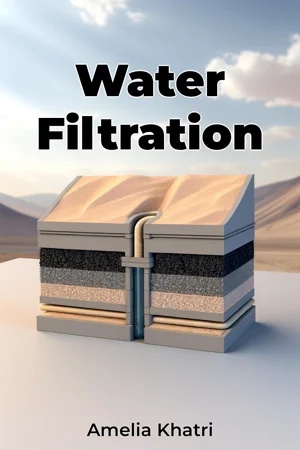
Could the key to solving future water crises lie in understanding ancient solutions? "Water Filtration" explores the fascinating history, scientific principles, and critical importance of techniques used to purify our most precious resource. This book tackles two major themes: the evolution of water purification methods across civilizations and the science underpinning modern filtration technologies. These topics are fundamentally important because access to clean water is essential for public health, economic stability, and environmental sustainability. Understanding how we have purified water in the past and how we are improving these methods in the present is critical to addressing future water challenges. The narrative unfolds by first situating clean water access within a historical context. Examining ancient civilizations – such as the Egyptians, Greeks, and Romans – the book details their rudimentary yet effective filtration techniques using materials like sand, charcoal, and boiling. This historical overview establishes a baseline understanding of humanity's ongoing quest for potable water and how necessity drove innovation, even without a complete grasp of microbiology. Later chapters transition into the scientific principles governing modern water filtration. Osmosis, adsorption, and disinfection methods are explained using clear and accessible language, supplemented by diagrams and real-world examples. The central argument of "Water Filtration" is that while technological advancements in water purification have been significant, the fundamental principles often remain rooted in ancient practices. By understanding both the historical context and the scientific basis of water purification, we can better appreciate its importance and develop sustainable solutions for the future. The book reveals that our modern methods are simply refinements of processes used for millennia. The book is structured as follows: It begins with an introduction to basic water chemistry and the importance of purity. The first section then details the historical development of water purification techniques across different cultures. The second section delves into the scientific mechanisms behind modern filtration, covering physical, chemical, and biological methods. These chapters explore sedimentation, flocculation, filtration through various media (sand, activated carbon, membranes), disinfection (chlorination, UV radiation, ozonation) and advanced oxidation processes. The final section addresses current challenges in water purification, such as emerging contaminants, energy efficiency, and access to clean water in developing countries. The book concludes by discussing future trends in water treatment and the role of individual action in conserving and protecting water resources. The arguments presented within "Water Filtration" are supported by a wide range of evidence, drawing from archaeological findings, historical texts, scientific studies, and engineering reports. The book references original research articles, government publications, and case studies of successful water treatment plants. "Water Filtration" inherently connects to other fields such as public health, environmental science, and civil engineering. The book highlights how water quality directly impacts public health outcomes, how filtration technologies affect ecosystems, and how engineering principles are applied in the design and operation of water treatment facilities. This book takes a unique approach by bridging the gap between historical practices and modern science. It demonstrates how ancient civilizations used empirical methods that resonate with modern scientific understanding. The tone of the book is informative yet accessible, aiming to educate both general readers and students interested in science, history, or environmental issues. The target audience includes anyone interested in science, history, environmental sustainability, or public health. It would appeal to students, policymakers, environmental advocates, and concerned citizens who want to learn more about the science and history of clean water. As a work of non-fiction, the book adheres to genre conventions by prioritizing factual accuracy, clear explanations, and proper citation of sources. The scope of "Water Filtration" is broad, covering both historical and contemporary aspects of water purification. However, it intentionally limits its focus to the technological and scientific aspects, without delving deeply into the political or economic dimensions of water management. The knowledge gained from "Water Filtration" can be applied in various practical ways. Readers will learn about the importance of water quality testing, home filtration systems, and water conservation practices. The book also provides insights into the challenges faced by developing countries in ensuring access to clean water. In discussing modern filtration methods, the book addresses controversies surrounding the use of certain chemicals in water treatment, such as chlorine and fluoride, presenting different perspectives and research findings to allow readers to form their own informed opinions.
Could the key to solving future water crises lie in understanding ancient solutions? "Water Filtration" explores the fascinating history, scientific principles, and critical importance of techniques used to purify our most precious resource. This book tackles two major themes: the evolution of water purification methods across civilizations and the science underpinning modern filtration technologies. These topics are fundamentally important because access to clean water is essential for public health, economic stability, and environmental sustainability. Understanding how we have purified water in the past and how we are improving these methods in the present is critical to addressing future water challenges. The narrative unfolds by first situating clean water access within a historical context. Examining ancient civilizations – such as the Egyptians, Greeks, and Romans – the book details their rudimentary yet effective filtration techniques using materials like sand, charcoal, and boiling. This historical overview establishes a baseline understanding of humanity's ongoing quest for potable water and how necessity drove innovation, even without a complete grasp of microbiology. Later chapters transition into the scientific principles governing modern water filtration. Osmosis, adsorption, and disinfection methods are explained using clear and accessible language, supplemented by diagrams and real-world examples. The central argument of "Water Filtration" is that while technological advancements in water purification have been significant, the fundamental principles often remain rooted in ancient practices. By understanding both the historical context and the scientific basis of water purification, we can better appreciate its importance and develop sustainable solutions for the future. The book reveals that our modern methods are simply refinements of processes used for millennia. The book is structured as follows: It begins with an introduction to basic water chemistry and the importance of purity. The first section then details the historical development of water purification techniques across different cultures. The second section delves into the scientific mechanisms behind modern filtration, covering physical, chemical, and biological methods. These chapters explore sedimentation, flocculation, filtration through various media (sand, activated carbon, membranes), disinfection (chlorination, UV radiation, ozonation) and advanced oxidation processes. The final section addresses current challenges in water purification, such as emerging contaminants, energy efficiency, and access to clean water in developing countries. The book concludes by discussing future trends in water treatment and the role of individual action in conserving and protecting water resources. The arguments presented within "Water Filtration" are supported by a wide range of evidence, drawing from archaeological findings, historical texts, scientific studies, and engineering reports. The book references original research articles, government publications, and case studies of successful water treatment plants. "Water Filtration" inherently connects to other fields such as public health, environmental science, and civil engineering. The book highlights how water quality directly impacts public health outcomes, how filtration technologies affect ecosystems, and how engineering principles are applied in the design and operation of water treatment facilities. This book takes a unique approach by bridging the gap between historical practices and modern science. It demonstrates how ancient civilizations used empirical methods that resonate with modern scientific understanding. The tone of the book is informative yet accessible, aiming to educate both general readers and students interested in science, history, or environmental issues. The target audience includes anyone interested in science, history, environmental sustainability, or public health. It would appeal to students, policymakers, environmental advocates, and concerned citizens who want to learn more about the science and history of clean water. As a work of non-fiction, the book adheres to genre conventions by prioritizing factual accuracy, clear explanations, and proper citation of sources. The scope of "Water Filtration" is broad, covering both historical and contemporary aspects of water purification. However, it intentionally limits its focus to the technological and scientific aspects, without delving deeply into the political or economic dimensions of water management. The knowledge gained from "Water Filtration" can be applied in various practical ways. Readers will learn about the importance of water quality testing, home filtration systems, and water conservation practices. The book also provides insights into the challenges faced by developing countries in ensuring access to clean water. In discussing modern filtration methods, the book addresses controversies surrounding the use of certain chemicals in water treatment, such as chlorine and fluoride, presenting different perspectives and research findings to allow readers to form their own informed opinions.
"Water Filtration" explores the history and science of water purification, highlighting humanity's enduring quest for clean water. The book begins by examining ancient civilizations like the Egyptians and Romans, detailing their rudimentary yet effective techniques, such as using sand and charcoal for filtration. It then transitions to the scientific principles behind modern methods like osmosis and disinfection, showing how these advanced processes often build upon ancient practices. The book uniquely bridges historical practices with modern science, revealing how ancient methods resonate with current scientific understanding. By understanding both the historical context and the scientific basis of water purification, readers can appreciate its importance and develop sustainable solutions. The narrative progresses from ancient water solutions to modern filtration techniques, covering sedimentation, disinfection, and addressing current challenges like emerging contaminants and energy efficiency.
Book Details
ISBN
9788233986889
Publisher
Publifye AS
Your Licenses
You don't own any licenses for this book
Purchase a license below to unlock this book and download the EPUB.
Purchase License
Select a tier to unlock this book
Need bulk licensing?
Contact us for enterprise agreements.