
About This Book
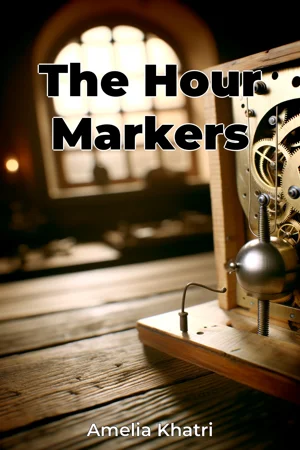
Have you ever paused to consider how profoundly our lives are shaped by the measurement of time? "The Hour Markers" delves into the fascinating history of humanity's quest to quantify and understand time, exploring the ingenious devices and systems we've created to mark its passage. This book examines the evolution of timekeeping, from ancient shadow clocks to intricate mechanical dials and ultimately, the ubiquitous digital systems that govern our modern world. The primary focus of "The Hour Markers" revolves around three core themes: the scientific principles underlying time measurement, the historical development of timekeeping technologies, and the social and cultural impact of standardized time. Understanding these themes is crucial because timekeeping is not merely a technical exercise; it's deeply interwoven with advancements in astronomy, physics, and mathematics, and it has fundamentally shaped human civilization and its rhythms. To fully appreciate the journey of time measurement, readers will gain an understanding of basic astronomical concepts, such as the Earth's rotation and its orbit around the sun, which formed the foundation for early timekeeping methods. No prior advanced scientific knowledge is required, as the book provides clear and accessible explanations of necessary concepts. The central argument of "The Hour Markers" is that the relentless pursuit of accurate time measurement has been a driving force behind scientific and technological innovation throughout history and in turn shaped societal structure. This pursuit reflects humanity's innate desire to understand its place in the cosmos and exercise control over daily life. Structured chronologically, the book begins by exploring ancient methods of timekeeping, such as shadow clocks and water clocks used in ancient Egypt and Mesopotamia. It then transitions to the development of mechanical clocks in medieval Europe, detailing the intricate mechanisms and the role of clockmakers. Central to the discussion will be the story of the pendulum clock, a pivotal moment in accurate timekeeping that came about thanks to the work of Christiaan Huygens. The book proceeds through the era of precision timekeeping, including the invention of the marine chronometer, essential for navigation, and the advancements that led to the development of atomic clocks, which provide the standard for modern time. Furthermore, "The Hour Markers" will look into how the introduction and adoption of standardized time across the globe altered social and economic norms. The book's arguments and analysis are supported by historical records, including original diagrams of early clocks, scientific papers detailing advancements in timekeeping technology, and accounts of the social impact of standardized time. Unique data sources include newly translated texts about the history of horology and time, as well as detailed comparisons of various timekeeping methods and their accuracy. "The Hour Markers" connects to several interdisciplinary fields, including astronomy, physics, history, and sociology. The physics of pendulum motion is vital to understanding early clocks, while the history of science explores the context in which these inventions emerged. Sociology helps interpret the effects of standardized time on social organization and labor practices. The book distinguishes itself by providing a holistic view that integrates technical details of timekeeping devices with the broader social and cultural implications of time standardization. It offers not just a history of clocks, but a narrative of how our perception and measurement of time has shaped humanity. Written in an accessible and engaging style, "The Hour Markers" aims to be both informative and thought-provoking. It's targeted at a broad audience, including science enthusiasts, history buffs, and anyone curious about the evolution of timekeeping. This book would be of particular benefit to anyone studying general science and general history. As a work of non-fiction, "The Hour Markers" adheres to the rigorous standards of historical and scientific accuracy, presenting information in a clear, objective, and well-documented manner. The scope of "The Hour Markers" concentrates on the methods and devices humans have used to measure time, from the most rudimentary to the most sophisticated, with particular emphasis on Western advancements. It does not extensively cover philosophical discussions of time or delve into areas like quantum physics. Readers can apply the information in "The Hour Markers" to better understand the technology that surrounds them and the impact of time standardization on their daily routines. The book fosters a deeper appreciation for the ingenuity of past innovators and the complex relationship between humanity and time. While the standardization of time has largely been seen as beneficial, the book also explores its impact on communities and cultures. The book acknowledges ongoing debates about the implications of this control over time, including its effects on individual autonomy and social equity.
Have you ever paused to consider how profoundly our lives are shaped by the measurement of time? "The Hour Markers" delves into the fascinating history of humanity's quest to quantify and understand time, exploring the ingenious devices and systems we've created to mark its passage. This book examines the evolution of timekeeping, from ancient shadow clocks to intricate mechanical dials and ultimately, the ubiquitous digital systems that govern our modern world. The primary focus of "The Hour Markers" revolves around three core themes: the scientific principles underlying time measurement, the historical development of timekeeping technologies, and the social and cultural impact of standardized time. Understanding these themes is crucial because timekeeping is not merely a technical exercise; it's deeply interwoven with advancements in astronomy, physics, and mathematics, and it has fundamentally shaped human civilization and its rhythms. To fully appreciate the journey of time measurement, readers will gain an understanding of basic astronomical concepts, such as the Earth's rotation and its orbit around the sun, which formed the foundation for early timekeeping methods. No prior advanced scientific knowledge is required, as the book provides clear and accessible explanations of necessary concepts. The central argument of "The Hour Markers" is that the relentless pursuit of accurate time measurement has been a driving force behind scientific and technological innovation throughout history and in turn shaped societal structure. This pursuit reflects humanity's innate desire to understand its place in the cosmos and exercise control over daily life. Structured chronologically, the book begins by exploring ancient methods of timekeeping, such as shadow clocks and water clocks used in ancient Egypt and Mesopotamia. It then transitions to the development of mechanical clocks in medieval Europe, detailing the intricate mechanisms and the role of clockmakers. Central to the discussion will be the story of the pendulum clock, a pivotal moment in accurate timekeeping that came about thanks to the work of Christiaan Huygens. The book proceeds through the era of precision timekeeping, including the invention of the marine chronometer, essential for navigation, and the advancements that led to the development of atomic clocks, which provide the standard for modern time. Furthermore, "The Hour Markers" will look into how the introduction and adoption of standardized time across the globe altered social and economic norms. The book's arguments and analysis are supported by historical records, including original diagrams of early clocks, scientific papers detailing advancements in timekeeping technology, and accounts of the social impact of standardized time. Unique data sources include newly translated texts about the history of horology and time, as well as detailed comparisons of various timekeeping methods and their accuracy. "The Hour Markers" connects to several interdisciplinary fields, including astronomy, physics, history, and sociology. The physics of pendulum motion is vital to understanding early clocks, while the history of science explores the context in which these inventions emerged. Sociology helps interpret the effects of standardized time on social organization and labor practices. The book distinguishes itself by providing a holistic view that integrates technical details of timekeeping devices with the broader social and cultural implications of time standardization. It offers not just a history of clocks, but a narrative of how our perception and measurement of time has shaped humanity. Written in an accessible and engaging style, "The Hour Markers" aims to be both informative and thought-provoking. It's targeted at a broad audience, including science enthusiasts, history buffs, and anyone curious about the evolution of timekeeping. This book would be of particular benefit to anyone studying general science and general history. As a work of non-fiction, "The Hour Markers" adheres to the rigorous standards of historical and scientific accuracy, presenting information in a clear, objective, and well-documented manner. The scope of "The Hour Markers" concentrates on the methods and devices humans have used to measure time, from the most rudimentary to the most sophisticated, with particular emphasis on Western advancements. It does not extensively cover philosophical discussions of time or delve into areas like quantum physics. Readers can apply the information in "The Hour Markers" to better understand the technology that surrounds them and the impact of time standardization on their daily routines. The book fosters a deeper appreciation for the ingenuity of past innovators and the complex relationship between humanity and time. While the standardization of time has largely been seen as beneficial, the book also explores its impact on communities and cultures. The book acknowledges ongoing debates about the implications of this control over time, including its effects on individual autonomy and social equity.
"The Hour Markers" explores the captivating history of time measurement, from ancient methods to modern atomic clocks, revealing how our quest to quantify time has shaped society. The book highlights how timekeeping is interwoven with advancements in astronomy, physics, and mathematics, and it has fundamentally shaped human civilization and its rhythms. Discover how early timekeeping methods were based on astronomical observations, such as the Earth's rotation, and how the invention of the pendulum clock marked a pivotal advancement in accuracy. This journey through timekeeping history examines the scientific principles, historical development, and social impact of standardized time. The book progresses chronologically, starting with ancient shadow clocks and water clocks, then moves through the development of mechanical clocks in medieval Europe, and ultimately reaches the era of precision timekeeping with atomic clocks. Furthermore, "The Hour Markers" investigates how the introduction and adoption of standardized time across the globe altered social and economic norms. It uniquely integrates the technical details of timekeeping devices with the broader social and cultural implications of time standardization. By understanding the evolution of time measurement, readers can gain a deeper appreciation for the technology that surrounds them and the profound impact of time standardization on their daily lives.
Book Details
ISBN
9788233986872
Publisher
Publifye AS
Your Licenses
You don't own any licenses for this book
Purchase a license below to unlock this book and download the EPUB.
Purchase License
Select a tier to unlock this book
Need bulk licensing?
Contact us for enterprise agreements.