
About This Book
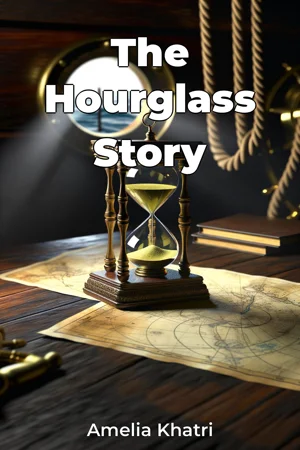
Have you ever wondered how people kept time before the advent of clocks and digital devices? "The Hourglass Story" delves into the fascinating history and enduring legacy of the hourglass, a seemingly simple device that played a crucial role in shaping our understanding and measurement of time. This book explores the multifaceted significance of the hourglass, examining its historical evolution, its impact on various aspects of society, and its surprising influence on modern timekeeping technologies. The book centers around three primary themes: the historical journey of the hourglass from its obscure origins to widespread use; the technological ingenuity behind its design and the materials used in its construction; and the cultural significance of the hourglass as a symbol of mortality, efficiency, and the relentless passage of time. These topics are explored in depth to illustrate how the hourglass served not only as a timekeeping tool, but also as a reflection of societal values and technological progress. Understanding the hourglass requires placing it within the context of pre-modern timekeeping methods and the evolving needs of societies. We examine the limitations of earlier methods such as sundials and water clocks, highlighting the unique advantages the hourglass offered in terms of portability, reliability, and accuracy, particularly in maritime settings and during periods of uncertain weather. Our central argument is that the hourglass, often overlooked in favor of more complex timekeeping devices, represents a pivotal innovation in the human quest to quantify and control time. It offered a degree of precision previously unavailable, influencing everything from navigation and commerce to religious practices and scientific experimentation. The book underscores the enduring relevance of the hourglass, not just as an artifact of the past, but as a testament to the human drive for innovation. "The Hourglass Story" begins by tracing the earliest potential mentions of similar devices and then establishes the timeline of its adoption across Europe and beyond, detailing its spread across various cultures and its adaptation to different uses. The book then explores the technical aspects of hourglass construction, examining the materials used—from the glass itself to the types of sand employed—and the methods used to calibrate the flow of time. We then transition to exploring how the hourglass became embedded in cultural practices, and how it was used as a symbol in art, literature, and philosophical discourse. The concluding chapters analyze the gradual decline of the hourglass with the rise of mechanical clocks, and examine the lingering influence of the hourglass on modern concepts of time management, design, and technology. To support our analysis, we draw upon a wide range of primary and secondary sources, including historical documents, archaeological findings, scientific treatises, and artistic representations of the hourglass throughout history. Unique data sources include medieval inventories listing hourglasses and their values and historical shipping logs that document the use of hourglasses for navigation. The book also connects to other fields of study, such as the history of science and technology, art history, and maritime history. By examining these interdisciplinary connections, we demonstrate the far-reaching impact of the hourglass on society and culture. "The Hourglass Story" takes a fresh look at this familiar object, moving beyond a simple description to offer a comprehensive analysis of its historical, technological, and cultural significance. The book adopts a narrative non-fiction style, blending scholarly research with engaging storytelling to make the subject accessible to a broad audience. This book is targeted towards readers interested in history, technology, and the cultural significance of everyday objects. It will appeal to anyone curious about the quest to measure time and the ingenuity of past civilizations. As a work of history and technology, "The Hourglass Story" adheres to rigorous standards of accuracy and objectivity. While covering a broad historical span, the book focuses primarily on the European and Mediterranean history of the instrument, acknowledging the limitations of available data for certain regions and periods. While the hourglass may no longer be a primary timekeeping device, the principles it embodies—precision, reliability, and the quantification of time—continue to resonate in modern applications, from medical timers to the design of user interfaces. While the history of timekeeping is often presented as a linear progression towards greater accuracy, the book acknowledges the ongoing debates about the social and cultural implications of increasingly precise time measurement, and the potential for timekeeping technologies to both empower and constrain human activity. "The Hourglass Story" invites readers to appreciate the ingenuity and cultural resonance of this deceptively simple tool and to reflect on how it has shaped, and continues to shape, our relationship with time itself.
Have you ever wondered how people kept time before the advent of clocks and digital devices? "The Hourglass Story" delves into the fascinating history and enduring legacy of the hourglass, a seemingly simple device that played a crucial role in shaping our understanding and measurement of time. This book explores the multifaceted significance of the hourglass, examining its historical evolution, its impact on various aspects of society, and its surprising influence on modern timekeeping technologies. The book centers around three primary themes: the historical journey of the hourglass from its obscure origins to widespread use; the technological ingenuity behind its design and the materials used in its construction; and the cultural significance of the hourglass as a symbol of mortality, efficiency, and the relentless passage of time. These topics are explored in depth to illustrate how the hourglass served not only as a timekeeping tool, but also as a reflection of societal values and technological progress. Understanding the hourglass requires placing it within the context of pre-modern timekeeping methods and the evolving needs of societies. We examine the limitations of earlier methods such as sundials and water clocks, highlighting the unique advantages the hourglass offered in terms of portability, reliability, and accuracy, particularly in maritime settings and during periods of uncertain weather. Our central argument is that the hourglass, often overlooked in favor of more complex timekeeping devices, represents a pivotal innovation in the human quest to quantify and control time. It offered a degree of precision previously unavailable, influencing everything from navigation and commerce to religious practices and scientific experimentation. The book underscores the enduring relevance of the hourglass, not just as an artifact of the past, but as a testament to the human drive for innovation. "The Hourglass Story" begins by tracing the earliest potential mentions of similar devices and then establishes the timeline of its adoption across Europe and beyond, detailing its spread across various cultures and its adaptation to different uses. The book then explores the technical aspects of hourglass construction, examining the materials used—from the glass itself to the types of sand employed—and the methods used to calibrate the flow of time. We then transition to exploring how the hourglass became embedded in cultural practices, and how it was used as a symbol in art, literature, and philosophical discourse. The concluding chapters analyze the gradual decline of the hourglass with the rise of mechanical clocks, and examine the lingering influence of the hourglass on modern concepts of time management, design, and technology. To support our analysis, we draw upon a wide range of primary and secondary sources, including historical documents, archaeological findings, scientific treatises, and artistic representations of the hourglass throughout history. Unique data sources include medieval inventories listing hourglasses and their values and historical shipping logs that document the use of hourglasses for navigation. The book also connects to other fields of study, such as the history of science and technology, art history, and maritime history. By examining these interdisciplinary connections, we demonstrate the far-reaching impact of the hourglass on society and culture. "The Hourglass Story" takes a fresh look at this familiar object, moving beyond a simple description to offer a comprehensive analysis of its historical, technological, and cultural significance. The book adopts a narrative non-fiction style, blending scholarly research with engaging storytelling to make the subject accessible to a broad audience. This book is targeted towards readers interested in history, technology, and the cultural significance of everyday objects. It will appeal to anyone curious about the quest to measure time and the ingenuity of past civilizations. As a work of history and technology, "The Hourglass Story" adheres to rigorous standards of accuracy and objectivity. While covering a broad historical span, the book focuses primarily on the European and Mediterranean history of the instrument, acknowledging the limitations of available data for certain regions and periods. While the hourglass may no longer be a primary timekeeping device, the principles it embodies—precision, reliability, and the quantification of time—continue to resonate in modern applications, from medical timers to the design of user interfaces. While the history of timekeeping is often presented as a linear progression towards greater accuracy, the book acknowledges the ongoing debates about the social and cultural implications of increasingly precise time measurement, and the potential for timekeeping technologies to both empower and constrain human activity. "The Hourglass Story" invites readers to appreciate the ingenuity and cultural resonance of this deceptively simple tool and to reflect on how it has shaped, and continues to shape, our relationship with time itself.
"The Hourglass Story" explores the evolution of the hourglass, a pivotal tool in pre-modern timekeeping. It details the hourglass's journey from obscure origins to widespread use, highlighting its technological ingenuity and profound cultural significance as a symbol of mortality and efficiency. Unlike sundials and water clocks, the hourglass offered portability and reliability, especially in maritime navigation where weather-independent time measurement was crucial. The book demonstrates how this simple device provided a new degree of precision, influencing navigation, commerce, and even religious practices. The book progresses chronologically, starting with the earliest mentions of hourglass-like devices and tracing their adoption across Europe. It then delves into the materials and construction techniques, explaining how artisans calibrated the flow of sand for accurate time measurement. The narrative explores the hourglass's presence in art, literature, and philosophical discourse, before examining its decline with the advent of mechanical clocks. By blending historical research with engaging storytelling, "The Hourglass Story" reveals how the hourglass continues to influence modern concepts of time management and design.
Book Details
ISBN
9788233986759
Publisher
Publifye AS
Your Licenses
You don't own any licenses for this book
Purchase a license below to unlock this book and download the EPUB.
Purchase License
Select a tier to unlock this book
Need bulk licensing?
Contact us for enterprise agreements.