
About This Book
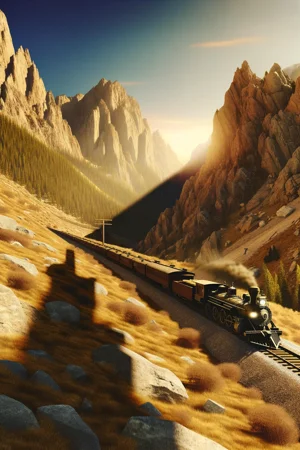
Imagine a world before interconnectedness, before rapid transit shrunk distances and reshaped societies. "The First Trains" explores the revolutionary impact of rail transportation, tracing its evolution from rudimentary steam-powered locomotives to the complex, high-speed networks that define modern travel. This book delves into the history and technology of the railway, examining its profound effect on society, industry, and the very fabric of our lives. This exploration is vital because the rise of railroads represents a pivotal moment in human history. It explores the intricate engineering feats that birthed the first locomotives, it examines their transformative power on global economies, and it analyses their subsequent influence on societal structures. Ignoring this history leaves a gap in our understanding of the modern world. To fully appreciate the railway's significance, the book will provide historical context. Beginning with the pre-railway era of canals and horse-drawn transport, the book establishes the limitations that spurred the need for innovation. A basic understanding of mechanics and industrial processes will be helpful to the reader, but all technical concepts are explained clearly and concisely. The central argument of "The First Trains" is that the development of railway technology was not merely a series of engineering advancements, but a catalyst for unprecedented social, economic, and geographic change. The argument's importance lies in understanding how technology, when coupled with societal needs, can reshape civilization. The book begins by introducing early experiments in rail transport and the key figures who pioneered steam locomotion. It then examines three major points: First, the engineering challenges and innovations that led to increasingly efficient and reliable locomotives, from early designs like Trevithick's "Puffing Devil" to the more sophisticated engines of the Victorian era. Detailed analysis of locomotive design, track construction, and signaling systems will be included. Second, the economic impact of railways, including their role in facilitating industrial growth, trade, and urbanization. The book will explore statistical data on freight and passenger transport, as well as case studies of specific industries that benefited from rail access such as coal mining and manufacturing during the Industrial Revolution. Third, the social consequences of railway expansion, including changes in travel patterns, perceptions of distance, and the creation of new social classes associated with the railway industry. It will culminate in an analysis of the lasting legacy of railways, including their influence on urban planning, landscape design, and cultural identity. The evidence presented will draw upon a variety of primary and secondary sources, including original engineering drawings, historical photographs, government reports, and newspaper accounts related to the early days of railway mania. The methodology involves a combination of historical analysis, technological assessment, and social impact studies. "The First Trains" connects to several other fields of study. Urban planning is relevant as railway lines often dictated the layout and expansion of cities. Economic history is connected as the technology changed the ways people worked and goods were moved. Sociology provides another lens through which to view the impact on how people lived and interacted with each other. This book offers a unique perspective by integrating technological history with social and economic analysis, providing a holistic view of the railway's impact. The tone of the book is informative and engaging. The writing style is accessible to a general audience while maintaining scholarly rigor. The target audience includes history enthusiasts, railway aficionados, students of technology and transportation, and anyone interested in understanding the forces that have shaped the modern world. Railway enthusiasts seeking an in-depth historical account of the technology and those curious about the history of the Industrial Revolution will find this book of value. As a work in the genres of History and Technology, "The First Trains" adheres to the conventions of historical accuracy, factual reporting, and clear explanation of technical concepts. The scope of the book is limited to the development and impact of railways up to the early 20th century, focusing primarily on Europe and North America. It does not delve into the intricacies of modern high-speed rail systems in detail, but it does lay the groundwork for understanding their origins. The information in "The First Trains" can be applied to contemporary discussions about transportation policy, urban development, and the role of technology in shaping society. Understanding the historical precedents of railway development can inform current debates about infrastructure investment and sustainable transportation solutions. The book also touches upon controversies surrounding the environmental impact of railway construction and the social displacement caused by railway projects. "The First Trains" invites readers on a journey into the past, revealing how a seemingly simple invention transformed the world.
Imagine a world before interconnectedness, before rapid transit shrunk distances and reshaped societies. "The First Trains" explores the revolutionary impact of rail transportation, tracing its evolution from rudimentary steam-powered locomotives to the complex, high-speed networks that define modern travel. This book delves into the history and technology of the railway, examining its profound effect on society, industry, and the very fabric of our lives. This exploration is vital because the rise of railroads represents a pivotal moment in human history. It explores the intricate engineering feats that birthed the first locomotives, it examines their transformative power on global economies, and it analyses their subsequent influence on societal structures. Ignoring this history leaves a gap in our understanding of the modern world. To fully appreciate the railway's significance, the book will provide historical context. Beginning with the pre-railway era of canals and horse-drawn transport, the book establishes the limitations that spurred the need for innovation. A basic understanding of mechanics and industrial processes will be helpful to the reader, but all technical concepts are explained clearly and concisely. The central argument of "The First Trains" is that the development of railway technology was not merely a series of engineering advancements, but a catalyst for unprecedented social, economic, and geographic change. The argument's importance lies in understanding how technology, when coupled with societal needs, can reshape civilization. The book begins by introducing early experiments in rail transport and the key figures who pioneered steam locomotion. It then examines three major points: First, the engineering challenges and innovations that led to increasingly efficient and reliable locomotives, from early designs like Trevithick's "Puffing Devil" to the more sophisticated engines of the Victorian era. Detailed analysis of locomotive design, track construction, and signaling systems will be included. Second, the economic impact of railways, including their role in facilitating industrial growth, trade, and urbanization. The book will explore statistical data on freight and passenger transport, as well as case studies of specific industries that benefited from rail access such as coal mining and manufacturing during the Industrial Revolution. Third, the social consequences of railway expansion, including changes in travel patterns, perceptions of distance, and the creation of new social classes associated with the railway industry. It will culminate in an analysis of the lasting legacy of railways, including their influence on urban planning, landscape design, and cultural identity. The evidence presented will draw upon a variety of primary and secondary sources, including original engineering drawings, historical photographs, government reports, and newspaper accounts related to the early days of railway mania. The methodology involves a combination of historical analysis, technological assessment, and social impact studies. "The First Trains" connects to several other fields of study. Urban planning is relevant as railway lines often dictated the layout and expansion of cities. Economic history is connected as the technology changed the ways people worked and goods were moved. Sociology provides another lens through which to view the impact on how people lived and interacted with each other. This book offers a unique perspective by integrating technological history with social and economic analysis, providing a holistic view of the railway's impact. The tone of the book is informative and engaging. The writing style is accessible to a general audience while maintaining scholarly rigor. The target audience includes history enthusiasts, railway aficionados, students of technology and transportation, and anyone interested in understanding the forces that have shaped the modern world. Railway enthusiasts seeking an in-depth historical account of the technology and those curious about the history of the Industrial Revolution will find this book of value. As a work in the genres of History and Technology, "The First Trains" adheres to the conventions of historical accuracy, factual reporting, and clear explanation of technical concepts. The scope of the book is limited to the development and impact of railways up to the early 20th century, focusing primarily on Europe and North America. It does not delve into the intricacies of modern high-speed rail systems in detail, but it does lay the groundwork for understanding their origins. The information in "The First Trains" can be applied to contemporary discussions about transportation policy, urban development, and the role of technology in shaping society. Understanding the historical precedents of railway development can inform current debates about infrastructure investment and sustainable transportation solutions. The book also touches upon controversies surrounding the environmental impact of railway construction and the social displacement caused by railway projects. "The First Trains" invites readers on a journey into the past, revealing how a seemingly simple invention transformed the world.
"The First Trains" explores the revolutionary history and technology behind the emergence of rail transportation, a pivotal force that reshaped societies and spurred unprecedented economic growth during the Industrial Revolution. The book vividly illustrates how early steam locomotives and railway engineering feats transformed global economies and influenced societal structures. One intriguing aspect explored is how railways altered perceptions of distance, effectively shrinking the world and fostering increased interconnectedness. Also, the book unpacks how the rise of railways led to the creation of new social classes and professions, forever changing the social fabric. The book progresses chronologically, beginning with the pre-railway era and early experiments in rail transport, then transitions into the engineering challenges overcome to create reliable locomotives. It examines the economic impact of railways by looking at statistical data on freight and passenger transport, as well as case studies of specific industries that benefited from rail access. Finally, "The First Trains" analyzes the social ramifications of railway expansion, including changes in travel patterns and urban planning. By integrating technological history with social and economic analysis, this book provides a holistic view of the railway's lasting legacy.
Book Details
ISBN
9788233986650
Publisher
Publifye AS
Your Licenses
You don't own any licenses for this book
Purchase a license below to unlock this book and download the EPUB.
Purchase License
Select a tier to unlock this book
Need bulk licensing?
Contact us for enterprise agreements.