
About This Book
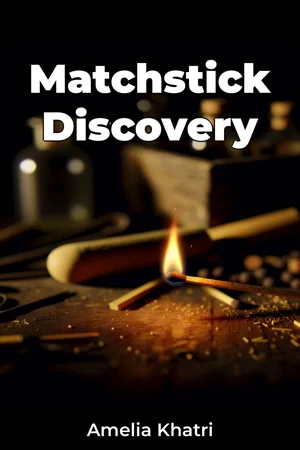
Imagine a world where summoning fire was a laborious, uncertain endeavor. This book, "Matchstick Discovery," explores how the humble matchstick irrevocably transformed that reality, ushering in an era of unprecedented convenience and fundamentally altering daily life. This volume details the fascinating history of matchsticks, examining the technological innovations that led to their invention and widespread adoption, and analyzing the profound impact they had on society, culture, and even scientific progress. We delve into the pre-match era, a time when fire was a precious commodity, often preserved for days or laboriously created using flint and steel. Understanding this context highlights the revolutionary nature of the matchstick and its role in democratizing access to fire. The central argument of "Matchstick Discovery" is that the invention of the matchstick was far more than a simple technological advancement; it was a catalyst for social and economic change. By making fire readily accessible to the masses, matchsticks fueled industrial growth, transformed domestic routines, and contributed to advancements in fields ranging from sanitation to scientific experimentation. The book is structured in three main parts. First, we trace the early experiments in chemical fire-starting, from the dangerous and unreliable "Promethean matches" to the development of safer and more practical formulations by figures like John Walker and, crucially, the innovations of Johan Lundström. We will explore the complex patent disputes and the social consequences of these early inventions. Second, we investigate the mass production and global distribution of matchsticks, examining the socio-economic impact on various countries, including the rise and fall of match-making empires and the often-harsh working conditions faced by match factory laborers. We will analyse the advertising campaigns and the cultural significance of matchboxes, drawing upon historical documents and visual records. Third, we consider the legacy of the matchstick in the modern world, reflecting on its gradual displacement by lighters and other technologies, while acknowledging its enduring presence and its impact on our relationship with fire. This section culminates in a discussion of the environmental concerns associated with match production and disposal, along with a consideration of future sustainable alternatives. "Matchstick Discovery" draws upon a range of sources, including archival patent records, historical accounts from scientific journals and popular publications, and economic data related to match production and consumption. Company records and period advertising materials will provide insights into the business and cultural aspects of the matchstick industry. The book's exploration of matchstick history intersects with several other disciplines. It connects to chemistry through the study of the chemical reactions involved in match ignition. It relates to sociology by examining the impact of easily accessible fire on social structures and domestic life. And it links to economics through the analysis of the match industry's global trade networks and labor practices. This book distinguishes itself through its comprehensive approach, providing a balanced history that considers both the technological breakthroughs and the human costs associated with matchstick production. By using a narrative approach supported by solid research, "Matchstick Discovery" will appeal to anyone interested in technological history, social change, and the surprising stories behind everyday objects. The book aims at a general audience with an interest in history of science and technology, general history, and social studies. Previous knowledge of chemistry is not necessary. The scope of the book is limited to the history of friction matches, with only brief mentions of related technologies like lighters. While the matchstick may seem like a simple invention, its story highlights how technology can reshape society in profound and unexpected ways. The book also touches upon the controversies surrounding the use of white phosphorus in early match production due to the severe health consequences for factory workers. Understanding the history of matchsticks offers a valuable perspective on the complex interplay between innovation, society, and the environment.
Imagine a world where summoning fire was a laborious, uncertain endeavor. This book, "Matchstick Discovery," explores how the humble matchstick irrevocably transformed that reality, ushering in an era of unprecedented convenience and fundamentally altering daily life. This volume details the fascinating history of matchsticks, examining the technological innovations that led to their invention and widespread adoption, and analyzing the profound impact they had on society, culture, and even scientific progress. We delve into the pre-match era, a time when fire was a precious commodity, often preserved for days or laboriously created using flint and steel. Understanding this context highlights the revolutionary nature of the matchstick and its role in democratizing access to fire. The central argument of "Matchstick Discovery" is that the invention of the matchstick was far more than a simple technological advancement; it was a catalyst for social and economic change. By making fire readily accessible to the masses, matchsticks fueled industrial growth, transformed domestic routines, and contributed to advancements in fields ranging from sanitation to scientific experimentation. The book is structured in three main parts. First, we trace the early experiments in chemical fire-starting, from the dangerous and unreliable "Promethean matches" to the development of safer and more practical formulations by figures like John Walker and, crucially, the innovations of Johan Lundström. We will explore the complex patent disputes and the social consequences of these early inventions. Second, we investigate the mass production and global distribution of matchsticks, examining the socio-economic impact on various countries, including the rise and fall of match-making empires and the often-harsh working conditions faced by match factory laborers. We will analyse the advertising campaigns and the cultural significance of matchboxes, drawing upon historical documents and visual records. Third, we consider the legacy of the matchstick in the modern world, reflecting on its gradual displacement by lighters and other technologies, while acknowledging its enduring presence and its impact on our relationship with fire. This section culminates in a discussion of the environmental concerns associated with match production and disposal, along with a consideration of future sustainable alternatives. "Matchstick Discovery" draws upon a range of sources, including archival patent records, historical accounts from scientific journals and popular publications, and economic data related to match production and consumption. Company records and period advertising materials will provide insights into the business and cultural aspects of the matchstick industry. The book's exploration of matchstick history intersects with several other disciplines. It connects to chemistry through the study of the chemical reactions involved in match ignition. It relates to sociology by examining the impact of easily accessible fire on social structures and domestic life. And it links to economics through the analysis of the match industry's global trade networks and labor practices. This book distinguishes itself through its comprehensive approach, providing a balanced history that considers both the technological breakthroughs and the human costs associated with matchstick production. By using a narrative approach supported by solid research, "Matchstick Discovery" will appeal to anyone interested in technological history, social change, and the surprising stories behind everyday objects. The book aims at a general audience with an interest in history of science and technology, general history, and social studies. Previous knowledge of chemistry is not necessary. The scope of the book is limited to the history of friction matches, with only brief mentions of related technologies like lighters. While the matchstick may seem like a simple invention, its story highlights how technology can reshape society in profound and unexpected ways. The book also touches upon the controversies surrounding the use of white phosphorus in early match production due to the severe health consequences for factory workers. Understanding the history of matchsticks offers a valuable perspective on the complex interplay between innovation, society, and the environment.
"Matchstick Discovery" explores the surprisingly transformative history of matchsticks, illuminating their journey from a luxury to an everyday necessity. Beyond mere convenience, matchsticks revolutionized society by democratizing access to fire, a pivotal element for cooking, heating, and industry. The book delves into the chemical innovations that led to safer, more reliable matches, highlighting figures like Johan Lundström, whose contributions were instrumental in the matchstick's evolution. The book progresses chronologically, first examining early, dangerous attempts at creating fire. Then, it investigates the rise of mass production and the global match industry, shedding light on the socio-economic impacts, including the harsh conditions faced by match factory laborers. For example, the use of white phosphorus in early matches led to severe health problems for workers, a dark chapter in the matchstick's history. Finally, the book reflects on the matchstick's legacy in the modern world, looking at its gradual displacement by other technologies and also the environmental concerns associated with its production. By drawing upon diverse sources, including patent records, historical accounts, and economic data, "Matchstick Discovery" offers a balanced perspective. This approach makes it an engaging read for anyone interested in the history of technology, social change, and the untold stories behind the objects we often take for granted.
Book Details
ISBN
9788233986643
Publisher
Publifye AS
Your Licenses
You don't own any licenses for this book
Purchase a license below to unlock this book and download the EPUB.
Purchase License
Select a tier to unlock this book
Need bulk licensing?
Contact us for enterprise agreements.