
About This Book
Have you ever considered the intricate blend of science, engineering, and history beneath every journey you take on a road? "Building Better Roads" delves deep into the fascinating world of road construction, tracing its evolution from ancient pathways to the sophisticated smart highways of the future. This book explores the core principles of civil engineering, materials science, and urban planning that underpin this essential infrastructure, and examines how these elements have been shaped by historical needs and technological advances. Two key topics addressed are the evolution of road-building materials and the ever-changing design philosophies that dictate road construction. The improvements in materials, from simple dirt and gravel to advanced asphalt and concrete composites, directly correlate with increased durability, safety, and environmental sustainability. Simultaneously, the approaches to road design, influenced by population growth, traffic management, and environmental concerns, reflect our understanding of how to create efficient and resilient transportation networks. Understanding the historical context is crucial. The book begins with a look at ancient road-building techniques, such as those employed by the Romans, highlighting how their innovations laid the foundation for modern practices. It examines how social and economic factors throughout history have driven the need for better roads, and how these factors are continuing to shape infrastructure development today. Readers will need a basic familiarity with concepts of physics, materials science, and history to fully grasp the significance of the topics discussed. The central argument of "Building Better Roads" is that the pursuit of superior road construction is an ongoing process of innovation, driven by the need for safer, more sustainable, and more efficient transportation systems. It stresses that advancements in road technology are vital for economic growth and the overall quality of life, making the case that informed understanding of road construction's principles is important to a wide audience. The book is structured in a logical progression, first introducing the fundamental science behind road construction, including soil mechanics, material properties, and structural engineering. It then moves on to explore the history of road development, detailing the evolution of techniques and technologies across different eras and cultures. The core of the book is dedicated to modern road construction methods, covering topics such as asphalt and concrete mixes, pavement design, drainage systems, and traffic management strategies. It culminates with a look at emerging technologies, including smart roads, self-healing pavements, and sustainable construction practices. The arguments presented in the book are supported by a wealth of research and real-world examples. Data from government transportation agencies, industry reports, and academic studies are used to illustrate key concepts and demonstrate the effectiveness of different road-building techniques. Case studies of successful and unsuccessful road projects from around the world provide practical insights and highlight the challenges involved in infrastructure development. "Building Better Roads" connects to other fields such as environmental science, economics, and policy making. The environmental impact of road construction, including greenhouse gas emissions and habitat disruption, is thoroughly explored, and sustainable alternatives are presented. The economic implications of infrastructure investment, including job creation and increased trade, are also examined. The book also touches on the role of government policies and regulations in shaping road development. A unique aspect of the book is its focus on the interdisciplinary nature of road construction, highlighting how advancements in different fields can be integrated to create more effective and sustainable transportation systems. It emphasizes the importance of collaboration between engineers, scientists, planners, and policymakers to address the challenges of modern road construction. The book is written in a professional yet accessible style, making it suitable for a broad audience. Complex technical concepts are explained in a clear and concise manner, with illustrations and diagrams used to enhance understanding. The tone is informative and engaging, encouraging readers to think critically about the role of roads in their lives. The target audience for "Building Better Roads" includes students of civil engineering, urban planning, and transportation, as well as professionals working in the infrastructure industry. It would also be very valuable to policymakers, investors, and anyone simply interested in the science and history behind the roads people travel every day. As a work of non-fiction, this book aims to present accurate, well-researched information in a clear and unbiased manner. It adheres to the conventions of academic writing, including proper citation of sources and a thorough bibliography. The scope of the book is limited to the science, engineering, and history of road construction, with a focus on paved roads. It does not delve into the details of bridge construction or other related infrastructure projects. The information presented in "Building Better Roads" can be applied practically by readers in a variety of ways. Engineers can use the book as a reference for best practices in road design and construction. Planners can use it to inform decisions about transportation policy and infrastructure investment. Citizens can use it to better understand the challenges and opportunities facing the transportation system. The book also addresses some of the ongoing debates in the field of road construction, such as the optimal balance between asphalt and concrete pavements, the effectiveness of different traffic management strategies, and the role of government regulation in promoting sustainable infrastructure development.
Have you ever considered the intricate blend of science, engineering, and history beneath every journey you take on a road? "Building Better Roads" delves deep into the fascinating world of road construction, tracing its evolution from ancient pathways to the sophisticated smart highways of the future. This book explores the core principles of civil engineering, materials science, and urban planning that underpin this essential infrastructure, and examines how these elements have been shaped by historical needs and technological advances. Two key topics addressed are the evolution of road-building materials and the ever-changing design philosophies that dictate road construction. The improvements in materials, from simple dirt and gravel to advanced asphalt and concrete composites, directly correlate with increased durability, safety, and environmental sustainability. Simultaneously, the approaches to road design, influenced by population growth, traffic management, and environmental concerns, reflect our understanding of how to create efficient and resilient transportation networks. Understanding the historical context is crucial. The book begins with a look at ancient road-building techniques, such as those employed by the Romans, highlighting how their innovations laid the foundation for modern practices. It examines how social and economic factors throughout history have driven the need for better roads, and how these factors are continuing to shape infrastructure development today. Readers will need a basic familiarity with concepts of physics, materials science, and history to fully grasp the significance of the topics discussed. The central argument of "Building Better Roads" is that the pursuit of superior road construction is an ongoing process of innovation, driven by the need for safer, more sustainable, and more efficient transportation systems. It stresses that advancements in road technology are vital for economic growth and the overall quality of life, making the case that informed understanding of road construction's principles is important to a wide audience. The book is structured in a logical progression, first introducing the fundamental science behind road construction, including soil mechanics, material properties, and structural engineering. It then moves on to explore the history of road development, detailing the evolution of techniques and technologies across different eras and cultures. The core of the book is dedicated to modern road construction methods, covering topics such as asphalt and concrete mixes, pavement design, drainage systems, and traffic management strategies. It culminates with a look at emerging technologies, including smart roads, self-healing pavements, and sustainable construction practices. The arguments presented in the book are supported by a wealth of research and real-world examples. Data from government transportation agencies, industry reports, and academic studies are used to illustrate key concepts and demonstrate the effectiveness of different road-building techniques. Case studies of successful and unsuccessful road projects from around the world provide practical insights and highlight the challenges involved in infrastructure development. "Building Better Roads" connects to other fields such as environmental science, economics, and policy making. The environmental impact of road construction, including greenhouse gas emissions and habitat disruption, is thoroughly explored, and sustainable alternatives are presented. The economic implications of infrastructure investment, including job creation and increased trade, are also examined. The book also touches on the role of government policies and regulations in shaping road development. A unique aspect of the book is its focus on the interdisciplinary nature of road construction, highlighting how advancements in different fields can be integrated to create more effective and sustainable transportation systems. It emphasizes the importance of collaboration between engineers, scientists, planners, and policymakers to address the challenges of modern road construction. The book is written in a professional yet accessible style, making it suitable for a broad audience. Complex technical concepts are explained in a clear and concise manner, with illustrations and diagrams used to enhance understanding. The tone is informative and engaging, encouraging readers to think critically about the role of roads in their lives. The target audience for "Building Better Roads" includes students of civil engineering, urban planning, and transportation, as well as professionals working in the infrastructure industry. It would also be very valuable to policymakers, investors, and anyone simply interested in the science and history behind the roads people travel every day. As a work of non-fiction, this book aims to present accurate, well-researched information in a clear and unbiased manner. It adheres to the conventions of academic writing, including proper citation of sources and a thorough bibliography. The scope of the book is limited to the science, engineering, and history of road construction, with a focus on paved roads. It does not delve into the details of bridge construction or other related infrastructure projects. The information presented in "Building Better Roads" can be applied practically by readers in a variety of ways. Engineers can use the book as a reference for best practices in road design and construction. Planners can use it to inform decisions about transportation policy and infrastructure investment. Citizens can use it to better understand the challenges and opportunities facing the transportation system. The book also addresses some of the ongoing debates in the field of road construction, such as the optimal balance between asphalt and concrete pavements, the effectiveness of different traffic management strategies, and the role of government regulation in promoting sustainable infrastructure development.
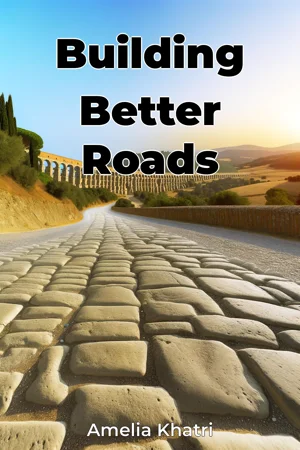
"Building Better Roads" explores the evolution and science of road construction, from ancient pathways to modern smart highways. It examines how civil engineering, materials science, and urban planning intersect to create transportation infrastructure. The book highlights the historical context, noting how Roman road-building techniques laid the foundation for modern practices. It further investigates how changing materials, like the shift from gravel to advanced asphalt and concrete, have improved road durability and sustainability. The book progresses logically, starting with the fundamental science of road construction, including soil mechanics and material properties. It then explores the history of road development across different eras and cultures. A central focus is modern road construction methods, covering pavement design and traffic management. The book concludes with a look at emerging technologies, such as self-healing pavements and sustainable construction practices. This approach makes complex topics accessible to a broad audience interested in the technology and history of roads.
Book Details
ISBN
9788233986629
Publisher
Publifye AS
Your Licenses
You don't own any licenses for this book
Purchase a license below to unlock this book and download the EPUB.
Purchase License
Select a tier to unlock this book
Need bulk licensing?
Contact us for enterprise agreements.