
About This Book
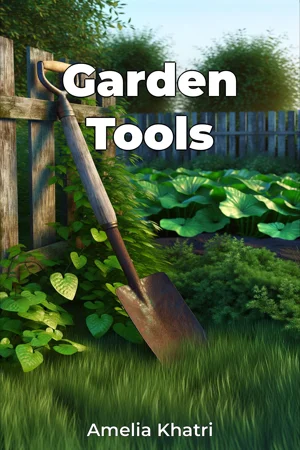
Have you ever considered the profound impact of seemingly simple tools on the very fabric of our civilization? "Garden Tools" delves into this fascinating subject, charting the evolution of implements used to cultivate the earth and revealing their pivotal role in shaping agriculture and dramatically improving food production across millennia. This book explores not just the tools themselves, but how their development reflects and influences societal changes, technological advancements, and our evolving relationship with the natural world. The book focuses on three central themes: the historical progression of garden tools from rudimentary instruments to sophisticated machines, the influence of these tools on agricultural practices and yields, and the cultural and economic ramifications of enhanced food production capabilities. These topics are significant because they highlight the continuous interplay between human ingenuity, environmental resources, and the fundamental need for sustenance. Understanding this interplay is crucial for appreciating our past, navigating present agricultural challenges, and planning for a sustainable future. "Garden Tools" offers a comprehensive historical context, tracing the origins of agriculture in ancient civilizations, such as Mesopotamia and Egypt, where the earliest forms of digging sticks and hoes emerged. It examines how these simple tools enabled settled agriculture, laying the foundation for complex societies. Later, the book explores the impact of the Roman Empire’s agricultural innovations and the subsequent transformations during the Middle Ages and the Renaissance. No prior knowledge of gardening or agriculture is required; the book provides a clear and accessible introduction to these historical periods. The central argument of "Garden Tools" is that the evolution of gardening tools is inextricably linked to the advancement of human civilization. It posits that incremental improvements in these tools have consistently driven increases in food production, leading to population growth, economic specialization, and cultural development. This argument underscores the importance of often-overlooked technological innovations in shaping our world. The structure of the book follows a chronological and thematic approach. It begins by introducing the basic principles of early agriculture and the initial development of hand tools. The subsequent chapters explore significant advancements, such as the introduction of metal tools, the development of plows and irrigation systems, and the mechanization of agriculture during the Industrial Revolution. The book culminates with an analysis of modern gardening and farming technologies, including the use of robotics and precision agriculture, while also discussing the potential future of food production. The book draws on a wide range of evidence, including archaeological findings, historical texts, agricultural manuals, and patent records. It incorporates data from agricultural experiments and statistical analyses of crop yields to demonstrate the direct impact of tool improvements on food production. Furthermore, it features case studies of specific tools and their impact on particular regions or crops. "Garden Tools" connects to several interdisciplinary fields, including archaeology, history, economics, and environmental science. Archaeology provides insight into the earliest forms of tools and their uses. History offers a narrative framework for understanding the social and economic factors that drove tool development. Economics explains the impact of increased food production on trade and wealth creation. Environmental science examines the ecological consequences of different agricultural practices and the sustainability of modern tools. These connections enhance the book's argument by providing a more holistic understanding of the relationship between tools, agriculture, and society. This book offers a unique perspective by focusing specifically on the tools themselves as drivers of change, rather than simply viewing them as passive instruments. It provides a detailed analysis of how each tool improvement, no matter how small, contributed to larger agricultural and societal transformations. The tone is factual and informative, presented in a clear and engaging manner. While grounded in solid research, the writing style is accessible to a broad audience, avoiding overly technical jargon. The target audience includes gardening enthusiasts, history buffs, agricultural students, and anyone interested in the history of technology and its impact on society. The book would be valuable to them by offering a fresh perspective on the evolution of agriculture and the often-underestimated role of simple tools in shaping our world. As a work of non-fiction, "Garden Tools" adheres to the genre's conventions of accuracy, objectivity, and evidence-based analysis. It strives to provide a comprehensive and balanced account of the topic, acknowledging different perspectives and interpretations. The scope of the book is intentionally broad, covering the entire history of gardening and agricultural tools from their earliest origins to the present day. However, it focuses primarily on tools used for cultivation, harvesting, and processing crops, rather than delving into specialized equipment for animal husbandry or forestry. The information presented in "Garden Tools" has numerous real-world applications. It can inform sustainable gardening practices by highlighting the environmental impact of different tools and techniques. It can also inspire innovation in agricultural technology by showcasing the power of incremental improvements. Furthermore, it can promote a greater appreciation for the role of agriculture in shaping our world. While the narrative focuses on progress, the book also acknowledges controversies surrounding modern agricultural practices, such as the overuse of pesticides and the environmental impact of large-scale farming. It addresses these debates by presenting different perspectives and encouraging critical thinking about the future of food production.
Have you ever considered the profound impact of seemingly simple tools on the very fabric of our civilization? "Garden Tools" delves into this fascinating subject, charting the evolution of implements used to cultivate the earth and revealing their pivotal role in shaping agriculture and dramatically improving food production across millennia. This book explores not just the tools themselves, but how their development reflects and influences societal changes, technological advancements, and our evolving relationship with the natural world. The book focuses on three central themes: the historical progression of garden tools from rudimentary instruments to sophisticated machines, the influence of these tools on agricultural practices and yields, and the cultural and economic ramifications of enhanced food production capabilities. These topics are significant because they highlight the continuous interplay between human ingenuity, environmental resources, and the fundamental need for sustenance. Understanding this interplay is crucial for appreciating our past, navigating present agricultural challenges, and planning for a sustainable future. "Garden Tools" offers a comprehensive historical context, tracing the origins of agriculture in ancient civilizations, such as Mesopotamia and Egypt, where the earliest forms of digging sticks and hoes emerged. It examines how these simple tools enabled settled agriculture, laying the foundation for complex societies. Later, the book explores the impact of the Roman Empire’s agricultural innovations and the subsequent transformations during the Middle Ages and the Renaissance. No prior knowledge of gardening or agriculture is required; the book provides a clear and accessible introduction to these historical periods. The central argument of "Garden Tools" is that the evolution of gardening tools is inextricably linked to the advancement of human civilization. It posits that incremental improvements in these tools have consistently driven increases in food production, leading to population growth, economic specialization, and cultural development. This argument underscores the importance of often-overlooked technological innovations in shaping our world. The structure of the book follows a chronological and thematic approach. It begins by introducing the basic principles of early agriculture and the initial development of hand tools. The subsequent chapters explore significant advancements, such as the introduction of metal tools, the development of plows and irrigation systems, and the mechanization of agriculture during the Industrial Revolution. The book culminates with an analysis of modern gardening and farming technologies, including the use of robotics and precision agriculture, while also discussing the potential future of food production. The book draws on a wide range of evidence, including archaeological findings, historical texts, agricultural manuals, and patent records. It incorporates data from agricultural experiments and statistical analyses of crop yields to demonstrate the direct impact of tool improvements on food production. Furthermore, it features case studies of specific tools and their impact on particular regions or crops. "Garden Tools" connects to several interdisciplinary fields, including archaeology, history, economics, and environmental science. Archaeology provides insight into the earliest forms of tools and their uses. History offers a narrative framework for understanding the social and economic factors that drove tool development. Economics explains the impact of increased food production on trade and wealth creation. Environmental science examines the ecological consequences of different agricultural practices and the sustainability of modern tools. These connections enhance the book's argument by providing a more holistic understanding of the relationship between tools, agriculture, and society. This book offers a unique perspective by focusing specifically on the tools themselves as drivers of change, rather than simply viewing them as passive instruments. It provides a detailed analysis of how each tool improvement, no matter how small, contributed to larger agricultural and societal transformations. The tone is factual and informative, presented in a clear and engaging manner. While grounded in solid research, the writing style is accessible to a broad audience, avoiding overly technical jargon. The target audience includes gardening enthusiasts, history buffs, agricultural students, and anyone interested in the history of technology and its impact on society. The book would be valuable to them by offering a fresh perspective on the evolution of agriculture and the often-underestimated role of simple tools in shaping our world. As a work of non-fiction, "Garden Tools" adheres to the genre's conventions of accuracy, objectivity, and evidence-based analysis. It strives to provide a comprehensive and balanced account of the topic, acknowledging different perspectives and interpretations. The scope of the book is intentionally broad, covering the entire history of gardening and agricultural tools from their earliest origins to the present day. However, it focuses primarily on tools used for cultivation, harvesting, and processing crops, rather than delving into specialized equipment for animal husbandry or forestry. The information presented in "Garden Tools" has numerous real-world applications. It can inform sustainable gardening practices by highlighting the environmental impact of different tools and techniques. It can also inspire innovation in agricultural technology by showcasing the power of incremental improvements. Furthermore, it can promote a greater appreciation for the role of agriculture in shaping our world. While the narrative focuses on progress, the book also acknowledges controversies surrounding modern agricultural practices, such as the overuse of pesticides and the environmental impact of large-scale farming. It addresses these debates by presenting different perspectives and encouraging critical thinking about the future of food production.
"Garden Tools" explores the fascinating history of agricultural tools, revealing their profound impact on civilization and food production. The book examines how the evolution of these tools, from simple digging sticks to sophisticated machinery, reflects and influences societal changes and technological advancements. One intriguing fact is how incremental improvements in tools consistently drove increases in crop yields, leading to population growth and economic specialization. The book also highlights the cultural and economic ramifications of enhanced food production capabilities, showcasing the continuous interplay between human ingenuity and environmental resources. The book's approach is both chronological and thematic, beginning with the origins of agriculture in ancient civilizations and progressing through key developments like the introduction of metal tools and the mechanization of agriculture. Drawing on archaeological findings, historical texts, and agricultural manuals, "Garden Tools" connects interdisciplinary fields to provide a holistic understanding. The book culminates with an analysis of modern gardening and farming technologies, including robotics and precision agriculture, while also discussing the potential future of food production, making it valuable for anyone interested in gardening, history, or the impact of technology on society.
Book Details
ISBN
9788233986605
Publisher
Publifye AS
Your Licenses
You don't own any licenses for this book
Purchase a license below to unlock this book and download the EPUB.
Purchase License
Select a tier to unlock this book
Need bulk licensing?
Contact us for enterprise agreements.