
About This Book
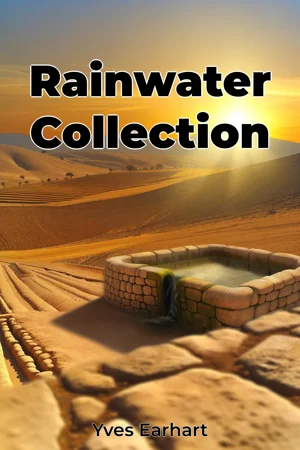
Imagine a world where access to clean water isn't a daily struggle. "Rainwater Collection" explores the historical and contemporary significance of harvesting rainwater as a sustainable solution to water scarcity, particularly in the context of agriculture, environmental conservation, and sustainable living. This book delves into the time-honored practices of civilizations that thrived by utilizing rainwater, demonstrating its critical role in ensuring food security and societal resilience. It explores how ancient societies, understanding the rhythms of weather, developed sophisticated systems for capturing, storing, and utilizing rainwater, often surpassing the capabilities of some modern approaches in their simplicity and effectiveness. The book is structured around three core themes: the history of rainwater harvesting, its application in agriculture, and its role in modern water conservation strategies. Understanding these themes is crucial because as global populations increase and climate change intensifies, conventional water sources are being depleted or polluted. Rainwater harvesting offers a decentralized, environmentally sound alternative that can mitigate these challenges, enhance local water security, and promote resilience in the face of environmental change. We will explore the historical context, examining how cultures across the globe – from the Indus Valley Civilization to the Maya – ingeniously captured and utilized rainwater for drinking, irrigation, and sanitation. This historical overview provides a foundation for understanding the enduring relevance of these practices in a world facing increasing water stress. The book then shifts to the agricultural applications of rainwater harvesting, showcasing how it can improve crop yields, reduce reliance on expensive and environmentally damaging irrigation systems, and enhance food security, especially in arid and semi-arid regions. Case studies from around the world illustrate the practical benefits and challenges of implementing rainwater harvesting in diverse agricultural settings. Finally, it examines modern water conservation techniques, evaluating the effectiveness of various technologies and policies aimed at promoting sustainable water management practices. It looks at contemporary rainwater harvesting systems, from simple household setups to large-scale urban collection projects, and analyzes their potential to reduce water demand, conserve resources, and mitigate the impacts of climate change. The central argument of "Rainwater Collection" is that rainwater harvesting is not merely a historical practice but a vital strategy for achieving water security, promoting sustainable agriculture, and mitigating the impacts of climate change in the 21st century. It posits that a renewed focus on rainwater harvesting can unlock the potential for more resilient and sustainable water management across diverse contexts, from individual households to entire communities. The book is divided into three main parts. The first part introduces the history and principles of rainwater harvesting. The second part explores its practical applications in agriculture, including case studies and best practices. The third part presents modern techniques and policies for promoting rainwater harvesting as a key component of integrated water resource management. The culmination of the argument lies in demonstrating the scalability and adaptability of rainwater harvesting to address water scarcity challenges globally. The evidence presented in the book is drawn from a combination of historical records, scientific research, and case studies. We will analyze archaeological findings of ancient water harvesting systems, scientific data on water availability and quality, and data collected from various international organizations working on water conservation and sustainable agriculture. The book connects to several other fields, including environmental science, agricultural engineering, and public policy. By highlighting the environmental benefits of rainwater harvesting, such as reduced water pollution and energy consumption, will show that it can complement other sustainable development initiatives. Understanding the engineering aspects of rainwater harvesting systems is crucial for designing effective and efficient infrastructure. Examining public policies related to water management and conservation helps to identify barriers and opportunities for promoting rainwater harvesting as a widespread practice. "Rainwater Collection" stands out by integrating historical insights with contemporary scientific and technological advancements. It offers a practical and accessible guide to understanding and implementing rainwater harvesting in various contexts. The tone of the book is informative and analytical. It aims to present complex information in a clear and engaging manner, making it accessible to a broad audience. This book is targeted towards environmental scientists, agricultural engineers, policymakers, and anyone interested in learning more about sustainable water management. It will be valuable to individuals, communities, and organizations seeking to implement practical solutions to water scarcity and promote environmental stewardship. As a work of non-fiction in the Earth Sciences Geography and Environmental Science, "Rainwater Collection" adheres to the genre's expectations of accuracy, objectivity, and evidence-based analysis. It strives to be thorough, well-researched, and accessible to a diverse readership. While "Rainwater Collection" provides a comprehensive overview of rainwater harvesting, its scope is limited to the technical, environmental, and policy aspects. It does not delve into the socio-cultural dimensions of water management or the specific challenges faced by marginalized communities, though these issues are acknowledged within the discussion of case studies and policy considerations. The information in this book can be applied practically by readers in several ways. Individuals can learn how to design and implement rainwater harvesting systems for their homes or gardens. Communities can use the information to develop sustainable water management plans and policies. Agricultural practitioners can learn how to improve crop yields and reduce reliance on conventional irrigation systems. While there is broad consensus on the importance of water conservation, debates persist regarding the optimal strategies for achieving it. This book addresses these debates by presenting a balanced assessment of the strengths and limitations of rainwater harvesting, while promoting rainwater harvesting as a critical part of the solution.
Imagine a world where access to clean water isn't a daily struggle. "Rainwater Collection" explores the historical and contemporary significance of harvesting rainwater as a sustainable solution to water scarcity, particularly in the context of agriculture, environmental conservation, and sustainable living. This book delves into the time-honored practices of civilizations that thrived by utilizing rainwater, demonstrating its critical role in ensuring food security and societal resilience. It explores how ancient societies, understanding the rhythms of weather, developed sophisticated systems for capturing, storing, and utilizing rainwater, often surpassing the capabilities of some modern approaches in their simplicity and effectiveness. The book is structured around three core themes: the history of rainwater harvesting, its application in agriculture, and its role in modern water conservation strategies. Understanding these themes is crucial because as global populations increase and climate change intensifies, conventional water sources are being depleted or polluted. Rainwater harvesting offers a decentralized, environmentally sound alternative that can mitigate these challenges, enhance local water security, and promote resilience in the face of environmental change. We will explore the historical context, examining how cultures across the globe – from the Indus Valley Civilization to the Maya – ingeniously captured and utilized rainwater for drinking, irrigation, and sanitation. This historical overview provides a foundation for understanding the enduring relevance of these practices in a world facing increasing water stress. The book then shifts to the agricultural applications of rainwater harvesting, showcasing how it can improve crop yields, reduce reliance on expensive and environmentally damaging irrigation systems, and enhance food security, especially in arid and semi-arid regions. Case studies from around the world illustrate the practical benefits and challenges of implementing rainwater harvesting in diverse agricultural settings. Finally, it examines modern water conservation techniques, evaluating the effectiveness of various technologies and policies aimed at promoting sustainable water management practices. It looks at contemporary rainwater harvesting systems, from simple household setups to large-scale urban collection projects, and analyzes their potential to reduce water demand, conserve resources, and mitigate the impacts of climate change. The central argument of "Rainwater Collection" is that rainwater harvesting is not merely a historical practice but a vital strategy for achieving water security, promoting sustainable agriculture, and mitigating the impacts of climate change in the 21st century. It posits that a renewed focus on rainwater harvesting can unlock the potential for more resilient and sustainable water management across diverse contexts, from individual households to entire communities. The book is divided into three main parts. The first part introduces the history and principles of rainwater harvesting. The second part explores its practical applications in agriculture, including case studies and best practices. The third part presents modern techniques and policies for promoting rainwater harvesting as a key component of integrated water resource management. The culmination of the argument lies in demonstrating the scalability and adaptability of rainwater harvesting to address water scarcity challenges globally. The evidence presented in the book is drawn from a combination of historical records, scientific research, and case studies. We will analyze archaeological findings of ancient water harvesting systems, scientific data on water availability and quality, and data collected from various international organizations working on water conservation and sustainable agriculture. The book connects to several other fields, including environmental science, agricultural engineering, and public policy. By highlighting the environmental benefits of rainwater harvesting, such as reduced water pollution and energy consumption, will show that it can complement other sustainable development initiatives. Understanding the engineering aspects of rainwater harvesting systems is crucial for designing effective and efficient infrastructure. Examining public policies related to water management and conservation helps to identify barriers and opportunities for promoting rainwater harvesting as a widespread practice. "Rainwater Collection" stands out by integrating historical insights with contemporary scientific and technological advancements. It offers a practical and accessible guide to understanding and implementing rainwater harvesting in various contexts. The tone of the book is informative and analytical. It aims to present complex information in a clear and engaging manner, making it accessible to a broad audience. This book is targeted towards environmental scientists, agricultural engineers, policymakers, and anyone interested in learning more about sustainable water management. It will be valuable to individuals, communities, and organizations seeking to implement practical solutions to water scarcity and promote environmental stewardship. As a work of non-fiction in the Earth Sciences Geography and Environmental Science, "Rainwater Collection" adheres to the genre's expectations of accuracy, objectivity, and evidence-based analysis. It strives to be thorough, well-researched, and accessible to a diverse readership. While "Rainwater Collection" provides a comprehensive overview of rainwater harvesting, its scope is limited to the technical, environmental, and policy aspects. It does not delve into the socio-cultural dimensions of water management or the specific challenges faced by marginalized communities, though these issues are acknowledged within the discussion of case studies and policy considerations. The information in this book can be applied practically by readers in several ways. Individuals can learn how to design and implement rainwater harvesting systems for their homes or gardens. Communities can use the information to develop sustainable water management plans and policies. Agricultural practitioners can learn how to improve crop yields and reduce reliance on conventional irrigation systems. While there is broad consensus on the importance of water conservation, debates persist regarding the optimal strategies for achieving it. This book addresses these debates by presenting a balanced assessment of the strengths and limitations of rainwater harvesting, while promoting rainwater harvesting as a critical part of the solution.
"Rainwater Collection" explores the age-old practice of rainwater harvesting as a key solution to water scarcity, sustainable agriculture, and overall environmental conservation. From ancient civilizations like the Indus Valley to modern applications, the book illustrates how capturing rainwater ensures food security and societal resilience. Intriguingly, some ancient rainwater harvesting systems rival modern techniques in their simplicity and effectiveness. The book emphasizes that, amidst increasing populations and climate change, rainwater harvesting offers a decentralized and eco-friendly alternative to depleting conventional water sources. Divided into three parts, the book first examines the history of rainwater harvesting, then progresses to its agricultural applications, and concludes with modern water conservation strategies. Case studies demonstrate how rainwater harvesting can boost crop yields and reduce dependence on environmentally damaging irrigation systems. The book highlights the potential of both simple household setups and large-scale urban projects to reduce water demand and mitigate the effects of climate change. It targets environmental scientists, agricultural engineers, and policymakers, offering a practical guide to understanding and implementing this vital water management strategy.
Book Details
ISBN
9788233986568
Publisher
Publifye AS
Your Licenses
You don't own any licenses for this book
Purchase a license below to unlock this book and download the EPUB.
Purchase License
Select a tier to unlock this book
Need bulk licensing?
Contact us for enterprise agreements.