
About This Book
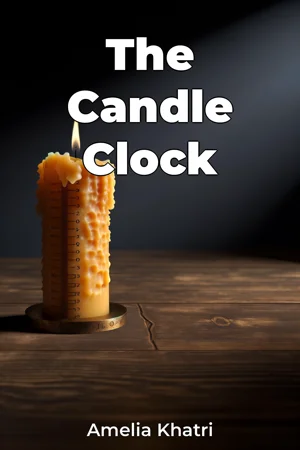
Imagine a world without clocks, where the passage of time was measured not by intricate gears and precisely calibrated springs, but by the slow, steady burn of a candle. "The Candle Clock" delves into this fascinating history, exploring a timekeeping method both elegant and surprisingly accurate that predates mechanical timekeeping. This book illuminates the ingenious ways our ancestors marked the hours, revealing the critical role candle clocks played in daily life, religious practices, and even scientific endeavors. This book is significant because it unveils a forgotten chapter in the history of time measurement, a crucial element in the development of societies. Understanding how people perceived and quantified time before modern technology offers a unique insight into the past. It also showcases human ingenuity and resourcefulness in the face of limited technology. To fully appreciate the candle clock, we must first understand the context of pre-mechanical timekeeping. Before the advent of pendulum clocks and watches, devices such as sundials, water clocks, and hourglasses were common. However each had limitations linked to weather, required constant attention, or were difficult to move about. Candle clocks offered a portable, relatively reliable alternative, particularly useful indoors and at night. The central argument of "The Candle Clock" is that these seemingly simple devices represent a significant step in the human quest to understand and control time. They were more than just primitive timekeepers; they were tools that influenced social structures, religious observances, and the development of early scientific thought. The book begins with an introduction to early methods of timekeeping, setting the stage for the detailed exploration of candle clocks. It covers the history of candle clocks, their design and construction, and their uses in various cultures. We will explore the different types of candle clocks, from simple marked candles to more elaborate designs incorporating weights and alarms. Chapters will detail the mathematical principles involved in ensuring consistent burn rates and accurate time measurement. Further chapters will examine the social and cultural impact of candle clocks, discussing their usage in monasteries, households, and even early scientific experiments. The book culminates in a discussion of the legacy of candle clocks and their influence on the development of subsequent timekeeping technologies. The arguments presented in this book are supported by a range of historical sources including surviving examples of candle clocks, period texts describing their construction and use, and archaeological evidence. Mathematical analyses of candle burning rates will also be provided to evaluate the accuracy of these devices. These resources provide a comprehensive and reliable account of this timekeeping method. "The Candle Clock" is a distinctly interdisciplinary work. It connects the fields of history, science, and sociology. Investigating historical timekeeping practices naturally involves historical research and analysis. The physics and chemistry of candle burning are crucial to understanding how candle clocks work, forming a scientific connection. Finally, how the adoption of candle clocks impacted societal behaviours and views toward time brings a sociological perspective. This book sets itself apart by offering a dedicated and comprehensive examination of candle clocks. While other works touch upon early timekeeping methods, few focus specifically on the history, science, and cultural significance of these unique devices. The information presented in this book is written for a broad audience, from history enthusiasts to those with an interest in science and technology. The book will appeal to anyone curious about how people measured time before the age of modern technology. As a work of non-fiction, the book prioritizes accuracy and clarity. The writing style is accessible and engaging, making complex concepts understandable without sacrificing intellectual rigor. The scope of "The Candle Clock" is limited to the history, science, and cultural impact of wax-based time measurement, beginning with its earliest appearance and concluding with the advent of more precise and portable timekeeping devices. The knowledge imparted by this book can enhance an appreciation of the ingenuity of past societies in solving problems with limited resources. It can also provide a fresh perspective on our current relationship with time, emphasizing the importance of understanding its historical and cultural context. While the use of candle clocks may seem straightforward, there are ongoing discussions regarding their true accuracy and reliability under varying environmental conditions. "The Candle Clock" addresses these debates, presenting evidence and arguments from various sources to offer a balanced perspective. Specifically, factors such as variations in wax composition, wick type, and ambient temperature all influenced the burn rates and accuracy of candle clocks.
Imagine a world without clocks, where the passage of time was measured not by intricate gears and precisely calibrated springs, but by the slow, steady burn of a candle. "The Candle Clock" delves into this fascinating history, exploring a timekeeping method both elegant and surprisingly accurate that predates mechanical timekeeping. This book illuminates the ingenious ways our ancestors marked the hours, revealing the critical role candle clocks played in daily life, religious practices, and even scientific endeavors. This book is significant because it unveils a forgotten chapter in the history of time measurement, a crucial element in the development of societies. Understanding how people perceived and quantified time before modern technology offers a unique insight into the past. It also showcases human ingenuity and resourcefulness in the face of limited technology. To fully appreciate the candle clock, we must first understand the context of pre-mechanical timekeeping. Before the advent of pendulum clocks and watches, devices such as sundials, water clocks, and hourglasses were common. However each had limitations linked to weather, required constant attention, or were difficult to move about. Candle clocks offered a portable, relatively reliable alternative, particularly useful indoors and at night. The central argument of "The Candle Clock" is that these seemingly simple devices represent a significant step in the human quest to understand and control time. They were more than just primitive timekeepers; they were tools that influenced social structures, religious observances, and the development of early scientific thought. The book begins with an introduction to early methods of timekeeping, setting the stage for the detailed exploration of candle clocks. It covers the history of candle clocks, their design and construction, and their uses in various cultures. We will explore the different types of candle clocks, from simple marked candles to more elaborate designs incorporating weights and alarms. Chapters will detail the mathematical principles involved in ensuring consistent burn rates and accurate time measurement. Further chapters will examine the social and cultural impact of candle clocks, discussing their usage in monasteries, households, and even early scientific experiments. The book culminates in a discussion of the legacy of candle clocks and their influence on the development of subsequent timekeeping technologies. The arguments presented in this book are supported by a range of historical sources including surviving examples of candle clocks, period texts describing their construction and use, and archaeological evidence. Mathematical analyses of candle burning rates will also be provided to evaluate the accuracy of these devices. These resources provide a comprehensive and reliable account of this timekeeping method. "The Candle Clock" is a distinctly interdisciplinary work. It connects the fields of history, science, and sociology. Investigating historical timekeeping practices naturally involves historical research and analysis. The physics and chemistry of candle burning are crucial to understanding how candle clocks work, forming a scientific connection. Finally, how the adoption of candle clocks impacted societal behaviours and views toward time brings a sociological perspective. This book sets itself apart by offering a dedicated and comprehensive examination of candle clocks. While other works touch upon early timekeeping methods, few focus specifically on the history, science, and cultural significance of these unique devices. The information presented in this book is written for a broad audience, from history enthusiasts to those with an interest in science and technology. The book will appeal to anyone curious about how people measured time before the age of modern technology. As a work of non-fiction, the book prioritizes accuracy and clarity. The writing style is accessible and engaging, making complex concepts understandable without sacrificing intellectual rigor. The scope of "The Candle Clock" is limited to the history, science, and cultural impact of wax-based time measurement, beginning with its earliest appearance and concluding with the advent of more precise and portable timekeeping devices. The knowledge imparted by this book can enhance an appreciation of the ingenuity of past societies in solving problems with limited resources. It can also provide a fresh perspective on our current relationship with time, emphasizing the importance of understanding its historical and cultural context. While the use of candle clocks may seem straightforward, there are ongoing discussions regarding their true accuracy and reliability under varying environmental conditions. "The Candle Clock" addresses these debates, presenting evidence and arguments from various sources to offer a balanced perspective. Specifically, factors such as variations in wax composition, wick type, and ambient temperature all influenced the burn rates and accuracy of candle clocks.
"The Candle Clock" explores the history of timekeeping through the lens of candle clocks, a pre-mechanical method of measuring time using the consistent burn rate of candles. Before modern clocks, people relied on ingenious methods like sundials and water clocks, but these had limitations. Candle clocks offered a portable and relatively reliable solution, especially indoors and at night. The book reveals how these wax-based timekeepers weren't just primitive devices; they influenced social structures, religious practices, and even early scientific endeavors. The book delves into the design, construction, and cultural uses of candle clocks across different societies. It examines the mathematical principles behind ensuring consistent burn rates and accurate time measurement, akin to understanding the mechanics of a modern clock. By exploring surviving examples, period texts, and archaeological evidence, the book paints a picture of how our ancestors ingeniously quantified time before technology advanced, contributing to our understanding of the history of time measurement. Beginning with an overview of early timekeeping methods, the book progresses through the history, design, and uses of candle clocks, ultimately discussing their legacy and influence on subsequent timekeeping technologies. It highlights the interdisciplinary nature of this topic, connecting history, science, and sociology to provide a comprehensive understanding of this unique timekeeping method and its cultural impact.
Book Details
ISBN
9788233986483
Publisher
Publifye AS
Your Licenses
You don't own any licenses for this book
Purchase a license below to unlock this book and download the EPUB.
Purchase License
Select a tier to unlock this book
Need bulk licensing?
Contact us for enterprise agreements.