
About This Book
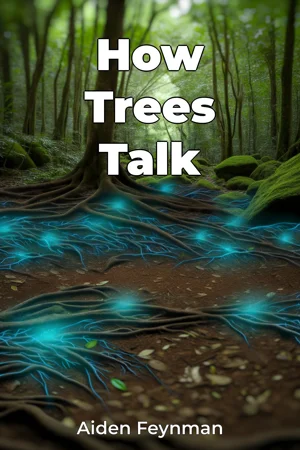
Did you know that trees in a forest are not solitary individuals but interconnected members of a complex, cooperative society? "How Trees Talk" delves into the fascinating world of plant communication, revealing the hidden networks that link trees together and the profound implications of these interactions for forest ecosystems and our planet's climate stability. This book explores three central themes: the intricate root systems of trees, the chemical signals they use to communicate, and the symbiotic relationships they form with fungi, collectively known as the "wood wide web." Understanding these interconnected systems is vital because they underpin the health and resilience of our forests, which play a critical role in carbon sequestration, biodiversity conservation, and watershed management. We will explore the historical context of this research, tracing the evolution of our scientific understanding from early observations of plant behavior to cutting-edge studies utilizing advanced molecular techniques. No prior knowledge of botany or ecology is required, as the concepts are presented in an accessible manner, building from foundational principles to more complex ideas. Our central argument is that trees, far from being passive organisms, actively communicate and cooperate to optimize resource allocation, defend against threats, and ensure the survival of the forest as a whole. This understanding challenges conventional views of individual competition in nature and highlights the importance of cooperation in ecological systems. The book is structured in three parts. Firstly, we introduce the fundamental concepts of plant communication, exploring the different channels through which trees exchange information. Secondly, we develop these ideas by examining specific examples of tree communication, such as the sharing of nutrients through mycorrhizal networks, the release of airborne warning signals in response to herbivore attacks, and the subtle chemical cues that influence seedling establishment. Thirdly, we culminate our argument by discussing the broader implications of tree communication for forest management and climate change mitigation. The evidence presented throughout the book is based on scientific research, including experimental studies, field observations, and molecular analyses. We draw on data from a variety of sources, including academic publications, government reports, and independent research projects. The book also incorporates unique data and insights from long-term ecological monitoring sites, providing a comprehensive picture of tree communication in action. "How Trees Talk" connects to several other fields, including ecology, forestry, and climate science. Understanding tree communication is crucial for developing sustainable forestry practices that promote forest health and resilience. It also has implications for climate change mitigation, as healthy forests are more effective carbon sinks. Furthermore, the study of tree communication sheds light on the evolution of cooperative behavior in biological systems. This book offers a fresh perspective on forest ecology, emphasizing the importance of communication and cooperation among trees. It challenges us to rethink our relationship with the natural world and to appreciate the complexity and interconnectedness of forest ecosystems. Written in a conversational and engaging style, "How Trees Talk" is targeted at general readers with an interest in nature, science, and the environment. It will also appeal to students and professionals in fields such as ecology, forestry, and conservation biology. The book's accessible language and compelling examples make it an ideal introduction to the fascinating world of plant communication. The scope of the book focuses primarily on the communication strategies employed by trees in temperate and boreal forests. While we touch on examples from other ecosystems, our primary emphasis is on the forests of North America and Europe. This focus allows us to delve into the details of specific communication systems and to provide in-depth case studies. The information presented in "How Trees Talk" has practical applications for forest management, conservation, and gardening. By understanding how trees communicate, we can develop more sustainable forestry practices, protect vulnerable forest ecosystems, and create healthier gardens and landscapes. Finally, we address current debates surrounding the interpretation of tree communication, acknowledging alternative viewpoints and presenting a balanced perspective on the evidence. While the concept of tree communication is now widely accepted, there are ongoing discussions about the extent to which trees exhibit intentionality and the precise mechanisms underlying their interactions.
Did you know that trees in a forest are not solitary individuals but interconnected members of a complex, cooperative society? "How Trees Talk" delves into the fascinating world of plant communication, revealing the hidden networks that link trees together and the profound implications of these interactions for forest ecosystems and our planet's climate stability. This book explores three central themes: the intricate root systems of trees, the chemical signals they use to communicate, and the symbiotic relationships they form with fungi, collectively known as the "wood wide web." Understanding these interconnected systems is vital because they underpin the health and resilience of our forests, which play a critical role in carbon sequestration, biodiversity conservation, and watershed management. We will explore the historical context of this research, tracing the evolution of our scientific understanding from early observations of plant behavior to cutting-edge studies utilizing advanced molecular techniques. No prior knowledge of botany or ecology is required, as the concepts are presented in an accessible manner, building from foundational principles to more complex ideas. Our central argument is that trees, far from being passive organisms, actively communicate and cooperate to optimize resource allocation, defend against threats, and ensure the survival of the forest as a whole. This understanding challenges conventional views of individual competition in nature and highlights the importance of cooperation in ecological systems. The book is structured in three parts. Firstly, we introduce the fundamental concepts of plant communication, exploring the different channels through which trees exchange information. Secondly, we develop these ideas by examining specific examples of tree communication, such as the sharing of nutrients through mycorrhizal networks, the release of airborne warning signals in response to herbivore attacks, and the subtle chemical cues that influence seedling establishment. Thirdly, we culminate our argument by discussing the broader implications of tree communication for forest management and climate change mitigation. The evidence presented throughout the book is based on scientific research, including experimental studies, field observations, and molecular analyses. We draw on data from a variety of sources, including academic publications, government reports, and independent research projects. The book also incorporates unique data and insights from long-term ecological monitoring sites, providing a comprehensive picture of tree communication in action. "How Trees Talk" connects to several other fields, including ecology, forestry, and climate science. Understanding tree communication is crucial for developing sustainable forestry practices that promote forest health and resilience. It also has implications for climate change mitigation, as healthy forests are more effective carbon sinks. Furthermore, the study of tree communication sheds light on the evolution of cooperative behavior in biological systems. This book offers a fresh perspective on forest ecology, emphasizing the importance of communication and cooperation among trees. It challenges us to rethink our relationship with the natural world and to appreciate the complexity and interconnectedness of forest ecosystems. Written in a conversational and engaging style, "How Trees Talk" is targeted at general readers with an interest in nature, science, and the environment. It will also appeal to students and professionals in fields such as ecology, forestry, and conservation biology. The book's accessible language and compelling examples make it an ideal introduction to the fascinating world of plant communication. The scope of the book focuses primarily on the communication strategies employed by trees in temperate and boreal forests. While we touch on examples from other ecosystems, our primary emphasis is on the forests of North America and Europe. This focus allows us to delve into the details of specific communication systems and to provide in-depth case studies. The information presented in "How Trees Talk" has practical applications for forest management, conservation, and gardening. By understanding how trees communicate, we can develop more sustainable forestry practices, protect vulnerable forest ecosystems, and create healthier gardens and landscapes. Finally, we address current debates surrounding the interpretation of tree communication, acknowledging alternative viewpoints and presenting a balanced perspective on the evidence. While the concept of tree communication is now widely accepted, there are ongoing discussions about the extent to which trees exhibit intentionality and the precise mechanisms underlying their interactions.
"How Trees Talk" unveils the hidden world of tree communication, revealing that forests are not simply collections of individual trees but complex, cooperative societies. These interactions, facilitated by intricate root systems and chemical signals, have profound implications for forest ecosystems, climate stability, and our understanding of biology. A key element is the "wood wide web," a network of mycorrhizal fungi connecting trees and enabling them to share resources and information. The book progresses by first introducing the fundamental concepts of plant communication, then exploring specific examples like nutrient sharing and airborne warning signals. Finally, it discusses the broader implications for forest management and climate change mitigation. It challenges conventional views of competition by highlighting cooperation, presenting evidence from scientific research and long-term ecological monitoring, and emphasizing the importance of understanding these complex systems for sustainable forestry and conservation.
Book Details
ISBN
9788233986452
Publisher
Publifye AS
Your Licenses
You don't own any licenses for this book
Purchase a license below to unlock this book and download the EPUB.
Purchase License
Select a tier to unlock this book
Need bulk licensing?
Contact us for enterprise agreements.