
About This Book
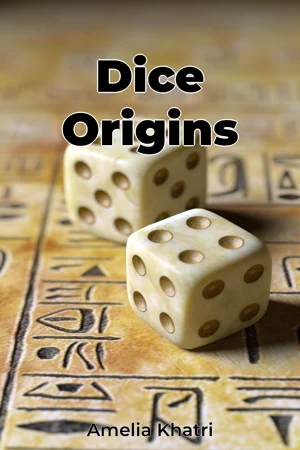
Have you ever considered the journey of the humble die, from ancient ritual object to the cornerstone of modern games and chance? "Dice Origins" delves into this fascinating history, exploring the creation, evolution, and enduring influence of dice on civilizations throughout time. This book examines how these seemingly simple objects have not only shaped our leisure activities but also fundamentally impacted our understanding of probability and risk. This book is organized around three core themes: the archaeological discovery and cultural significance of early dice, the development of probability theory as it intertwines with games of chance, and the pervasive influence of dice and randomness on human decision-making. Understanding these themes is crucial because it reveals the deep-seated human fascination with chance, order, and the desire to predict the unpredictable. To provide context, "Dice Origins" begins with a survey of early human societies and their nascent attempts at games and divination. We will examine archaeological evidence from various cultures, including Mesopotamia, Egypt, and ancient Greece, where early forms of dice were discovered, often crafted from bone, ivory, or stone. The book then traces the evolution of games of chance alongside the slow but steady development of mathematical tools to analyze them. At the heart of "Dice Origins" lies the argument that dice are not merely gaming accessories but artifacts that reflect fundamental human drives and intellectual leaps. Their use spurred the formalization of probability theory, influencing fields from mathematics and statistics to economics and game theory. The book is structured in three parts. First, "Ancient Roots" will explore the archaeological record, examining the earliest known dice and their use in ritual and recreation. Next, "The Birth of Probability" charts the evolution of mathematical thought as scholars began to grapple with the odds and outcomes associated with dice games. Finally, "Chance and Consequence" examines how concepts of probability, born from the study of dice, permeated decision-making in areas as diverse as insurance, investment, and strategic planning. The evidence presented in "Dice Origins" is drawn from a diverse range of sources, including archaeological reports, historical texts, mathematical treatises, and modern statistical analyses. Special attention is given to newly translated texts and overlooked archaeological findings that shed new light on the early history of dice. "Dice Origins" also intersects with several other fields of study. It connects to anthropology through the study of games and rituals across cultures. It relates to mathematics in its exploration of probability theory and statistical analysis. Finally, it touches on economics by examining the role of risk assessment and game theory in economic models. These connections enhance the book's argument by demonstrating the wide-ranging impact of dice on human thought and culture. This book offers a unique perspective by tracing the historical development of both dice and the mathematical tools used to understand them, side by side. This intertwined narrative reveals how the practical challenges of games of chance directly spurred theoretical advancements in probability and statistics. "Dice Origins" is written in a clear, accessible style, suitable for both academic and general audiences. The book aims to make complex mathematical concepts understandable to readers without extensive mathematical backgrounds. This approach ensures the book’s ideas are communicated effectively, fostering a comprehensive appreciation of the subject matter. The target audience includes anyone interested in history, mathematics, games, or the history of science. The book is valuable to readers who appreciate the interconnectedness of seemingly disparate fields and who are curious about the surprising origins of concepts that shape our modern world. As a work of non-fiction, "Dice Origins" adheres to the highest standards of accuracy and objectivity. The book provides detailed citations and source materials, allowing readers to verify the evidence presented and explore the subject further. The scope of "Dice Origins" is intentionally limited to the history of dice and their immediate influence on the development of probability. While the book touches on the broader history of games and gambling, it does not attempt to provide an exhaustive account of these subjects. The information in "Dice Origins" can be applied practically to understanding the role of randomness and risk in everyday life. The book demonstrates how a deeper appreciation of probability can improve decision-making in areas ranging from financial investments to strategic planning. While the basic principles of probability are now widely accepted, debates continue regarding the interpretation and application of these principles in specific contexts. This book addresses these nuances by exploring the evolution of thought surrounding dice and chance.
Have you ever considered the journey of the humble die, from ancient ritual object to the cornerstone of modern games and chance? "Dice Origins" delves into this fascinating history, exploring the creation, evolution, and enduring influence of dice on civilizations throughout time. This book examines how these seemingly simple objects have not only shaped our leisure activities but also fundamentally impacted our understanding of probability and risk. This book is organized around three core themes: the archaeological discovery and cultural significance of early dice, the development of probability theory as it intertwines with games of chance, and the pervasive influence of dice and randomness on human decision-making. Understanding these themes is crucial because it reveals the deep-seated human fascination with chance, order, and the desire to predict the unpredictable. To provide context, "Dice Origins" begins with a survey of early human societies and their nascent attempts at games and divination. We will examine archaeological evidence from various cultures, including Mesopotamia, Egypt, and ancient Greece, where early forms of dice were discovered, often crafted from bone, ivory, or stone. The book then traces the evolution of games of chance alongside the slow but steady development of mathematical tools to analyze them. At the heart of "Dice Origins" lies the argument that dice are not merely gaming accessories but artifacts that reflect fundamental human drives and intellectual leaps. Their use spurred the formalization of probability theory, influencing fields from mathematics and statistics to economics and game theory. The book is structured in three parts. First, "Ancient Roots" will explore the archaeological record, examining the earliest known dice and their use in ritual and recreation. Next, "The Birth of Probability" charts the evolution of mathematical thought as scholars began to grapple with the odds and outcomes associated with dice games. Finally, "Chance and Consequence" examines how concepts of probability, born from the study of dice, permeated decision-making in areas as diverse as insurance, investment, and strategic planning. The evidence presented in "Dice Origins" is drawn from a diverse range of sources, including archaeological reports, historical texts, mathematical treatises, and modern statistical analyses. Special attention is given to newly translated texts and overlooked archaeological findings that shed new light on the early history of dice. "Dice Origins" also intersects with several other fields of study. It connects to anthropology through the study of games and rituals across cultures. It relates to mathematics in its exploration of probability theory and statistical analysis. Finally, it touches on economics by examining the role of risk assessment and game theory in economic models. These connections enhance the book's argument by demonstrating the wide-ranging impact of dice on human thought and culture. This book offers a unique perspective by tracing the historical development of both dice and the mathematical tools used to understand them, side by side. This intertwined narrative reveals how the practical challenges of games of chance directly spurred theoretical advancements in probability and statistics. "Dice Origins" is written in a clear, accessible style, suitable for both academic and general audiences. The book aims to make complex mathematical concepts understandable to readers without extensive mathematical backgrounds. This approach ensures the book’s ideas are communicated effectively, fostering a comprehensive appreciation of the subject matter. The target audience includes anyone interested in history, mathematics, games, or the history of science. The book is valuable to readers who appreciate the interconnectedness of seemingly disparate fields and who are curious about the surprising origins of concepts that shape our modern world. As a work of non-fiction, "Dice Origins" adheres to the highest standards of accuracy and objectivity. The book provides detailed citations and source materials, allowing readers to verify the evidence presented and explore the subject further. The scope of "Dice Origins" is intentionally limited to the history of dice and their immediate influence on the development of probability. While the book touches on the broader history of games and gambling, it does not attempt to provide an exhaustive account of these subjects. The information in "Dice Origins" can be applied practically to understanding the role of randomness and risk in everyday life. The book demonstrates how a deeper appreciation of probability can improve decision-making in areas ranging from financial investments to strategic planning. While the basic principles of probability are now widely accepted, debates continue regarding the interpretation and application of these principles in specific contexts. This book addresses these nuances by exploring the evolution of thought surrounding dice and chance.
"Dice Origins" explores the captivating history of dice, tracing their journey from ancient divination tools to essential components of modern games and probability theory. It argues that dice are more than mere gaming accessories; they are artifacts reflecting humanity’s deep fascination with chance and order, and the desire to predict the unpredictable. Early dice, crafted from materials like bone and ivory, were discovered in archaeological sites across Mesopotamia, Egypt, and ancient Greece, highlighting their cultural significance in early civilizations. The book uniquely intertwines the evolution of dice with the development of probability theory, demonstrating how games of chance spurred mathematical advancements. It reveals that the formalization of probability theory, influenced by dice, has permeated various fields, including mathematics, statistics, economics, and game theory. Organized into three parts, "Dice Origins" progresses from the archaeological record of early dice to the birth of probability and finally examines the influence of chance on decision-making in areas like insurance and investment. The book presents evidence from archaeological reports, historical texts, and mathematical treatises, offering a unique perspective on how the practical challenges of games directly influenced theoretical advancements. By tracing the historical development of both dice and the mathematical tools used to understand them, "Dice Origins" provides a comprehensive appreciation of the subject, making complex concepts accessible to a general audience interested in the history of science and mathematics.
Book Details
ISBN
9788233986445
Publisher
Publifye AS
Your Licenses
You don't own any licenses for this book
Purchase a license below to unlock this book and download the EPUB.
Purchase License
Select a tier to unlock this book
Need bulk licensing?
Contact us for enterprise agreements.