
About This Book
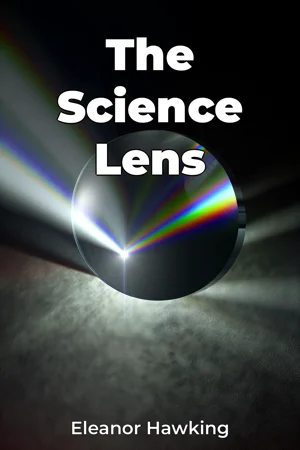
Have you ever considered the profound impact of lenses, not just on our ability to see, but on our entire understanding of the universe? "The Science Lens" delves into the captivating story of how lenses and optics have revolutionized our perception, from the intricacies of the human eye to the vastness of space explored by telescopes. This book examines the core principles of optics, the historical development of lens technology, and the diverse applications that have shaped science, technology, and art. This book primarily focuses on the physics governing lenses and optical systems, detailing how light interacts with different materials to create images. A second key area explores the evolution of optical instruments, tracing their development from rudimentary magnifying glasses to sophisticated microscopes and telescopes. Finally, the book investigates the application of lenses in diverse fields, highlighting their crucial role in photography, medicine, astronomy, and materials science. Understanding these topics is crucial because it allows us to appreciate the technological advancements that have propelled scientific discovery and transformed everyday life. To fully appreciate the power of lenses, we will explore their historical context, starting from ancient civilizations' early use of rudimentary lenses to the scientific breakthroughs of the Renaissance and beyond. No prior in-depth knowledge of physics is required, but a general understanding of basic science concepts will be beneficial. The central argument of "The Science Lens" is that the development and application of lenses represent a pivotal chapter in human history. Lenses have not only extended the range of human vision but have also enabled us to probe the fundamental nature of reality, unlocking secrets of the micro and macro worlds that were previously inaccessible. The book is structured to provide a comprehensive journey through the world of optics. It begins with an introduction to the fundamental principles of light and refraction, followed by detailed explanations of different types of lenses and their properties. The book then moves on to explore the design and function of optical instruments like cameras, microscopes, and telescopes, illustrating how these devices have transformed their respective fields. The book culminates in a discussion of advanced optical technologies and their potential for future innovation, highlighting the practical implications of lens technology in everyday applications. The arguments presented are supported by a blend of theoretical explanations, experimental data, and historical case studies. The book will draw upon original research papers, historical documents, and contemporary reports to provide a robust and evidence-based account of the science lens. "The Science Lens" connects deeply with various other fields. It relates to biology through the study of the human eye and microscopy, to chemistry through the analysis of materials used in lenses, and to art through photography and the creation of visual illusions. These interdisciplinary connections enhance the book's argument by demonstrating the pervasive influence of optics across diverse domains. This book sets itself apart through its comprehensive approach, blending scientific rigor with historical context and practical applications. It emphasizes the human element in the story of lenses, highlighting the scientists, inventors, and artists who have shaped the field. The book maintains a professional yet accessible tone, aiming to make complex scientific concepts understandable to a broad audience. The writing style is clear, concise, and engaging, making the book both informative and enjoyable to read. "The Science Lens" is intended for students, science enthusiasts, and anyone curious about the science behind vision and optical technology. It will be valuable to those seeking a deeper understanding of the technology that shapes our world. As a work of non-fiction, "The Science Lens" adheres to the genre's conventions by presenting accurate, well-researched information in a clear and objective manner. The book avoids speculation and relies on verifiable sources to support its claims. The book's scope is broad, covering the major aspects of lens science and technology. However, it is limited to the study of physical lenses and excludes discussion of metaphorical lenses or abstract concepts. The information in this book can be applied practically in various ways. Readers can gain a deeper understanding of how cameras, microscopes, and telescopes work, as well as acquire insights into the design of optical systems and the development of new optical technologies. While the fundamental principles of optics are well-established, there are ongoing debates regarding the ethical implications of certain optical technologies, such as surveillance cameras and advanced imaging techniques. "The Science Lens" briefly touches upon these controversies, encouraging readers to consider the broader societal impact of optical innovation.
Have you ever considered the profound impact of lenses, not just on our ability to see, but on our entire understanding of the universe? "The Science Lens" delves into the captivating story of how lenses and optics have revolutionized our perception, from the intricacies of the human eye to the vastness of space explored by telescopes. This book examines the core principles of optics, the historical development of lens technology, and the diverse applications that have shaped science, technology, and art. This book primarily focuses on the physics governing lenses and optical systems, detailing how light interacts with different materials to create images. A second key area explores the evolution of optical instruments, tracing their development from rudimentary magnifying glasses to sophisticated microscopes and telescopes. Finally, the book investigates the application of lenses in diverse fields, highlighting their crucial role in photography, medicine, astronomy, and materials science. Understanding these topics is crucial because it allows us to appreciate the technological advancements that have propelled scientific discovery and transformed everyday life. To fully appreciate the power of lenses, we will explore their historical context, starting from ancient civilizations' early use of rudimentary lenses to the scientific breakthroughs of the Renaissance and beyond. No prior in-depth knowledge of physics is required, but a general understanding of basic science concepts will be beneficial. The central argument of "The Science Lens" is that the development and application of lenses represent a pivotal chapter in human history. Lenses have not only extended the range of human vision but have also enabled us to probe the fundamental nature of reality, unlocking secrets of the micro and macro worlds that were previously inaccessible. The book is structured to provide a comprehensive journey through the world of optics. It begins with an introduction to the fundamental principles of light and refraction, followed by detailed explanations of different types of lenses and their properties. The book then moves on to explore the design and function of optical instruments like cameras, microscopes, and telescopes, illustrating how these devices have transformed their respective fields. The book culminates in a discussion of advanced optical technologies and their potential for future innovation, highlighting the practical implications of lens technology in everyday applications. The arguments presented are supported by a blend of theoretical explanations, experimental data, and historical case studies. The book will draw upon original research papers, historical documents, and contemporary reports to provide a robust and evidence-based account of the science lens. "The Science Lens" connects deeply with various other fields. It relates to biology through the study of the human eye and microscopy, to chemistry through the analysis of materials used in lenses, and to art through photography and the creation of visual illusions. These interdisciplinary connections enhance the book's argument by demonstrating the pervasive influence of optics across diverse domains. This book sets itself apart through its comprehensive approach, blending scientific rigor with historical context and practical applications. It emphasizes the human element in the story of lenses, highlighting the scientists, inventors, and artists who have shaped the field. The book maintains a professional yet accessible tone, aiming to make complex scientific concepts understandable to a broad audience. The writing style is clear, concise, and engaging, making the book both informative and enjoyable to read. "The Science Lens" is intended for students, science enthusiasts, and anyone curious about the science behind vision and optical technology. It will be valuable to those seeking a deeper understanding of the technology that shapes our world. As a work of non-fiction, "The Science Lens" adheres to the genre's conventions by presenting accurate, well-researched information in a clear and objective manner. The book avoids speculation and relies on verifiable sources to support its claims. The book's scope is broad, covering the major aspects of lens science and technology. However, it is limited to the study of physical lenses and excludes discussion of metaphorical lenses or abstract concepts. The information in this book can be applied practically in various ways. Readers can gain a deeper understanding of how cameras, microscopes, and telescopes work, as well as acquire insights into the design of optical systems and the development of new optical technologies. While the fundamental principles of optics are well-established, there are ongoing debates regarding the ethical implications of certain optical technologies, such as surveillance cameras and advanced imaging techniques. "The Science Lens" briefly touches upon these controversies, encouraging readers to consider the broader societal impact of optical innovation.
"The Science Lens" explores the fascinating world of lenses and optics, revealing how they've shaped our understanding of everything from the human eye to the cosmos. It delves into the fundamental principles of light and refraction, highlighting intriguing facts such as how different materials bend light to create images and how early lenses, though rudimentary, paved the way for modern optical instruments. The book traces the evolution of lens technology, from simple magnifying glasses to sophisticated microscopes and telescopes, emphasizing their impact on science, technology, and even art. The book presents its information through a blend of theoretical explanations, experimental data, and historical case studies, making complex concepts accessible. Readers will journey through the principles of light, explore various lens types, and then examine optical instruments like cameras and telescopes. Ultimately, "The Science Lens" illustrates how lenses have not only extended our vision but also unlocked secrets of both the microscopic and macroscopic worlds, revolutionizing fields like medicine, astronomy, and materials science.
Book Details
ISBN
9788233986421
Publisher
Publifye AS
Your Licenses
You don't own any licenses for this book
Purchase a license below to unlock this book and download the EPUB.
Purchase License
Select a tier to unlock this book
Need bulk licensing?
Contact us for enterprise agreements.