
About This Book
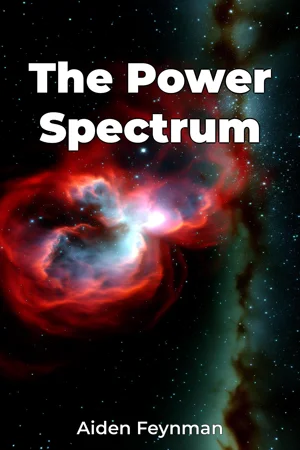
Have you ever considered that the invisible electromagnetic radiation surrounding us dictates not only our digital communications but also profoundly impacts human health and our understanding of the cosmos? "The Power Spectrum" delves into the multifaceted world of electromagnetic radiation, exploring its diverse forms, from radio waves to gamma rays, and their pervasive influence on communication technologies, biological systems, and astrophysical phenomena. This book addresses three central topics. First, it explores the nature of electromagnetic radiation itself, describing its wave-particle duality and fundamental properties like frequency, wavelength, and intensity. Second, it examines its applications in communication technologies, from the earliest telegraphs to modern wireless networks, focusing on how different parts of the spectrum are utilized and the engineering challenges involved. Third, it investigates the biological effects of various types of radiation, discussing both the beneficial uses, such as X-rays for medical imaging, and the potential hazards of exposure to high-intensity radiation. These topics are crucial because understanding the power spectrum allows us to harness its potential while mitigating its risks, shaping technological advancements and protecting public health. The historical context begins with the 19th-century discoveries of electromagnetism by scientists like Maxwell and Hertz, which laid the groundwork for radio communication. Socially, our reliance on wireless technology has transformed global interconnectedness, but it also raises concerns about privacy, security, and digital equity. Scientifically, a basic understanding of physics, particularly wave mechanics and electromagnetism, would be helpful, but the book is designed to be accessible to a wide audience with a general science background. The central argument of "The Power Spectrum" is that electromagnetic radiation, while often perceived as a singular phenomenon, is a continuous spectrum of energy with vastly different properties and effects, each requiring careful consideration in its technological applications and biological interactions. Comprehending the nuances of each spectral region is essential for responsible innovation and informed decision-making. The book begins by introducing the elementary concepts of electromagnetic waves, photons, and the electromagnetic spectrum. It then devotes chapters to radio waves and microwaves, discussing their use in broadcasting, satellite communication, and radar technology. Subsequent chapters explore the visible light spectrum, delving into optics, imaging techniques, and the human visual system. The final sections cover higher-energy radiation, including ultraviolet, X-rays, and gamma rays, detailing their applications in medicine, material science, and astronomy, as well as the risks associated with ionizing radiation. The book concludes with a discussion of future trends in spectrum management and the ethical considerations surrounding electromagnetic radiation. The arguments are supported by a variety of evidence, including experimental data from physics laboratories, engineering case studies of communication systems, epidemiological studies of radiation exposure, and astronomical observations of celestial objects. It also draws upon regulatory guidelines from organizations like the FCC and the WHO. Interdisciplinary connections are made with fields such as electrical engineering, which provides the practical understanding of device creation and signal transmission; medicine, which offers insights into the biological effects of radiation; and astronomy, which relies heavily on electromagnetic radiation for observing the universe. These connections enhance the argument by illustrating the broad impact of the power spectrum. A unique approach of this book lies in its holistic view, connecting the seemingly disparate worlds of communication, biology, and astrophysics through the unifying framework of the electromagnetic spectrum. It presents information that is simultaneously technical and accessible, with a tone that is educational and engaging. The target audience includes students in science and engineering, professionals in related fields, policymakers involved in spectrum regulation, and anyone with a general interest in science and technology. Understanding the power spectrum is increasingly relevant in our technology-driven world. As a work of science and technology non-fiction, "The Power Spectrum" aims to present factual information in a clear and objective manner, while acknowledging the inherent uncertainties and limitations of scientific knowledge. The scope is broad, covering the entire electromagnetic spectrum, but it intentionally avoids in-depth mathematical derivations, focusing instead on conceptual understanding and practical applications. The information in this book can be applied to numerous real-world situations, such as evaluating the safety of cell phone use, understanding the capabilities of medical imaging techniques, and interpreting data from astronomical observations. While the benefits of electromagnetic radiation are clear, certain applications, like 5G technology and high-energy radiation therapies, do face ongoing debates regarding potential health effects and environmental impacts, which the book explores objectively.
Have you ever considered that the invisible electromagnetic radiation surrounding us dictates not only our digital communications but also profoundly impacts human health and our understanding of the cosmos? "The Power Spectrum" delves into the multifaceted world of electromagnetic radiation, exploring its diverse forms, from radio waves to gamma rays, and their pervasive influence on communication technologies, biological systems, and astrophysical phenomena. This book addresses three central topics. First, it explores the nature of electromagnetic radiation itself, describing its wave-particle duality and fundamental properties like frequency, wavelength, and intensity. Second, it examines its applications in communication technologies, from the earliest telegraphs to modern wireless networks, focusing on how different parts of the spectrum are utilized and the engineering challenges involved. Third, it investigates the biological effects of various types of radiation, discussing both the beneficial uses, such as X-rays for medical imaging, and the potential hazards of exposure to high-intensity radiation. These topics are crucial because understanding the power spectrum allows us to harness its potential while mitigating its risks, shaping technological advancements and protecting public health. The historical context begins with the 19th-century discoveries of electromagnetism by scientists like Maxwell and Hertz, which laid the groundwork for radio communication. Socially, our reliance on wireless technology has transformed global interconnectedness, but it also raises concerns about privacy, security, and digital equity. Scientifically, a basic understanding of physics, particularly wave mechanics and electromagnetism, would be helpful, but the book is designed to be accessible to a wide audience with a general science background. The central argument of "The Power Spectrum" is that electromagnetic radiation, while often perceived as a singular phenomenon, is a continuous spectrum of energy with vastly different properties and effects, each requiring careful consideration in its technological applications and biological interactions. Comprehending the nuances of each spectral region is essential for responsible innovation and informed decision-making. The book begins by introducing the elementary concepts of electromagnetic waves, photons, and the electromagnetic spectrum. It then devotes chapters to radio waves and microwaves, discussing their use in broadcasting, satellite communication, and radar technology. Subsequent chapters explore the visible light spectrum, delving into optics, imaging techniques, and the human visual system. The final sections cover higher-energy radiation, including ultraviolet, X-rays, and gamma rays, detailing their applications in medicine, material science, and astronomy, as well as the risks associated with ionizing radiation. The book concludes with a discussion of future trends in spectrum management and the ethical considerations surrounding electromagnetic radiation. The arguments are supported by a variety of evidence, including experimental data from physics laboratories, engineering case studies of communication systems, epidemiological studies of radiation exposure, and astronomical observations of celestial objects. It also draws upon regulatory guidelines from organizations like the FCC and the WHO. Interdisciplinary connections are made with fields such as electrical engineering, which provides the practical understanding of device creation and signal transmission; medicine, which offers insights into the biological effects of radiation; and astronomy, which relies heavily on electromagnetic radiation for observing the universe. These connections enhance the argument by illustrating the broad impact of the power spectrum. A unique approach of this book lies in its holistic view, connecting the seemingly disparate worlds of communication, biology, and astrophysics through the unifying framework of the electromagnetic spectrum. It presents information that is simultaneously technical and accessible, with a tone that is educational and engaging. The target audience includes students in science and engineering, professionals in related fields, policymakers involved in spectrum regulation, and anyone with a general interest in science and technology. Understanding the power spectrum is increasingly relevant in our technology-driven world. As a work of science and technology non-fiction, "The Power Spectrum" aims to present factual information in a clear and objective manner, while acknowledging the inherent uncertainties and limitations of scientific knowledge. The scope is broad, covering the entire electromagnetic spectrum, but it intentionally avoids in-depth mathematical derivations, focusing instead on conceptual understanding and practical applications. The information in this book can be applied to numerous real-world situations, such as evaluating the safety of cell phone use, understanding the capabilities of medical imaging techniques, and interpreting data from astronomical observations. While the benefits of electromagnetic radiation are clear, certain applications, like 5G technology and high-energy radiation therapies, do face ongoing debates regarding potential health effects and environmental impacts, which the book explores objectively.
"The Power Spectrum" explores the vast world of electromagnetic radiation, from radio waves to gamma rays, and its influence on communication, biology, and our understanding of the universe. It examines the fundamental properties of electromagnetic waves, such as frequency and wavelength, and their applications in various technologies. The book uniquely connects these diverse areas, showing how the same underlying physics governs wireless networks, medical imaging, and astrophysical phenomena. It details how the discovery of electromagnetism laid the foundation for radio communication and how our reliance on wireless technology has transformed global interconnectedness. "The Power Spectrum" also investigates the biological effects of radiation, discussing both the beneficial uses of X-rays in medicine and the potential hazards of high-intensity exposure. A key insight is that electromagnetic radiation isn't a singular phenomenon but a continuous spectrum with vastly different properties and effects, each requiring careful consideration. The book begins with basic concepts and progresses through radio waves, microwaves, visible light, and higher-energy radiation like X-rays and gamma rays. It emphasizes conceptual understanding and practical applications over complex mathematics. The book concludes by addressing future trends in spectrum management, as well as the ethical considerations surrounding electromagnetic radiation exposure from devices like cell phones and radiation therapies.
Book Details
ISBN
9788233986391
Publisher
Publifye AS
Your Licenses
You don't own any licenses for this book
Purchase a license below to unlock this book and download the EPUB.
Purchase License
Select a tier to unlock this book
Need bulk licensing?
Contact us for enterprise agreements.