
About This Book
Imagine a world where vast oceans are impenetrable barriers, where coastlines are inescapable boundaries, and where exploration beyond sight is a perilous gamble. This was the reality before the advent of the magnetic compass, an invention that irrevocably transformed navigation and reshaped the course of global history. "The Compass Guide" delves into the fascinating story of this pivotal instrument, exploring its origins, its impact on exploration and cartography, and its enduring legacy in modern navigation. This book examines the compass through three primary lenses: its scientific underpinnings, its historical significance, and its practical applications. Understanding the Earth's magnetic field and the principles of magnetism is crucial to grasping how the compass functions. Equally important is exploring the compass's role in enabling maritime expansion, facilitating trade routes, and driving the discovery of new lands. Finally, comprehending the compass's evolution and its integration into contemporary navigational systems provides a holistic appreciation of its ongoing relevance. Prior knowledge of basic geography and an interest in historical exploration will enhance the reader's understanding, but no specialized scientific background is required. The book provides the necessary context to understand the scientific principles at play. The central argument of "The Compass Guide" is that the magnetic compass was not merely a navigational tool but a catalyst for global interconnectedness. It empowered explorers to venture into the unknown, fostering cultural exchange, economic growth, and an unparalleled understanding of our planet. The structure of the book unfolds as follows: initially, it elucidates the scientific basis of magnetism and the Earth's magnetic field, explaining how these fundamental principles underpin the compass's operation. The narrative then transitions to the compass's historical journey, tracing its origins in ancient China, its adoption by mariners in Europe and the Arab world, and its impact on the Age of Exploration. Next, the book analyzes the compass's influence on cartography, demonstrating how it enabled the creation of more accurate maps and charts, revolutionizing our perception of the world. Finally, the book explores the compass’s evolution, from magnetic to gyrocompasses, and its integration into modern navigational systems and technologies, including GPS and inertial navigation. The evidence presented within "The Compass Guide" draws from a variety of sources, including historical accounts of voyages and explorations, scientific studies on geomagnetism, and analyses of early maps and navigational instruments. Data from museum collections, archival records, and scientific publications are synthesized to provide a comprehensive and authoritative account. "The Compass Guide" bridges several disciplines. It connects Earth Sciences by illustrating principles of geomagnetism, History by examining the compass’s role in pivotal explorations, and Geography by illuminating its impact on mapping and spatial understanding. This interdisciplinary approach reveals the compass's multifaceted influence on civilization. The book adopts a balanced approach, combining historical narrative with scientific explanation in an accessible format. The tone strives to be informative and engaging, appealing to a broad audience interested in history, science, and geography. "The Compass Guide" is targeted toward readers with an interest in the history of science and technology, maritime exploration, and the development of cartography. It will appeal to students, educators, history enthusiasts, and anyone curious about the instruments that have shaped our understanding of the world and our place in it. The book aims to make complex scientific concepts accessible while offering fresh insights on a well-known instrument. Focusing on the evolution and impact of the magnetic compass, the book intentionally excludes detailed analyses of other navigational tools, such as the astrolabe or sextant, except where they directly relate to the compass's development or usage. The knowledge imparted in "The Compass Guide" can be appreciated and applied in several ways. Readers gain a deeper appreciation for the history of navigation and the ingenuity of early explorers. Educators can use the book as a resource for teaching interdisciplinary topics in science, history, and geography. Travelers can enhance their understanding of navigational tools, both traditional and modern, enriching their exploration and travels.
Imagine a world where vast oceans are impenetrable barriers, where coastlines are inescapable boundaries, and where exploration beyond sight is a perilous gamble. This was the reality before the advent of the magnetic compass, an invention that irrevocably transformed navigation and reshaped the course of global history. "The Compass Guide" delves into the fascinating story of this pivotal instrument, exploring its origins, its impact on exploration and cartography, and its enduring legacy in modern navigation. This book examines the compass through three primary lenses: its scientific underpinnings, its historical significance, and its practical applications. Understanding the Earth's magnetic field and the principles of magnetism is crucial to grasping how the compass functions. Equally important is exploring the compass's role in enabling maritime expansion, facilitating trade routes, and driving the discovery of new lands. Finally, comprehending the compass's evolution and its integration into contemporary navigational systems provides a holistic appreciation of its ongoing relevance. Prior knowledge of basic geography and an interest in historical exploration will enhance the reader's understanding, but no specialized scientific background is required. The book provides the necessary context to understand the scientific principles at play. The central argument of "The Compass Guide" is that the magnetic compass was not merely a navigational tool but a catalyst for global interconnectedness. It empowered explorers to venture into the unknown, fostering cultural exchange, economic growth, and an unparalleled understanding of our planet. The structure of the book unfolds as follows: initially, it elucidates the scientific basis of magnetism and the Earth's magnetic field, explaining how these fundamental principles underpin the compass's operation. The narrative then transitions to the compass's historical journey, tracing its origins in ancient China, its adoption by mariners in Europe and the Arab world, and its impact on the Age of Exploration. Next, the book analyzes the compass's influence on cartography, demonstrating how it enabled the creation of more accurate maps and charts, revolutionizing our perception of the world. Finally, the book explores the compass’s evolution, from magnetic to gyrocompasses, and its integration into modern navigational systems and technologies, including GPS and inertial navigation. The evidence presented within "The Compass Guide" draws from a variety of sources, including historical accounts of voyages and explorations, scientific studies on geomagnetism, and analyses of early maps and navigational instruments. Data from museum collections, archival records, and scientific publications are synthesized to provide a comprehensive and authoritative account. "The Compass Guide" bridges several disciplines. It connects Earth Sciences by illustrating principles of geomagnetism, History by examining the compass’s role in pivotal explorations, and Geography by illuminating its impact on mapping and spatial understanding. This interdisciplinary approach reveals the compass's multifaceted influence on civilization. The book adopts a balanced approach, combining historical narrative with scientific explanation in an accessible format. The tone strives to be informative and engaging, appealing to a broad audience interested in history, science, and geography. "The Compass Guide" is targeted toward readers with an interest in the history of science and technology, maritime exploration, and the development of cartography. It will appeal to students, educators, history enthusiasts, and anyone curious about the instruments that have shaped our understanding of the world and our place in it. The book aims to make complex scientific concepts accessible while offering fresh insights on a well-known instrument. Focusing on the evolution and impact of the magnetic compass, the book intentionally excludes detailed analyses of other navigational tools, such as the astrolabe or sextant, except where they directly relate to the compass's development or usage. The knowledge imparted in "The Compass Guide" can be appreciated and applied in several ways. Readers gain a deeper appreciation for the history of navigation and the ingenuity of early explorers. Educators can use the book as a resource for teaching interdisciplinary topics in science, history, and geography. Travelers can enhance their understanding of navigational tools, both traditional and modern, enriching their exploration and travels.
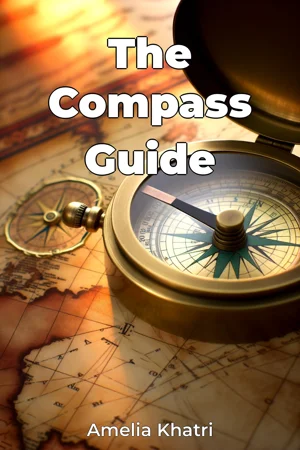
"The Compass Guide" explores the magnetic compass, revealing its pivotal role in navigation, exploration, and the reshaping of global history. This book examines how the compass's development empowered maritime expansion and revolutionized cartography. Consider how, before the compass, vast oceans were essentially impenetrable barriers, highlighting the instrument's transformative impact. The book begins by elucidating the scientific underpinnings of magnetism and the Earth's magnetic field, progresses through the compass's historical journey from ancient China to its adoption by mariners during the Age of Exploration, and culminates in its integration into modern navigational systems. By bridging Earth Sciences, History, and Geography, "The Compass Guide" offers a comprehensive understanding of how this seemingly simple instrument fostered cultural exchange and enabled the discovery of new lands.
Book Details
ISBN
9788233986308
Publisher
Publifye AS
Your Licenses
You don't own any licenses for this book
Purchase a license below to unlock this book and download the EPUB.
Purchase License
Select a tier to unlock this book
Need bulk licensing?
Contact us for enterprise agreements.