
About This Book
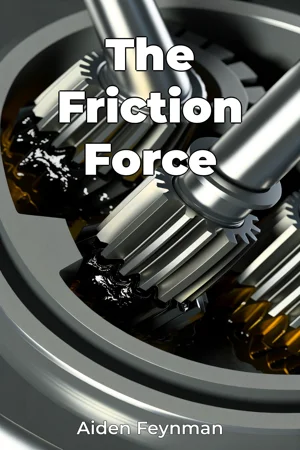
Have you ever considered that without friction, you couldn’t walk, a car couldn’t brake, and machines as we know them simply wouldn't function? "The Friction Force" delves into the multifaceted nature of friction, exploring its crucial role in enabling and controlling motion, while also examining the engineering strategies employed to minimize its detrimental effects in various applications. This book offers a comprehensive understanding of friction, a force both essential and often problematic in our technological world. This book addresses two primary themes: friction as an enabling force and friction as a force to be minimized. Understanding how friction facilitates motion – from the simple act of walking, where the friction between our shoes and the ground propels us forward, to the complex braking systems in vehicles – is crucial for designing efficient and safe mechanical systems. Conversely, the book also investigates methods engineers use to reduce friction in machines to improve efficiency, reduce wear, and extend operational life. These topics are vitally important because friction directly impacts energy consumption, material durability, and overall system performance in virtually all mechanical devices. The understanding of friction has evolved over centuries. Early observations focused on empirical relationships between surfaces and resistance to motion. The work of Leonardo da Vinci and later Guillaume Amontons laid the groundwork for understanding the basic laws governing friction. Modern tribology, the study of friction, wear, and lubrication, has advanced significantly due to developments in materials science, surface engineering, and computational modeling. A basic understanding of physics, particularly Newtonian mechanics, is helpful but not mandatory for readers to grasp the concepts presented. The central argument of "The Friction Force" is that friction is not simply a force to be overcome, but rather a fundamental element to be understood, manipulated, and optimized for effective mechanical design. Approaching friction with this perspective allows for the creation of more robust, efficient, and sustainable engineering solutions. The book is divided into three main sections. The first section introduces the fundamental principles of friction, including the different types of friction (static, kinetic, rolling), factors influencing friction (surface roughness, material properties, normal force), and the historical development of friction theories. The second section explores the beneficial aspects of friction, detailing its applications in locomotion, power transmission (e.g., clutches and brakes), and fastening devices, and how these systems are engineered to maximize frictional forces. The third section examines strategies for minimizing friction, such as lubrication techniques, surface coatings, and advanced materials with low friction coefficients, highlighting applications where minimizing friction is paramount, like bearings and internal combustion engines. These chapters culminate in a discussion of design approaches that balance the need for friction in some areas with the need to minimize it in others, presenting case studies of complex systems and practical applications. The analysis presented is supported by experimental data, case studies of real-world applications, and computational models. The book uses a range of sources, including published research articles, engineering handbooks, and industry reports, to provide a comprehensive and evidence-based understanding of friction. The methodology involves a synthesis of theoretical concepts, experimental results, and practical engineering design principles. "The Friction Force" connects to other fields, including materials science (the properties of materials affect friction), chemistry (lubricants and surface treatments involve chemical processes), and computer science (computational models are used to simulate frictional behavior). These interdisciplinary connections provide a more holistic understanding of friction and its implications. This book offers a unique perspective by integrating the seemingly contradictory roles of friction – both as an enabler and a hindrance – into a cohesive framework. It goes beyond simply describing the phenomena of friction to providing practical insights on how to engineer systems that effectively manage and utilize this force. The tone is informative and professional, aiming to present complex concepts in an accessible manner. While grounded in scientific principles, the book avoids overly technical jargon to appeal to a broader audience. The target audience includes mechanical engineers, engineering students, technicians, and anyone interested in understanding the science and applications of friction. The book offers valuable knowledge for those involved in the design, analysis, and maintenance of mechanical systems. As a work of mechanical engineering and science, this book emphasizes factual accuracy, empirical evidence, and practical applications, conforming to the expectations of non-fiction in these fields. The book's scope is limited to the mechanical aspects of friction, excluding topics like social friction or financial friction. The focus is on providing a thorough understanding of friction in engineering contexts, with a focus on practical applications. Readers can apply the information in this book to various real-world scenarios, such as optimizing the design of braking systems, selecting appropriate lubricants for machinery, or developing new materials with tailored frictional properties. While the basic laws of friction are well established, there are ongoing debates in the field of tribology regarding the precise mechanisms of friction at the nanoscale and the development of more accurate predictive models for complex systems. This book presents different viewpoints and explores emerging research areas.
Have you ever considered that without friction, you couldn’t walk, a car couldn’t brake, and machines as we know them simply wouldn't function? "The Friction Force" delves into the multifaceted nature of friction, exploring its crucial role in enabling and controlling motion, while also examining the engineering strategies employed to minimize its detrimental effects in various applications. This book offers a comprehensive understanding of friction, a force both essential and often problematic in our technological world. This book addresses two primary themes: friction as an enabling force and friction as a force to be minimized. Understanding how friction facilitates motion – from the simple act of walking, where the friction between our shoes and the ground propels us forward, to the complex braking systems in vehicles – is crucial for designing efficient and safe mechanical systems. Conversely, the book also investigates methods engineers use to reduce friction in machines to improve efficiency, reduce wear, and extend operational life. These topics are vitally important because friction directly impacts energy consumption, material durability, and overall system performance in virtually all mechanical devices. The understanding of friction has evolved over centuries. Early observations focused on empirical relationships between surfaces and resistance to motion. The work of Leonardo da Vinci and later Guillaume Amontons laid the groundwork for understanding the basic laws governing friction. Modern tribology, the study of friction, wear, and lubrication, has advanced significantly due to developments in materials science, surface engineering, and computational modeling. A basic understanding of physics, particularly Newtonian mechanics, is helpful but not mandatory for readers to grasp the concepts presented. The central argument of "The Friction Force" is that friction is not simply a force to be overcome, but rather a fundamental element to be understood, manipulated, and optimized for effective mechanical design. Approaching friction with this perspective allows for the creation of more robust, efficient, and sustainable engineering solutions. The book is divided into three main sections. The first section introduces the fundamental principles of friction, including the different types of friction (static, kinetic, rolling), factors influencing friction (surface roughness, material properties, normal force), and the historical development of friction theories. The second section explores the beneficial aspects of friction, detailing its applications in locomotion, power transmission (e.g., clutches and brakes), and fastening devices, and how these systems are engineered to maximize frictional forces. The third section examines strategies for minimizing friction, such as lubrication techniques, surface coatings, and advanced materials with low friction coefficients, highlighting applications where minimizing friction is paramount, like bearings and internal combustion engines. These chapters culminate in a discussion of design approaches that balance the need for friction in some areas with the need to minimize it in others, presenting case studies of complex systems and practical applications. The analysis presented is supported by experimental data, case studies of real-world applications, and computational models. The book uses a range of sources, including published research articles, engineering handbooks, and industry reports, to provide a comprehensive and evidence-based understanding of friction. The methodology involves a synthesis of theoretical concepts, experimental results, and practical engineering design principles. "The Friction Force" connects to other fields, including materials science (the properties of materials affect friction), chemistry (lubricants and surface treatments involve chemical processes), and computer science (computational models are used to simulate frictional behavior). These interdisciplinary connections provide a more holistic understanding of friction and its implications. This book offers a unique perspective by integrating the seemingly contradictory roles of friction – both as an enabler and a hindrance – into a cohesive framework. It goes beyond simply describing the phenomena of friction to providing practical insights on how to engineer systems that effectively manage and utilize this force. The tone is informative and professional, aiming to present complex concepts in an accessible manner. While grounded in scientific principles, the book avoids overly technical jargon to appeal to a broader audience. The target audience includes mechanical engineers, engineering students, technicians, and anyone interested in understanding the science and applications of friction. The book offers valuable knowledge for those involved in the design, analysis, and maintenance of mechanical systems. As a work of mechanical engineering and science, this book emphasizes factual accuracy, empirical evidence, and practical applications, conforming to the expectations of non-fiction in these fields. The book's scope is limited to the mechanical aspects of friction, excluding topics like social friction or financial friction. The focus is on providing a thorough understanding of friction in engineering contexts, with a focus on practical applications. Readers can apply the information in this book to various real-world scenarios, such as optimizing the design of braking systems, selecting appropriate lubricants for machinery, or developing new materials with tailored frictional properties. While the basic laws of friction are well established, there are ongoing debates in the field of tribology regarding the precise mechanisms of friction at the nanoscale and the development of more accurate predictive models for complex systems. This book presents different viewpoints and explores emerging research areas.
"The Friction Force" explores the complex role of friction in mechanical engineering, highlighting its dual nature as both an essential enabler and a significant impediment. Without friction, everyday actions like walking or a car braking would be impossible. The book delves into how engineers manipulate friction for beneficial purposes, such as in locomotion systems and power transmission, while also detailing strategies to minimize its negative impacts, like wear and energy loss in internal combustion engines. The book examines the historical evolution of our comprehension of friction, from early observations to modern tribology. It emphasizes the importance of surface engineering and lubrication in managing friction. Divided into three sections, the book first introduces the fundamental principles of friction, then explores its beneficial applications, and finally examines strategies for minimizing it. Through experimental data and case studies, "The Friction Force" presents a holistic perspective, integrating theoretical concepts with practical engineering design principles for a comprehensive understanding. This book offers a unique, cohesive framework by integrating friction's contradictory roles. It provides practical insights into engineering systems that effectively manage and utilize this force. By understanding and optimizing friction, engineers can create more robust, efficient, and sustainable mechanical systems.
Book Details
ISBN
9788233986216
Publisher
Publifye AS
Your Licenses
You don't own any licenses for this book
Purchase a license below to unlock this book and download the EPUB.
Purchase License
Select a tier to unlock this book
Need bulk licensing?
Contact us for enterprise agreements.