
About This Book
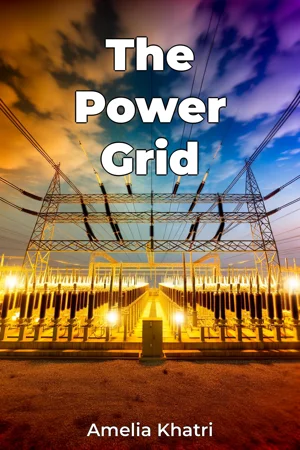
Have you ever stopped to consider the intricate network that powers our modern world? "The Power Grid" delves into the fascinating history and complex engineering behind the electricity that we often take for granted. This book examines the generation, transmission, and distribution of electrical power, tracing the evolution of power systems across the globe. Understanding the power grid is crucial because it underpins nearly every aspect of contemporary life, from communication networks to healthcare systems and industrial production. The book explores how electricity generation transformed from small, localized systems to expansive, interconnected networks capable of delivering power across vast distances. We will also examine the critical role of transmission lines, substations, and distribution networks in ensuring reliable electricity supply. From the earliest experiments with electric light to the development of alternating current (AC) systems, the book provides historical context for the technological advancements that shaped the modern grid. It also considers the social and economic factors that influenced the adoption and expansion of electricity infrastructure. While a basic understanding of physics is helpful, the book presents complex concepts in an accessible manner, guiding the reader through fundamental principles and key historical moments. The central argument of "The Power Grid" is that the development and continued evolution of electrical power systems are not merely technical achievements, but also reflect societal priorities and global trends. It showcases the pivotal role of innovation, policy, and economics in shaping the grid's capacity to meet ever-changing demands. The book is structured to provide a comprehensive overview of the power grid. It begins by introducing fundamental concepts of electricity generation, including thermal, hydro, and renewable sources. Following that, it examines the development of transmission technologies, highlighting the challenges of long-distance power delivery and the solutions that have been implemented. A key section is dedicated to the evolution of grid management strategies, addressing topics like frequency regulation and the integration of intermittent renewable resources. The evidence presented throughout the book draws from a variety of sources. These include archival documents, engineering reports, case studies of specific power grid projects, and analyses of policy decisions. The book also incorporates data from industry organizations and government agencies, providing a comprehensive and fact-based examination of the power grid. "The Power Grid" connects to a range of other fields. It touches on economics through an examination of electricity markets, environmental science through a discussion of the impact of different generation sources, and political science through an analysis of regulatory frameworks. These interdisciplinary connections enhance the book's argument, demonstrating the far-reaching consequences of power grid development. This book offers a unique perspective by combining historical analysis with technical explanations and policy considerations. It presents a balanced viewpoint on the challenges and opportunities facing the power grid, without advocating for any specific solution. Instead, it aims to promote understanding of the complex factors shaping the grid's future. Written in a clear and accessible style, "The Power Grid" is aimed at a broad audience, including students, engineers, policymakers, and anyone interested in the history and technology of electrical power. It provides valuable insights into the critical infrastructure that supports modern society. As a work of history and electrical engineering, the book adheres to scholarly standards of accuracy and objectivity. While focusing on global trends, it acknowledges that specific power grid implementations vary considerably from region to region. The book is intentionally limited in scope to the foundational aspects of the power grid, without delving into specialized topics like microgrids or smart grid technologies in excessive detail. The information in "The Power Grid" has several real-world applications. Engineers can use it to gain a deeper understanding of existing power systems and the challenges of integrating new technologies. Policymakers can draw on it to inform decisions about grid modernization and regulation. The general public can use it to become more informed consumers of electricity and advocates for sustainable energy policies. The book also addresses some of the ongoing debates in the field, such as the role of government intervention in electricity markets and the optimal mix of generation sources for a reliable and sustainable energy future.
Have you ever stopped to consider the intricate network that powers our modern world? "The Power Grid" delves into the fascinating history and complex engineering behind the electricity that we often take for granted. This book examines the generation, transmission, and distribution of electrical power, tracing the evolution of power systems across the globe. Understanding the power grid is crucial because it underpins nearly every aspect of contemporary life, from communication networks to healthcare systems and industrial production. The book explores how electricity generation transformed from small, localized systems to expansive, interconnected networks capable of delivering power across vast distances. We will also examine the critical role of transmission lines, substations, and distribution networks in ensuring reliable electricity supply. From the earliest experiments with electric light to the development of alternating current (AC) systems, the book provides historical context for the technological advancements that shaped the modern grid. It also considers the social and economic factors that influenced the adoption and expansion of electricity infrastructure. While a basic understanding of physics is helpful, the book presents complex concepts in an accessible manner, guiding the reader through fundamental principles and key historical moments. The central argument of "The Power Grid" is that the development and continued evolution of electrical power systems are not merely technical achievements, but also reflect societal priorities and global trends. It showcases the pivotal role of innovation, policy, and economics in shaping the grid's capacity to meet ever-changing demands. The book is structured to provide a comprehensive overview of the power grid. It begins by introducing fundamental concepts of electricity generation, including thermal, hydro, and renewable sources. Following that, it examines the development of transmission technologies, highlighting the challenges of long-distance power delivery and the solutions that have been implemented. A key section is dedicated to the evolution of grid management strategies, addressing topics like frequency regulation and the integration of intermittent renewable resources. The evidence presented throughout the book draws from a variety of sources. These include archival documents, engineering reports, case studies of specific power grid projects, and analyses of policy decisions. The book also incorporates data from industry organizations and government agencies, providing a comprehensive and fact-based examination of the power grid. "The Power Grid" connects to a range of other fields. It touches on economics through an examination of electricity markets, environmental science through a discussion of the impact of different generation sources, and political science through an analysis of regulatory frameworks. These interdisciplinary connections enhance the book's argument, demonstrating the far-reaching consequences of power grid development. This book offers a unique perspective by combining historical analysis with technical explanations and policy considerations. It presents a balanced viewpoint on the challenges and opportunities facing the power grid, without advocating for any specific solution. Instead, it aims to promote understanding of the complex factors shaping the grid's future. Written in a clear and accessible style, "The Power Grid" is aimed at a broad audience, including students, engineers, policymakers, and anyone interested in the history and technology of electrical power. It provides valuable insights into the critical infrastructure that supports modern society. As a work of history and electrical engineering, the book adheres to scholarly standards of accuracy and objectivity. While focusing on global trends, it acknowledges that specific power grid implementations vary considerably from region to region. The book is intentionally limited in scope to the foundational aspects of the power grid, without delving into specialized topics like microgrids or smart grid technologies in excessive detail. The information in "The Power Grid" has several real-world applications. Engineers can use it to gain a deeper understanding of existing power systems and the challenges of integrating new technologies. Policymakers can draw on it to inform decisions about grid modernization and regulation. The general public can use it to become more informed consumers of electricity and advocates for sustainable energy policies. The book also addresses some of the ongoing debates in the field, such as the role of government intervention in electricity markets and the optimal mix of generation sources for a reliable and sustainable energy future.
"The Power Grid" explores the evolution and engineering of electrical power systems, detailing how electricity generation has transformed societies worldwide. It examines the critical infrastructure that supports modern life, from early experiments with electric light to today's expansive, interconnected networks. One intriguing fact is the pivotal role of alternating current (AC) in enabling long-distance power transmission, which revolutionized how electricity is distributed. The book progresses from fundamental concepts of electricity generation to the complexities of transmission technologies and grid management strategies. This book uniquely combines historical analysis with technical explanations and policy considerations, appealing to a broad audience interested in the history of electricity and electrical engineering. It highlights how the development of the power grid reflects societal priorities and global trends, presenting complex concepts in an accessible manner. The book emphasizes the importance of understanding grid management strategies, especially concerning frequency regulation and the integration of renewable energy sources. By examining archival documents, engineering reports, and policy decisions, "The Power Grid" provides a comprehensive and balanced view of the challenges and opportunities facing the power grid's future.
Book Details
ISBN
9788233986100
Publisher
Publifye AS
Your Licenses
You don't own any licenses for this book
Purchase a license below to unlock this book and download the EPUB.
Purchase License
Select a tier to unlock this book
Need bulk licensing?
Contact us for enterprise agreements.