
About This Book
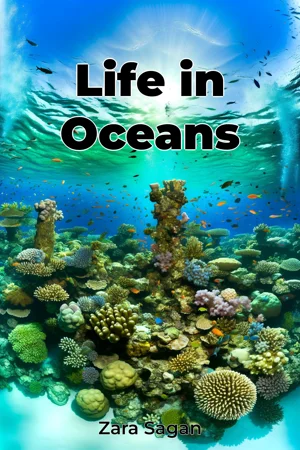
Have you ever wondered what secrets lie hidden beneath the ocean’s surface, beyond the familiar sandy shores and bustling harbors? "Life in Oceans" unveils the multifaceted world of marine ecosystems, exploring the astonishing biodiversity and ecological processes that sustain life in the seas. This book examines not only the well-known coral reefs but also the lesser-understood deep-sea trenches, revealing the intricate ways in which marine life adapts and thrives in vastly different environments. These topics are of paramount importance, as understanding marine ecosystems is crucial for effective conservation efforts and sustainable resource management in an era of increasing environmental pressures and climate change. This book provides a comprehensive overview of marine biology, assuming a foundational understanding of basic biological principles. We establish the scientific context by exploring the geological history of ocean basins, the chemical composition of seawater, and the physical forces that shape marine habitats, such as currents, tides, and wave action. The central argument of "Life in Oceans" posits that the interconnectedness of marine ecosystems demands a holistic approach to conservation, emphasizing the importance of protecting biodiversity at all levels, from microscopic organisms to apex predators. The book is structured to guide the reader through a logical progression of topics. Beginning with an introduction to the fundamental properties of oceans, including salinity, temperature gradients, and light penetration, we then explore the major marine habitats. These include coral reefs, kelp forests, open ocean (pelagic zone), deep-sea environments, and coastal ecosystems like estuaries and mangroves. Each habitat is examined in detail, highlighting the dominant species, trophic relationships, and unique adaptations of the organisms that live there. Furthermore, we devote specific attention to the significant roles that microorganisms play in marine food webs and biogeochemical cycles. The culmination of the book focuses on the challenges facing marine ecosystems today, including pollution, overfishing, habitat destruction, and climate change, presenting various conservation strategies and potential solutions. Finally, we suggest practical implications, emphasizing the imperative of adopting sustainable practices in fisheries, aquaculture, and coastal development. Evidence and research presented throughout the book draw from a wide range of scientific disciplines, namely marine biology, oceanography, ecology, and genetics. We integrate findings from numerous research expeditions, long-term monitoring studies, and laboratory experiments. Particular emphasis is given to studies employing molecular techniques to assess biodiversity and understand the effects of environmental stressors on marine organisms. Moreover, data from satellite remote sensing and acoustic monitoring are incorporated to demonstrate large-scale patterns and processes in the oceans. "Life in Oceans" also connects to other fields of study. Oceanography provides information about the physical and chemical properties of seawater. Climate science enhances the understanding of how global climate patterns influence marine ecosystems. Environmental policy is fundamental for the development and implementation of effective conservation strategies. These interdisciplinary connections enrich the narrative, adding depth and relevance to the discourse on marine conservation. Our approach is distinguished by its integrated perspective, viewing marine ecosystems as complex, interconnected networks rather than isolated entities. We highlight the importance of considering multiple stressors and synergistic effects when assessing the impact of human activities on marine life. Written in an accessible yet scientifically rigorous style, "Life in Oceans" is tailored to a broad audience, including students, educators, policymakers, and anyone with an interest in marine conservation. We aim to foster a deeper appreciation for the value of marine ecosystems and inspire action to protect them. As a nature and science book, we adhere to the conventions of presenting factual information objectively, supported by scientific evidence and avoiding sensationalism. The scope of "Life in Oceans" is intentionally broad, providing a general overview of marine ecosystems worldwide. However, we acknowledge that it is not possible to cover every aspect of marine biology in such a work. Therefore, we have focused on the major habitats and ecological processes that are most relevant to understanding the current challenges facing the oceans. The information provided can be applied to inform personal choices, such as reducing seafood consumption of unsustainably harvested species and supporting policies that promote marine conservation. The book touches on ongoing debates surrounding issues such as marine protected areas, the regulation of deep-sea mining, and the effectiveness of different approaches to fisheries management. By presenting different perspectives and highlighting the uncertainties involved, we encourage readers to think critically about these issues and engage in informed discussions.
Have you ever wondered what secrets lie hidden beneath the ocean’s surface, beyond the familiar sandy shores and bustling harbors? "Life in Oceans" unveils the multifaceted world of marine ecosystems, exploring the astonishing biodiversity and ecological processes that sustain life in the seas. This book examines not only the well-known coral reefs but also the lesser-understood deep-sea trenches, revealing the intricate ways in which marine life adapts and thrives in vastly different environments. These topics are of paramount importance, as understanding marine ecosystems is crucial for effective conservation efforts and sustainable resource management in an era of increasing environmental pressures and climate change. This book provides a comprehensive overview of marine biology, assuming a foundational understanding of basic biological principles. We establish the scientific context by exploring the geological history of ocean basins, the chemical composition of seawater, and the physical forces that shape marine habitats, such as currents, tides, and wave action. The central argument of "Life in Oceans" posits that the interconnectedness of marine ecosystems demands a holistic approach to conservation, emphasizing the importance of protecting biodiversity at all levels, from microscopic organisms to apex predators. The book is structured to guide the reader through a logical progression of topics. Beginning with an introduction to the fundamental properties of oceans, including salinity, temperature gradients, and light penetration, we then explore the major marine habitats. These include coral reefs, kelp forests, open ocean (pelagic zone), deep-sea environments, and coastal ecosystems like estuaries and mangroves. Each habitat is examined in detail, highlighting the dominant species, trophic relationships, and unique adaptations of the organisms that live there. Furthermore, we devote specific attention to the significant roles that microorganisms play in marine food webs and biogeochemical cycles. The culmination of the book focuses on the challenges facing marine ecosystems today, including pollution, overfishing, habitat destruction, and climate change, presenting various conservation strategies and potential solutions. Finally, we suggest practical implications, emphasizing the imperative of adopting sustainable practices in fisheries, aquaculture, and coastal development. Evidence and research presented throughout the book draw from a wide range of scientific disciplines, namely marine biology, oceanography, ecology, and genetics. We integrate findings from numerous research expeditions, long-term monitoring studies, and laboratory experiments. Particular emphasis is given to studies employing molecular techniques to assess biodiversity and understand the effects of environmental stressors on marine organisms. Moreover, data from satellite remote sensing and acoustic monitoring are incorporated to demonstrate large-scale patterns and processes in the oceans. "Life in Oceans" also connects to other fields of study. Oceanography provides information about the physical and chemical properties of seawater. Climate science enhances the understanding of how global climate patterns influence marine ecosystems. Environmental policy is fundamental for the development and implementation of effective conservation strategies. These interdisciplinary connections enrich the narrative, adding depth and relevance to the discourse on marine conservation. Our approach is distinguished by its integrated perspective, viewing marine ecosystems as complex, interconnected networks rather than isolated entities. We highlight the importance of considering multiple stressors and synergistic effects when assessing the impact of human activities on marine life. Written in an accessible yet scientifically rigorous style, "Life in Oceans" is tailored to a broad audience, including students, educators, policymakers, and anyone with an interest in marine conservation. We aim to foster a deeper appreciation for the value of marine ecosystems and inspire action to protect them. As a nature and science book, we adhere to the conventions of presenting factual information objectively, supported by scientific evidence and avoiding sensationalism. The scope of "Life in Oceans" is intentionally broad, providing a general overview of marine ecosystems worldwide. However, we acknowledge that it is not possible to cover every aspect of marine biology in such a work. Therefore, we have focused on the major habitats and ecological processes that are most relevant to understanding the current challenges facing the oceans. The information provided can be applied to inform personal choices, such as reducing seafood consumption of unsustainably harvested species and supporting policies that promote marine conservation. The book touches on ongoing debates surrounding issues such as marine protected areas, the regulation of deep-sea mining, and the effectiveness of different approaches to fisheries management. By presenting different perspectives and highlighting the uncertainties involved, we encourage readers to think critically about these issues and engage in informed discussions.
"Life in Oceans" explores the diverse and interconnected world of marine ecosystems, highlighting the extraordinary biodiversity and ecological processes that sustain ocean life. The book emphasizes the importance of understanding these complex environments for effective conservation and sustainable resource management, particularly in the face of increasing environmental pressures and climate change. Did you know that the book examines not only well-known coral reefs but also the lesser-understood, deep-sea trenches? The book posits that the interconnectedness of marine ecosystems demands a holistic approach to conservation. Beginning with the fundamental properties of oceans and major marine habitats, such as coral reefs and deep-sea environments, the book progresses to examine the roles of microorganisms in marine food webs and the challenges facing marine ecosystems today. The book draws from disciplines like marine biology, oceanography, and ecology. The culmination focuses on conservation strategies and the imperative of adopting sustainable practices.
Book Details
ISBN
9788233986070
Publisher
Publifye AS
Your Licenses
You don't own any licenses for this book
Purchase a license below to unlock this book and download the EPUB.
Purchase License
Select a tier to unlock this book
Need bulk licensing?
Contact us for enterprise agreements.