
About This Book
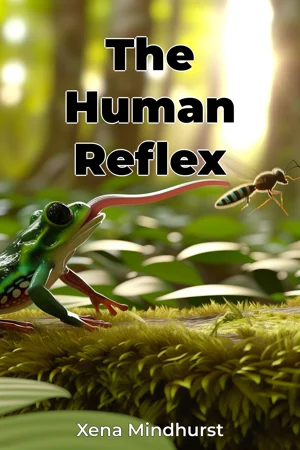
Have you ever wondered how you instinctively pull your hand away from a hot surface before you even consciously register the heat? This book, "The Human Reflex," explores the fascinating world of involuntary reflexes, illuminating their critical role in our survival and their intricate connection to the nervous system’s rapid response mechanisms. Within these pages, we delve into the science behind these automatic behaviors, revealing how they shape our interactions with the environment and contribute to our overall well-being. This study is significant because reflexes are fundamental to understanding the human nervous system and its evolution. From the simple knee-jerk reaction to more complex protective maneuvers, reflexes enable us to react quickly to potential dangers, maintaining bodily equilibrium and ensuring survival. Understanding these mechanisms provides insight into neurological health, developmental processes, and the very nature of our embodied existence. Our exploration begins with a historical overview of reflex research, tracing its origins from early anatomical studies to modern neuroscience. We provide a foundation in basic neuroanatomy, explaining the roles of sensory neurons, motor neurons, and interneurons in reflex arcs. No prior knowledge of neuroscience is required, as we gradually build upon fundamental concepts. The central argument of "The Human Reflex" is that involuntary reflexes are not merely simple, isolated responses but are integral components of a sophisticated system crucial for human adaptability and survival. We posit that understanding the nuances of these reflexes can offer valuable insights into diagnosing and managing neurological disorders, enhancing athletic performance, and even designing more intuitive human-machine interfaces. The book is structured to guide the reader through a comprehensive understanding of reflexes. Part one introduces basic reflex types and their underlying neural circuitry. Part two examines the development of reflexes from infancy through adulthood, highlighting how reflexes change over time and how they can be indicative of neurological development. Part three investigates the clinical significance of reflexes, exploring how abnormal reflex responses can signal underlying health issues and how reflex testing is used in medical diagnosis. Finally, we explore practical applications, such as the use of reflexes in physical therapy and sports training. Throughout the book, we present evidence from diverse research studies, including clinical trials, neurophysiological experiments, and behavioral analyses. We draw upon data from case studies of patients with neurological conditions, as well as insights from comparative studies of reflexes across different species. Additionally, we utilize cutting-edge neuroimaging techniques to illustrate the neural pathways involved in various reflex actions. "The Human Reflex" also connects to several other scientific disciplines. It draws upon principles from evolutionary biology to explain the origins of certain reflexes, biomechanics to understand the physical forces involved in reflexive movements, and psychology to explore the interplay between reflexes and voluntary behavior. These interdisciplinary connections enrich our understanding of reflexes and their role in the broader context of human biology. A unique aspect of this book lies in its accessible approach to complex scientific concepts. While grounded in rigorous scientific research, it avoids overwhelming technical jargon, making it accessible to a broad audience. The book employs clear explanations, illustrative diagrams, and real-world examples to enhance comprehension and engagement. "The Human Reflex" is written in a style that balances scientific accuracy with engaging storytelling. The tone is informative and authoritative, but also conversational and accessible. The target audience includes students of psychology, biology, and other health sciences, as well as healthcare professionals, athletes, coaches, and anyone with a general interest in understanding the workings of the human body. This book is valuable for readers seeking a comprehensive yet approachable introduction to reflexes and their significance. As a work of non-fiction within the genres of psychology, life sciences, and biology, "The Human Reflex" adheres to the conventions of presenting factual information, backed by evidence and research. The scope of the book is focused on involuntary reflexes in humans, with limited discussion of conscious actions except when they influence or are influenced by these reflexes. The book offers several real-world applications. For healthcare professionals, it provides a deeper understanding of diagnostic techniques and therapeutic interventions related to reflexes. For athletes and coaches, it offers insights into optimizing training and performance through reflex-based exercises. While this book delves into the complexities of reflexes, it acknowledges ongoing debates regarding the precise nature of consciousness and its influence on reflexive behavior. These debates highlight the limitations of our current understanding and inspire further research in this fascinating field.
Have you ever wondered how you instinctively pull your hand away from a hot surface before you even consciously register the heat? This book, "The Human Reflex," explores the fascinating world of involuntary reflexes, illuminating their critical role in our survival and their intricate connection to the nervous system’s rapid response mechanisms. Within these pages, we delve into the science behind these automatic behaviors, revealing how they shape our interactions with the environment and contribute to our overall well-being. This study is significant because reflexes are fundamental to understanding the human nervous system and its evolution. From the simple knee-jerk reaction to more complex protective maneuvers, reflexes enable us to react quickly to potential dangers, maintaining bodily equilibrium and ensuring survival. Understanding these mechanisms provides insight into neurological health, developmental processes, and the very nature of our embodied existence. Our exploration begins with a historical overview of reflex research, tracing its origins from early anatomical studies to modern neuroscience. We provide a foundation in basic neuroanatomy, explaining the roles of sensory neurons, motor neurons, and interneurons in reflex arcs. No prior knowledge of neuroscience is required, as we gradually build upon fundamental concepts. The central argument of "The Human Reflex" is that involuntary reflexes are not merely simple, isolated responses but are integral components of a sophisticated system crucial for human adaptability and survival. We posit that understanding the nuances of these reflexes can offer valuable insights into diagnosing and managing neurological disorders, enhancing athletic performance, and even designing more intuitive human-machine interfaces. The book is structured to guide the reader through a comprehensive understanding of reflexes. Part one introduces basic reflex types and their underlying neural circuitry. Part two examines the development of reflexes from infancy through adulthood, highlighting how reflexes change over time and how they can be indicative of neurological development. Part three investigates the clinical significance of reflexes, exploring how abnormal reflex responses can signal underlying health issues and how reflex testing is used in medical diagnosis. Finally, we explore practical applications, such as the use of reflexes in physical therapy and sports training. Throughout the book, we present evidence from diverse research studies, including clinical trials, neurophysiological experiments, and behavioral analyses. We draw upon data from case studies of patients with neurological conditions, as well as insights from comparative studies of reflexes across different species. Additionally, we utilize cutting-edge neuroimaging techniques to illustrate the neural pathways involved in various reflex actions. "The Human Reflex" also connects to several other scientific disciplines. It draws upon principles from evolutionary biology to explain the origins of certain reflexes, biomechanics to understand the physical forces involved in reflexive movements, and psychology to explore the interplay between reflexes and voluntary behavior. These interdisciplinary connections enrich our understanding of reflexes and their role in the broader context of human biology. A unique aspect of this book lies in its accessible approach to complex scientific concepts. While grounded in rigorous scientific research, it avoids overwhelming technical jargon, making it accessible to a broad audience. The book employs clear explanations, illustrative diagrams, and real-world examples to enhance comprehension and engagement. "The Human Reflex" is written in a style that balances scientific accuracy with engaging storytelling. The tone is informative and authoritative, but also conversational and accessible. The target audience includes students of psychology, biology, and other health sciences, as well as healthcare professionals, athletes, coaches, and anyone with a general interest in understanding the workings of the human body. This book is valuable for readers seeking a comprehensive yet approachable introduction to reflexes and their significance. As a work of non-fiction within the genres of psychology, life sciences, and biology, "The Human Reflex" adheres to the conventions of presenting factual information, backed by evidence and research. The scope of the book is focused on involuntary reflexes in humans, with limited discussion of conscious actions except when they influence or are influenced by these reflexes. The book offers several real-world applications. For healthcare professionals, it provides a deeper understanding of diagnostic techniques and therapeutic interventions related to reflexes. For athletes and coaches, it offers insights into optimizing training and performance through reflex-based exercises. While this book delves into the complexities of reflexes, it acknowledges ongoing debates regarding the precise nature of consciousness and its influence on reflexive behavior. These debates highlight the limitations of our current understanding and inspire further research in this fascinating field.
"The Human Reflex" explores the vital role of involuntary reflexes in human survival and their connection to the nervous system. It reveals how these automatic behaviors shape our interactions with the environment and contribute to our overall well-being. Did you know reflexes enable us to react quickly to danger, maintaining bodily equilibrium? Understanding reflexes provides insight into neurological health, developmental processes, and our embodied existence. The book traces reflex research from early anatomical studies to modern neuroscience, explaining the roles of sensory neurons, motor neurons, and interneurons in reflex arcs. It presents a comprehensive understanding of reflexes, starting with basic types and neural circuitry, then examining development from infancy to adulthood, and finally investigating clinical significance, such as how abnormal reflexes can signal health issues. The book's accessible approach to complex scientific concepts, illustrative diagrams, and real-world examples make it valuable for students of psychology, biology, healthcare professionals, athletes, and anyone interested in the human body.
Book Details
ISBN
9788233985882
Publisher
Publifye AS
Your Licenses
You don't own any licenses for this book
Purchase a license below to unlock this book and download the EPUB.
Purchase License
Select a tier to unlock this book
Need bulk licensing?
Contact us for enterprise agreements.